
SpaceX Starship Achieves New Milestone with Advanced Starlink Tech, Boosting Future Space Missions
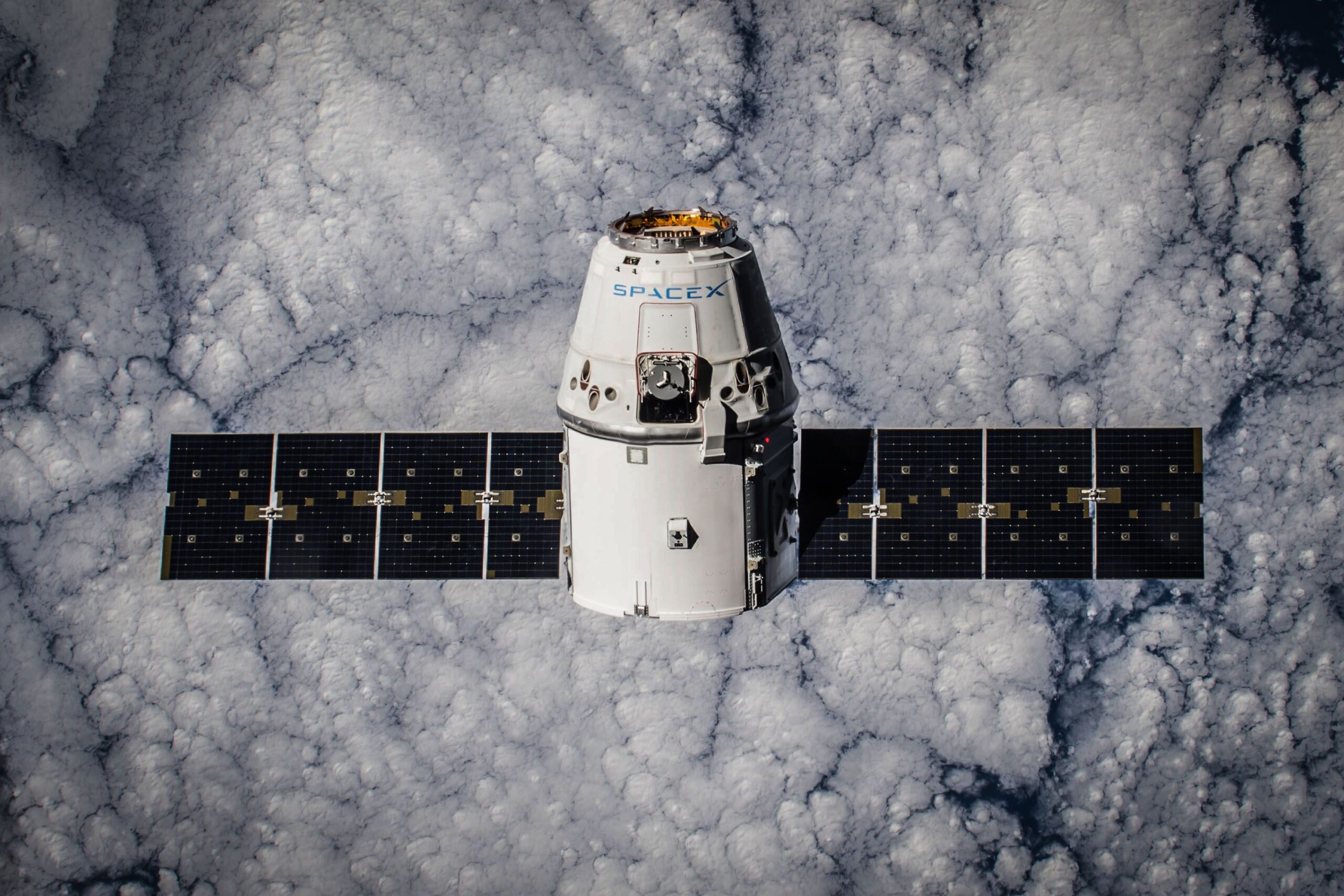
SpaceX has reached another major milestone by advancing its Starship program with next-generation Starlink technology. The latest achievement strengthens the company’s vision of building a fully reusable spacecraft for future space missions. At the same time, it supports the rapid expansion of global satellite internet services.
The mission comes as demand for satellite connectivity and reusable launch systems continues to grow worldwide. Governments, private companies, and research organizations increasingly depend on advanced space technology for communication, navigation, weather forecasting, and scientific research. Therefore, every successful Starship mission attracts global attention.
Industry experts believe Starship and Starlink will play a key role in the future of commercial spaceflight. Starship offers unmatched heavy-lift capabilities. Meanwhile, Starlink continues expanding high-speed internet coverage across the globe. Together, these technologies could transform both space transportation and global communications.
Starship Successfully Deploys Advanced Starlink Satellites
SpaceX achieved another breakthrough when Starship successfully deployed next-generation Starlink V3 satellites during its latest test flight. The giant launch vehicle lifted off from the company’s Starbase facility in Boca Chica, Texas. It demonstrated improved payload deployment capabilities and marked another step toward full commercial operations.
The mission also highlighted Starship’s growing role as a heavy-lift launch system. Instead of serving only as a test vehicle, the spacecraft is proving it can support large-scale satellite deployments. Consequently, NASA, commercial customers, and industry analysts continue monitoring every successful mission as SpaceX prepares for future commercial launches.
Starship Continues to Push the Boundaries of Space Exploration
Starship represents SpaceX’s most ambitious spacecraft project to date. Designed as a fully reusable launch system, it aims to transport satellites, scientific equipment, cargo, and eventually astronauts to destinations beyond Earth orbit.
Unlike traditional rockets that discard major components after launch, Starship is designed for repeated use. This approach can dramatically reduce launch costs while increasing mission frequency. As a result, reusable spacecraft could make space exploration more affordable for governments, private companies, and research institutions.
Engineers continue conducting test flights to evaluate propulsion systems, heat shields, structural performance, and landing capabilities. Every successful test provides valuable data that helps improve the spacecraft before operational missions begin.
Advanced Starlink Technology Strengthens Global Connectivity
Alongside Starship’s development, SpaceX continues expanding its Starlink satellite constellation. Starlink is designed to deliver high-speed internet using thousands of low-Earth orbit satellites instead of relying solely on traditional ground-based infrastructure.
The latest improvements focus on increasing network capacity, reducing latency, and providing more reliable internet access across urban and remote regions alike.
Advanced satellite communication technology allows Starlink to deliver internet services to locations where fiber-optic networks remain difficult or expensive to build. Consequently, schools, hospitals, businesses, emergency services, and rural communities may benefit from improved digital connectivity.
As additional satellites enter orbit, Starlink continues improving network coverage and service quality across multiple continents.
How Starship Supports the Future of Starlink
One of Starship’s biggest advantages is its enormous payload capacity. The spacecraft is expected to carry significantly more satellites during each launch than current launch vehicles.
This capability could accelerate Starlink deployment while reducing launch expenses. Instead of launching smaller batches of satellites, SpaceX may eventually deploy much larger groups during a single Starship mission.
Lower launch costs would allow faster expansion of the Starlink network. Furthermore, improved deployment efficiency could help replace aging satellites more quickly while introducing next-generation communication technology.
Industry analysts believe this combination of reusable rockets and advanced satellite systems could reshape the economics of global satellite communications.
Why This Milestone Matters
The latest milestone demonstrates continued progress in two of SpaceX’s most important long-term projects.
Starship has the potential to transform space transportation through full reusability, while Starlink continues expanding internet connectivity worldwide.
Together, these technologies support multiple industries, including telecommunications, disaster response, scientific research, aviation, maritime operations, defense, and education.
Moreover, stronger satellite communication networks could improve emergency response during natural disasters by maintaining internet access even when ground infrastructure becomes unavailable.
Consequently, many governments continue monitoring commercial satellite technology with growing interest.
Benefits for Future Space Missions
Future missions to the Moon, Mars, and other destinations will require reliable communication systems and heavy-lift transportation capabilities.
Starship could transport large scientific instruments, habitat modules, construction equipment, and life-support systems needed for long-duration missions.
Meanwhile, Starlink technology may eventually support communication between spacecraft, astronauts, and mission control by providing more advanced data transmission capabilities.
Although additional research remains necessary, experts believe integrated communication networks will become increasingly important for future deep-space exploration.
Commercial Opportunities Continue Expanding
Commercial space activity has grown rapidly during the past decade. Satellite operators, research organizations, telecommunications companies, and national governments continue increasing investment in space-based technologies.
SpaceX’s reusable launch model may reduce operational costs for satellite deployment, making access to space more affordable for a wider range of organizations.
Lower launch expenses could encourage additional innovation across industries such as Earth observation, climate monitoring, agriculture, logistics, navigation, and telecommunications.
Consequently, commercial demand for launch services is expected to remain strong in the coming years.
Investors Closely Watch SpaceX Developments
Although SpaceX remains a privately held company, its technological achievements significantly influence the broader aerospace industry.
Investors continue monitoring Starship testing, Starlink subscriber growth, satellite deployment, and commercial launch activity because these developments affect market confidence across the space sector.
Companies involved in satellite manufacturing, rocket components, semiconductor technology, and space communications may also benefit as commercial space activity expands.
Meanwhile, governments continue strengthening partnerships with private aerospace companies to support national space programs.
Challenges Still Remain
Despite remarkable progress, Starship and Starlink continue facing technical, operational, and regulatory challenges.
Starship requires additional testing before routine commercial missions become possible. Engineers must continue validating launch reliability, orbital performance, atmospheric reentry, and landing systems.
Starlink also faces challenges involving satellite traffic management, orbital sustainability, spectrum allocation, and increasing global competition.
In addition, international regulators continue developing policies governing satellite communications, orbital safety, and commercial space operations.
Nevertheless, SpaceX continues refining both technologies through continuous testing and engineering improvements.
Global Impact of Advanced Space Technology
The growing combination of reusable launch systems and satellite internet infrastructure may influence economies around the world.
Developing countries could gain improved internet access through satellite networks. Scientific organizations may conduct more affordable space missions. Businesses could benefit from better global communication infrastructure, while governments strengthen national connectivity.
Furthermore, advanced satellite systems support weather forecasting, environmental monitoring, disaster management, precision agriculture, and maritime safety.
As technology continues evolving, space infrastructure will likely become increasingly integrated into everyday life.
What Could Happen Next?
Industry analysts expect SpaceX to continue expanding Starship testing while increasing Starlink satellite deployments throughout the coming years.
Future milestones may include more advanced orbital demonstrations, larger satellite launches, expanded commercial missions, and additional improvements in satellite communication technology.
Researchers also expect closer collaboration between public and private space organizations as reusable spacecraft become more capable.
Meanwhile, businesses and governments will continue monitoring SpaceX’s progress because future developments could influence telecommunications, transportation, scientific research, and global digital infrastructure.
Operational Payload Deployment: Testing the Pez-Dispenser Mechanism
The defining highlight of the flight was the execution of Starship’s custom payload delivery system. During its coast phase along a suborbital trajectory, the upper stage opened its specialized door slot—frequently referred to as the “Pez dispenser”—and sequentially released 20 advanced third-generation Starlink satellites into space.
Unlike earlier iterations that deployed inert mass simulators, this flight represented the first real-world deployment of functional Starlink V3 satellites from Starship’s payload bay. These next-generation satellites are significantly larger, heavier, and more powerful than their predecessor V2 Mini counterparts carried by Falcon 9 rockets. Equipped with direct-to-cell communications hardware and upgraded optical inter-satellite laser links, the V3 units are designed to deliver multi-gigabit throughput directly to consumer terminals and standard smartphones on Earth.
Furthermore, the successful deployment validated Starship’s internal payload bay dynamics and ejector hardware. Deploying large, flat-packed satellites at extreme velocities requires precise attitude control to prevent collisions or tumbling. By achieving a clean deployment sequence, SpaceX engineers confirmed that Starship can reliably transport heavy satellite payloads into space.
Technical Feats Across the Launch Architecture
Powering the massive Super Heavy booster into the Texas sky were 33 methane-fueled Raptor engines generating a staggering 16 million pounds of thrust. Following a nominal ascent through maximum aerodynamic pressure (Max Q), the vehicle executed a flawless hot-staging maneuver, where the Starship upper stage ignited its six engines while still attached to the booster stage.
The flight demonstrated several key structural and propulsion milestones:
- Engine-Out Capability and Reliability: After addressing engine startup issues from earlier attempts, all 33 Raptor engines on the Super Heavy booster performed through primary ascent, proving critical hardware refinements.
- Re-entry Thermal Shield Testing: As Starship re-entered Earth’s atmosphere over the Indian Ocean, its heat shield subjected thousands of lightweight silica tiles to extreme temperatures exceeding 1,400°C.
- Controlled Water Landing: The upper stage performed a controlled landing flip maneuver and ignited its engines, executing what engineers described as the “softest splashdown” yet in the Indian Ocean while remaining fully intact on the surface.
The Strategic Importance of Starlink V3 and Starship Synergy
The seamless integration of Starship and Starlink V3 represents a fundamental pillar of SpaceX’s long-term business model. While the Falcon 9 reusable rocket has maintained an unprecedented launch cadence, its payload fairing volume limits how many large V3 satellites can be launched per mission.
In contrast, Starship’s immense volumetric capacity and 100-plus-ton payload capability allow SpaceX to deploy dozens of heavy V3 satellites in a single launch. This capability drastically lowers the cost-per-gigabit of orbitally deployed bandwidth, allowing the Starlink network to expand capacity in dense metropolitan markets, aviation sectors, and maritime routes without bottlenecking network infrastructure.
Additionally, revenue generated by an expanded, high-capacity Starlink network directly funds SpaceX’s broader interplanetary ambitions. By scaling commercial satellite launches, SpaceX builds the financial and operational foundation necessary to support deep-space exploration programs.
Implications for NASA’s Artemis Program and Beyond
SpaceX’s rapid progress with Starship is equally crucial for NASA’s Artemis program, which aims to return human astronauts to the lunar surface. Under a multi-billion-dollar contract, NASA selected a modified version of Starship to serve as the Human Landing System (HLS) for the Artemis III and Artemis IV missions.
To carry out a crewed lunar landing, SpaceX must demonstrate that Starship can reliably launch, perform orbital propellant refueling via a series of tanker flights, and execute precise landings on the Moon. Every successful Starship test flight—particularly those demonstrating clean engine reignition, thermal guidance, and payload integration—directly mitigates technical risks for NASA’s lunar timeline.