

Nvidia Chip Loophole: Major U.S. Crackdown Targets Chinese AI Access Abroad
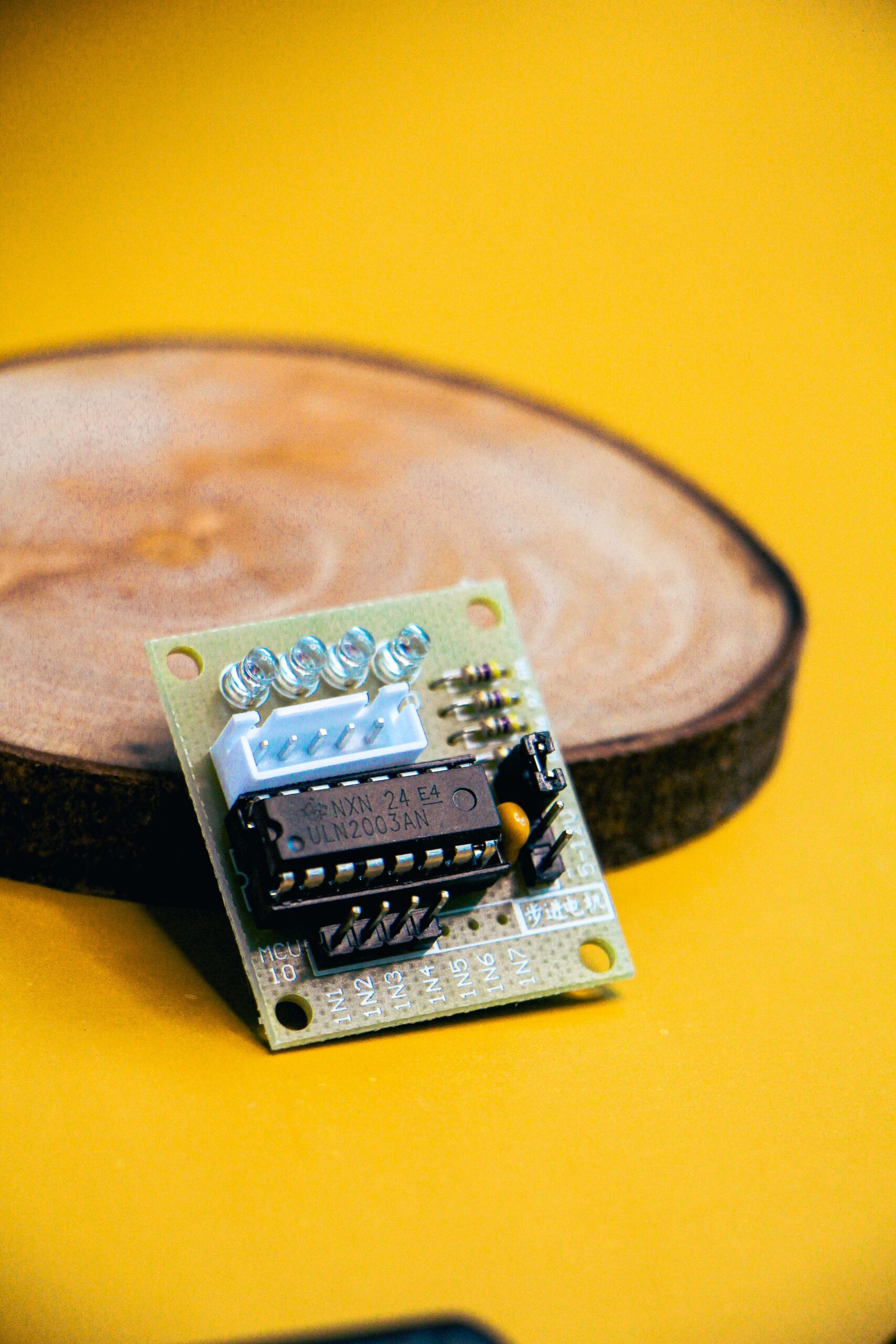
Nvidia Chip Loophole Comes Under Fresh U.S. Scrutiny
The United States is taking a closer look at a growing challenge in its technology policy: Chinese artificial intelligence companies may still be able to access advanced Nvidia computing power even when the physical chips are not located inside China. The review is drawing attention to what has become known as the Nvidia chip loophole, involving overseas data centers, cloud services, foreign subsidiaries, and other arrangements that can provide Chinese companies with access to powerful American-made AI hardware.
The latest scrutiny comes as Washington continues trying to limit China’s access to advanced semiconductors that could strengthen its artificial intelligence and high-performance computing capabilities. Recent reports indicate that a U.S. agency is examining how Chinese AI companies legally rent or otherwise access Nvidia chips located abroad.
The issue is important because traditional export controls generally focus on the physical movement of controlled products. However, AI computing can increasingly be delivered as a service. A company does not necessarily need to own a restricted GPU or move it across a border to use its computing power.
Instead, it can potentially rent computing capacity from an overseas data center and access that infrastructure remotely.
That distinction is now becoming a major challenge for U.S. policymakers.
How the Nvidia Chip Loophole Works
The Nvidia chip loophole is based on a relatively simple concept. Advanced Nvidia GPUs can be installed in data centers outside China, including facilities in other parts of Asia.
Chinese companies can then potentially rent computing capacity from those facilities instead of physically importing the restricted chips into China.
In such an arrangement, the hardware remains outside China while the customer accesses its computing resources through a network connection.
For AI development, this can be enough.
Training a large language model requires enormous computing power, but the engineers building the model do not necessarily need to be sitting next to the physical servers. Data, software, and training jobs can be transmitted across networks.
Therefore, controlling the physical shipment of chips becomes much more complicated when computing itself can be purchased remotely.
Recent reporting has highlighted concerns over Chinese companies using overseas data centers to obtain access to Nvidia’s high-end processors. Southeast Asia has emerged as an important part of this discussion because countries such as Singapore and Malaysia have become major technology and data-center hubs.
Why the U.S. Is Concerned
The Nvidia chip loophole matters to Washington because advanced AI processors are viewed as strategically important technology.
Nvidia’s most powerful GPUs can be used to train sophisticated AI models, develop autonomous systems, perform scientific computing, and operate large-scale data centers. Consequently, access to these processors can provide a significant advantage to companies developing frontier AI systems.
The United States has introduced increasingly strict export controls to limit China’s access to advanced computing technologies. Nvidia’s regulatory filings show that U.S. rules have applied to products based on processing performance, performance density, interconnect bandwidth, and memory bandwidth.
These restrictions have changed several times as Washington has attempted to balance national-security concerns with the commercial interests of U.S. technology companies.
However, the overseas-access issue creates a different problem.
Even if a chip never enters China, Chinese engineers may potentially be able to use its computing power from another country.
That is why U.S. officials are now examining whether existing rules adequately address cloud-based and remote access to advanced AI hardware.
Overseas Data Centers Become the New Battleground
The Nvidia chip loophole has become particularly relevant because data-center infrastructure is increasingly international.
A GPU can be manufactured in one location, shipped to another country, installed inside a server, and then made available to customers around the world through cloud services.
This creates a complicated chain of ownership and access.
For example, a Chinese technology company could theoretically contract with a foreign data-center operator. The operator could own the hardware and provide computing services to the customer. The Chinese company would then use the computing capacity without necessarily taking physical possession of the GPUs.
From a commercial perspective, this is a normal cloud-computing model.
From an export-control perspective, however, it creates difficult questions about who is actually using the technology.
Recent reporting says U.S. authorities are mapping how Chinese AI firms legally rent Nvidia chips overseas and are examining remote-access arrangements that could allow restricted computing power to be used by Chinese companies.
Earlier U.S. Action on Overseas Subsidiaries
The Nvidia chip loophole is not an entirely new issue.
In May 2026, the U.S. Commerce Department moved to close a potential loophole involving advanced AI processors being shipped to subsidiaries of Chinese companies located outside China.
Reuters reported that the move could affect advanced Nvidia processors such as Blackwell and Rubin products, as well as advanced AMD chips.
The new guidance clarified that licensing requirements could apply to entities headquartered in China even when the relevant operations were located outside the country.
That was an important change because companies can operate through international subsidiaries for legitimate business reasons.
However, policymakers were concerned that such structures could also be used to obtain access to advanced technology that would face restrictions if shipped directly to China.
The Commerce Department’s move demonstrated that Washington was becoming increasingly focused on the destination and ultimate user of technology, rather than simply the location where a product was delivered.
Singapore and Malaysia Face Increased Attention
The Nvidia chip loophole has also placed Southeast Asia under greater scrutiny.
Singapore and Malaysia have become important destinations for data centers, cloud infrastructure, and semiconductor-related investment. Their geographic position and business-friendly environments have made them attractive locations for technology companies.
At the same time, their growing role in AI infrastructure has raised questions about whether Chinese companies could access advanced U.S. chips through facilities located there.
Reuters previously reported that the U.S. Commerce Department believed advanced Nvidia chips may have reached subsidiaries of Chinese companies in locations such as Malaysia.
Singapore has separately addressed concerns involving Nvidia chips and export controls. In February 2025, Singapore’s Ministry of Trade and Industry said the country would not tolerate businesses using local ties to circumvent U.S. export controls. The ministry also said Singaporean authorities would work with U.S. counterparts where appropriate.
Therefore, the issue is not simply a dispute between Washington and Beijing. It also involves countries that host the infrastructure through which international AI computing is delivered.
Cloud Computing Changes Export Controls
The Nvidia chip loophole highlights a fundamental weakness in traditional export-control systems.
Export regulations were historically designed around physical goods. A government could identify a controlled product, determine its destination, and require an export license.
Cloud computing makes that process more complicated.
A customer can purchase access to computing power without buying the underlying machine. The server can remain in another country while the customer submits jobs remotely.
As a result, the real product being delivered is not necessarily a physical chip. It is computing capacity.
This distinction has already attracted attention from U.S. lawmakers. The House of Representatives previously passed legislation known as the Remote Access Security Act, which sought to extend export controls to remote access to advanced American AI chips through cloud services.
If such rules become broader or are implemented more aggressively, cloud providers could face additional obligations to verify who is actually using their AI infrastructure.
Chinese AI Firms Have Strong Incentives
The Nvidia chip loophole is particularly significant because Chinese AI companies have strong incentives to obtain high-performance computing resources.
China has developed major domestic AI chip companies, including Huawei and other semiconductor developers. Nevertheless, Nvidia’s hardware and software ecosystem remains highly influential in global AI development.
AI developers do not only depend on raw processor performance. They also rely on software libraries, networking systems, developer tools, optimized frameworks, and years of engineering experience.
Nvidia has built a broad ecosystem around its CUDA platform and related AI technologies.
Consequently, access to Nvidia hardware abroad could provide Chinese AI companies with resources that may be difficult to reproduce using domestic alternatives alone.
This does not mean that Chinese AI firms are completely dependent on Nvidia. China has invested heavily in domestic semiconductor development and AI optimization. Nevertheless, access to additional computing resources can accelerate model training and experimentation.
The DeepSeek Effect
The Nvidia chip loophole debate also reflects the broader shock created by Chinese AI breakthroughs.
The emergence of highly capable Chinese AI models has challenged assumptions about how much computing power is necessary to compete with leading American AI developers.
Chinese AI companies have demonstrated that model efficiency, software optimization, training techniques, and algorithmic improvements can sometimes compensate for hardware constraints.
Nevertheless, access to large amounts of advanced computing remains valuable.
The debate has therefore shifted from simply asking whether China can buy advanced chips to asking whether Chinese companies can access the computing power generated by those chips anywhere in the world.
That is a much harder question.
Nvidia Faces a Difficult Balance
The Nvidia chip loophole also creates a complicated situation for Nvidia itself.
Nvidia is one of the world’s most valuable technology companies, and China remains an important market. At the same time, U.S. export restrictions determine which products the company can sell to Chinese customers and under what conditions.
Nvidia’s regulatory filings show that the company has faced significant restrictions on its ability to compete in China’s data-center market. The company has also disclosed licensing developments involving products such as the H20 and H200.
For Nvidia, stricter overseas controls could potentially reduce sales opportunities.
However, the company also has to comply with U.S. law.
That creates a difficult balance between commercial expansion and regulatory compliance.
If Washington introduces tougher rules governing cloud access, Nvidia and its customers could face additional compliance requirements.
What Could Happen Next
The Nvidia chip loophole review could eventually lead to stronger restrictions on remote access to advanced AI computing.
One possible approach would be to require cloud providers to verify the identity and nationality of customers before providing access to certain high-performance processors.
Another possibility would involve restrictions based on the ultimate beneficial owner of a company.
Washington could also require data centers outside the United States to monitor customers more closely when advanced American chips are involved.
However, enforcing such rules globally would be difficult.
AI infrastructure is distributed across many countries, and cloud providers operate complex international networks. A customer can potentially use multiple corporate entities, cloud accounts, and service providers.
Therefore, regulators would need cooperation from international partners to make the rules effective.
The Compliance Burden Could Increase
The Nvidia chip loophole debate could create additional costs for data-center operators and cloud companies.
Providers may need to perform stronger know-your-customer checks, verify corporate ownership, monitor unusual usage patterns, and maintain records showing where computing resources are being used.
For smaller cloud companies, these requirements could be expensive.
Large providers may be better positioned to absorb the costs because they already have extensive compliance teams.
Nevertheless, stricter controls could make international AI cloud services more complicated.
Some companies may decide that the additional regulatory risk is not worth serving customers connected to sensitive jurisdictions.
Others may invest heavily in compliance technology.
China Could Accelerate Domestic AI Hardware
The Nvidia chip loophole controversy could also strengthen China’s motivation to develop domestic AI processors.
If Chinese companies find it increasingly difficult to access Nvidia hardware even through overseas data centers, domestic alternatives could become more attractive.
Chinese semiconductor companies are already working to improve AI accelerators and data-center processors.
Furthermore, Chinese technology companies have been developing software and optimization techniques designed to extract more performance from available hardware.
In the long term, tighter U.S. restrictions could therefore have an unintended effect.
Instead of permanently limiting China’s AI capabilities, they could encourage faster investment in domestic alternatives.
This is one of the central strategic questions facing U.S. policymakers.
The Broader U.S.-China AI Competition
The Nvidia chip loophole is ultimately part of a much larger competition between the United States and China over artificial intelligence.
Washington wants to preserve its technological advantage while preventing advanced computing technology from supporting Chinese military or strategic capabilities.
Beijing, meanwhile, wants to build an independent AI ecosystem and reduce reliance on American technology.
Semiconductors sit at the center of that competition.
Advanced GPUs are essential for training many modern AI systems, while semiconductor manufacturing equipment, networking technology, memory, and software are also strategically important.
Consequently, export controls have become a central tool of U.S. technology policy.
However, the more restrictions are introduced, the more companies have incentives to find alternative routes.
That creates a continuous cycle in which regulators close one pathway and businesses search for another.
What It Means for the Global AI Industry
The Nvidia chip loophole could have consequences far beyond the United States and China.
If Washington expands restrictions on remote access, countries hosting international data centers may face pressure to strengthen their own technology controls.
Cloud companies could also be required to distinguish between ordinary international customers and users connected to restricted entities.
At the same time, AI developers may increasingly build geographically distributed infrastructure to ensure access to computing resources.
This could accelerate the fragmentation of the global AI industry.
Instead of one interconnected market, the world could gradually develop separate technology ecosystems shaped by national security concerns, export regulations, and geopolitical alliances.
Conclusion
The Nvidia chip loophole has emerged as a major challenge for U.S. efforts to control China’s access to advanced artificial intelligence computing.
The issue is no longer limited to whether restricted Nvidia processors can be physically shipped into China. Increasingly, policymakers must consider whether Chinese companies can rent or remotely access powerful Nvidia GPUs located in overseas data centers.
Recent U.S. actions involving Chinese subsidiaries abroad, along with the latest review of remote and cloud-based access, show that Washington is moving toward a broader understanding of technology controls.
For Nvidia, the situation creates both commercial and regulatory challenges. The company must navigate U.S. export restrictions while maintaining its position in the global AI market.
For China, tighter controls could make access to foreign computing resources more difficult, but they could also encourage faster development of domestic AI chips and infrastructure.
Meanwhile, countries such as Singapore and Malaysia are likely to face increasing pressure to ensure that their data centers and technology companies are not used to circumvent international export restrictions.
Ultimately, the Nvidia chip loophole illustrates how difficult it has become to control technology in a world where computing power can be delivered remotely. Physical borders may restrict where a chip is shipped, but cloud computing can make access to that chip effectively global.
As artificial intelligence becomes more important to national security and economic competitiveness, the battle over GPUs, cloud computing, and international data centers is likely to intensify. The next phase of U.S. export policy may therefore focus not only on where advanced chips go, but also on who can use their computing power, wherever those chips happen to be located.
Nvidia Sarvam Funding: Major AI Investment Strengthens India’s Unicorn Ambitions
