

Unitree Robotics Stock Soars 542% in Stunning Shanghai Market Debut
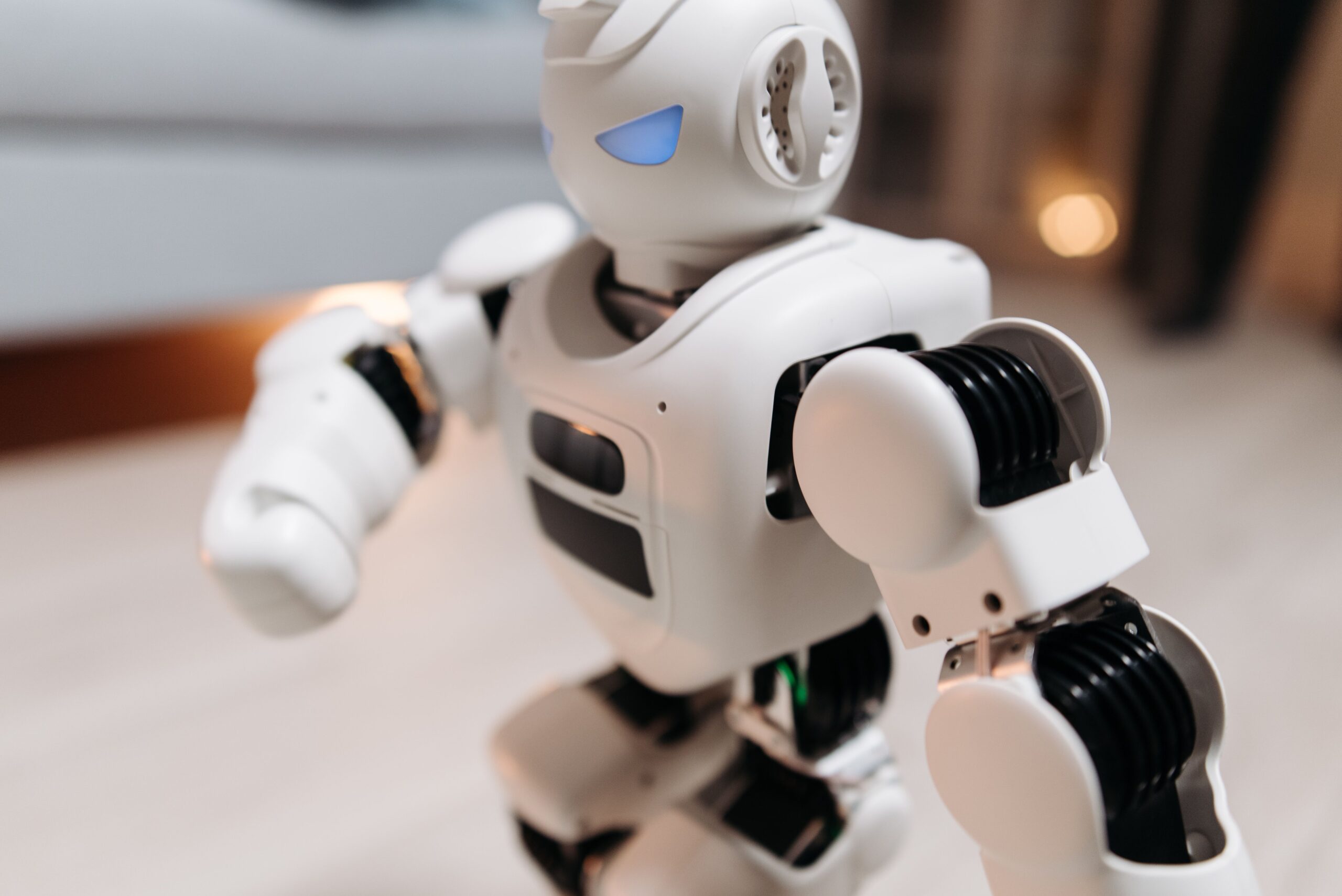
Unitree Robotics Stock Delivers a Stunning Market Debut
Unitree Robotics Stock made a spectacular entrance into China’s public markets on Wednesday, August 19, 2026, as shares of the humanoid robot maker surged as much as 629% during early trading on the Shanghai Stock Exchange’s STAR Market. The stock was up about 542% at one point compared with its initial public offering price, turning the listing into one of the most closely watched technology market debuts in China this year.
The extraordinary opening performance came after Unitree Robotics raised approximately 6.1 billion yuan, or around $904 million, through its IPO. By the end of the trading session, the shares had closed at 845 yuan, representing an increase of roughly 460% from the IPO price. The closing performance gave the company a market value of approximately $50 billion, underlining the enormous expectations investors have placed on the future of humanoid robotics.
For investors, Unitree Robotics Stock represents more than another technology listing. The company has become a symbol of China’s rapidly expanding ambitions in artificial intelligence, robotics and embodied AI. Its successful debut also shows how strongly investors are responding to companies that could play a major role in the next generation of automation.
Why Unitree Robotics Stock Attracted Huge Investor Interest
The excitement surrounding Unitree Robotics Stock did not begin on the first day of trading. In the weeks leading up to the IPO, demand for the offering was already exceptionally strong. Reuters reported before the listing that the IPO had attracted extraordinary interest from retail investors, with subscriptions reportedly exceeding the available shares by more than 8,000 times.
That level of demand reflected the growing popularity of humanoid robots in China. Unitree has gained international attention for robots capable of running, dancing, performing martial arts movements and completing difficult physical tasks. Videos of its machines have repeatedly attracted attention online, helping the company build a recognizable consumer and technology brand.
Moreover, Unitree has positioned itself across several areas of robotics rather than focusing only on humanoid machines. The Hangzhou-based company develops humanoid robots, quadruped robots, robotic components and embodied artificial intelligence technologies. This broader product portfolio has helped make Unitree one of China’s better-known robotics companies.
The strong debut of Unitree Robotics Stock therefore reflects both company-specific optimism and a wider investment trend. Investors increasingly believe that robotics could become one of the most important technology industries of the next decade, alongside artificial intelligence, semiconductors and advanced manufacturing.
Unitree Robotics Stock and the Growth of Humanoid Robotics
The rise of Unitree Robotics Stock comes at a time when China is aggressively developing its domestic robotics industry. Government policies have increasingly emphasized advanced manufacturing, artificial intelligence and intelligent machines as important areas for future economic growth.
Unitree was founded in Hangzhou in 2016 and initially became particularly well known for its quadruped robots. Over time, however, the company expanded into humanoid robotics and embodied AI. According to Xinhua, Unitree was among the early companies to commercialize high-performance quadruped robots for industrial applications.
The company’s growth has also been supported by improving financial performance. Its revenue increased from 159 million yuan in 2023 to 393 million yuan in 2024 and nearly 1.7 billion yuan in 2025, according to its prospectus cited by Xinhua.
That financial growth is important because many robotics companies are still investing heavily in research and manufacturing without generating consistent profits. Unitree’s ability to report substantial revenue growth has given investors another reason to take its public offering seriously.
As a result, Unitree Robotics Stock has attracted attention not only from technology investors but also from people looking at China’s broader industrial transformation.
Unitree Robotics Stock Gets a Major Valuation Boost
The dramatic first-day performance pushed Unitree’s valuation far beyond the level implied by its IPO pricing. Reuters reported that the company closed the day at approximately 845 yuan per share, valuing the business at around $50 billion.
Such a valuation places enormous expectations on the company. Investors are effectively betting that Unitree can expand its production, increase sales and turn humanoid robotics into a large commercial business.
However, a high valuation can also create pressure. The company will now have to demonstrate that its technology can move beyond demonstrations and limited deployments into practical, large-scale commercial applications.
This distinction is important. Humanoid robots can perform impressive movements, but making them economically useful in factories, warehouses, homes and other environments is considerably more difficult. Robots must be reliable, safe, affordable and capable of operating for long periods without frequent human intervention.
Therefore, the rise in Unitree Robotics Stock should not automatically be interpreted as proof that humanoid robots are already a mature industry. Instead, it shows how strongly investors believe the sector could develop in the future.
Unitree Robotics Stock and the Company’s IPO Plans
Unitree’s IPO process was closely watched by the Chinese technology market. In July, the company announced plans to issue approximately 40.45 million shares, representing 10% of its enlarged share capital. The offering was structured to include strategic placement as well as offline institutional and online public subscriptions.
Earlier, the Shanghai Stock Exchange’s review documents showed that Unitree planned to raise approximately 4.2 billion yuan through the IPO. The proposed funds were intended for research and development, new intelligent robot products and construction of an intelligent robot manufacturing base.
The final fundraising amount was higher, reaching around 6.1 billion yuan. That difference highlights the scale of investor demand surrounding the listing.
For Unitree Robotics Stock, the capital raised could provide significant financial support for future expansion. The company can use additional resources to develop new robotic models, improve artificial intelligence systems, increase manufacturing capacity and explore international markets.
Unitree Robotics Stock Reflects China’s Technology Ambitions
The listing also carries significance beyond Unitree itself. China’s government has identified robotics as an important strategic technology, and domestic companies are competing to establish leadership in humanoid machines and embodied AI.
The Shanghai STAR Market was created specifically to support high-technology and strategically important emerging companies. Unitree’s listing therefore fits closely with the market’s broader purpose.
The timing was also notable because the debut took place alongside heightened attention on robotics in China. The World Robot Conference in Beijing was taking place during the same period, creating an environment in which robotics technology was already attracting considerable public and investor attention.
Consequently, Unitree Robotics Stock became a market symbol for the country’s broader push toward intelligent machines.
Unitree Robotics Stock Faces Significant Challenges
Despite the impressive debut, Unitree faces several challenges. The biggest question is whether the excitement surrounding humanoid robots can translate into sustainable commercial demand.
At present, many humanoid robots remain concentrated in demonstrations, research projects and controlled industrial environments. Building a robot that can walk, dance or perform a backflip is impressive, but commercial customers need machines that can complete useful tasks consistently and at a competitive cost.
Another challenge is international expansion. Unitree has generated a meaningful share of its revenue outside China, but geopolitical tensions could complicate its access to important foreign markets. The United States has recently taken steps affecting imports of certain foreign-made humanoid and quadruped robots, citing national security concerns.
These restrictions could limit Unitree’s growth in some overseas markets. At the same time, competition from other Chinese robotics manufacturers is increasing rapidly.
Therefore, investors following Unitree Robotics Stock will need to watch sales growth, international revenue, production capacity and regulatory developments closely.
Unitree Robotics Stock and the Competition
Unitree is not operating alone in the humanoid robotics race. Chinese companies including AGIBOT and other emerging robotics manufacturers are also developing humanoid machines and seeking access to capital markets.
The competition is important because the industry is still developing. No single company has yet established complete dominance over the global humanoid robot market.
Unitree’s advantage comes partly from its early commercial experience, recognizable products and ability to manufacture different categories of robots. Its financial performance also gives it resources to continue investing in technology.
However, competitors are investing heavily in artificial intelligence, robotic hands, mobility systems and industrial applications. As the industry develops, the companies that can combine advanced AI with affordable hardware are likely to gain the strongest position.
That means Unitree Robotics Stock could remain highly sensitive to announcements about new products, partnerships, production targets and commercial contracts.
Unitree Robotics Stock Could Influence Future Robotics Investment
The enormous first-day gain could have consequences for the wider investment landscape. Investors may increasingly look toward robotics companies as a new growth category, particularly as artificial intelligence moves from software applications into physical machines.
The success of Unitree’s IPO could also encourage other private robotics companies to consider public listings. China’s robotics sector already has several firms preparing for possible capital-market activity, and a successful Unitree debut could make investors more receptive to future offerings.
At the same time, the extraordinary valuation could make investors more cautious about companies with limited commercial histories. A major difference exists between technological potential and proven long-term profitability.
For this reason, Unitree Robotics Stock may become an important benchmark for the entire humanoid robotics industry. If Unitree delivers strong revenue and profit growth after its IPO, confidence in the sector could increase. If expectations prove too high, the stock could experience significant volatility.
What Investors Should Watch After the Debut
After the dramatic first trading day, investors will likely focus on several key indicators. First, production capacity will be crucial. Unitree needs to demonstrate that it can manufacture robots at scale without sacrificing quality.
Second, commercial adoption will matter. Orders from factories, logistics companies, research institutions and other businesses could provide evidence that humanoid robots are moving toward mainstream use.
Third, research and development spending will remain important. Robotics is a rapidly changing field, and companies must continuously improve artificial intelligence, sensors, batteries, movement control and robotic manipulation.
Finally, investors will watch profitability. Strong revenue growth alone may not justify the valuation if costs rise quickly. Unitree’s ability to maintain healthy margins while expanding will therefore be a major factor for Unitree Robotics Stock.
Unitree Robotics Stock Signals Strong Confidence in Physical AI
One of the biggest themes behind the debut is the growing interest in what is often called physical or embodied AI. Traditional AI systems operate primarily through software, while embodied AI connects intelligence with physical machines that can interact with the real world.
Humanoid robots are one of the clearest examples of this trend. They can potentially operate in environments designed for humans, use existing tools and perform repetitive or physically demanding tasks.
Unitree’s development strategy places it directly in this emerging field. Its combination of robotic hardware and AI capabilities could allow it to benefit if physical AI becomes commercially significant.
Nevertheless, the technology remains at an early stage. Researchers and companies still face major problems involving dexterity, energy efficiency, navigation, safety and reliable decision-making.
Unitree Robotics Stock Becomes a Symbol of China’s Robot Boom
The first-day performance of Unitree Robotics Stock is remarkable even by the standards of China’s technology market. A rise of more than five times during early trading demonstrates the level of enthusiasm surrounding humanoid robotics.
Yet the real test begins after the excitement of the IPO fades. Unitree must now prove that its technology can generate sustainable commercial growth and justify the expectations reflected in its market valuation.
The company enters the public market with strong visibility, significant fresh capital and a growing international profile. It also enters an increasingly competitive industry where technological progress is happening rapidly.
Investors will therefore need to separate short-term market enthusiasm from long-term business fundamentals. The spectacular debut provides Unitree with momentum, but future performance will depend on execution.
Conclusion: Unitree Robotics Stock Opens a New Chapter
The extraordinary debut of Unitree Robotics Stock marks an important moment for China’s humanoid robotics industry. Shares surged as much as 629% during early trading and ultimately closed 460% above the IPO price, while the company raised around 6.1 billion yuan and reached a valuation of approximately $50 billion.
The market reaction demonstrates that investors see significant potential in humanoid robots, artificial intelligence and advanced automation. Unitree’s strong revenue growth, expanding product portfolio and growing international recognition have helped establish it as one of China’s most prominent robotics companies.
However, the huge valuation also raises expectations. Unitree will need to expand production, secure commercial customers, manage international challenges and continue developing its technology.
Ultimately, Unitree Robotics Stock is now more than a successful IPO story. It has become a major indicator of investor confidence in China’s robotics ambitions and the broader future of physical AI. Whether the company can turn today’s extraordinary market enthusiasm into years of sustainable growth will be one of the most important questions for investors watching the robotics industry.
Strong Alphabet Raises $3.9 Billion In Australian Dollar Bond Market Debut
Sources: Reuters reporting on Unitree’s Shanghai debut and IPO; Associated Press coverage of the company’s first trading day; Xinhua reporting on Unitree’s IPO review and financial performance; Shanghai Stock Exchange materials on the company’s STAR Market listing.
