

Nvidia Price Hike: AI Servers Get Costlier
Nvidia Price Hike Brings New Pressure to AI Infrastructure
The Nvidia Price Hike is becoming a major talking point in the technology industry after some of Nvidia’s largest customers were reportedly informed that prices for servers containing its artificial intelligence chips could rise by more than 15%.
The reported increases are expected to affect systems shipped early next year, including machines built around Nvidia’s Grace Blackwell and next-generation Vera Rubin platforms. The exact increase will depend on the chip generation and the amount and type of memory included in each system.
The development comes at a time when companies around the world are spending enormous amounts on AI data centers. Technology giants are building new computing facilities to train and operate increasingly powerful AI models, creating intense demand for processors, memory, networking equipment, electricity and data center capacity.
However, the latest pricing news shows that the cost of the AI boom is not limited to Nvidia’s processors. Memory has become a major source of pressure across the industry, and manufacturers are struggling to increase supply quickly enough.
As a result, the Nvidia Price Hike could have consequences for companies planning large AI infrastructure projects in the coming years.
Why Are Nvidia AI Servers Becoming More Expensive?
The main reason behind the Nvidia Price Hike appears to be the sharp increase in memory costs.
AI servers require large quantities of high-performance memory because AI accelerators need to move huge amounts of data quickly. Nvidia’s processors are therefore paired with advanced memory technologies, including high-bandwidth memory, while servers also require conventional DRAM and other components.
Demand for these memory products has increased rapidly as companies build AI data centers.
Nvidia Price Hike: According to reports, Samsung Electronics, SK Hynix and Micron are among the key memory suppliers benefiting from the strong demand. Although these companies are expanding production, increasing semiconductor capacity takes time because new facilities require significant investment, specialized equipment and lengthy production processes.
Therefore, supply has not been able to keep pace with demand in some areas of the memory market.
This imbalance is pushing component prices higher and adding pressure to the overall cost of AI servers.
Price Increases Could Start Early Next Year
The Nvidia Price Hike is not expected to affect every system by exactly the same amount.
Reports indicate that the increases will apply to systems scheduled to ship early in 2027. The size of the increase will vary according to the Nvidia chip generation and memory configuration.
This is important because AI servers are not identical products.
A basic system may contain a different number of accelerators and memory components than a large rack-scale system designed for major cloud providers. Consequently, the final price increase could differ significantly between customers and configurations.
Server manufacturers that build systems for major data center operators have reportedly begun informing customers about the upcoming changes.
That means companies planning new AI infrastructure may now have to reconsider budgets that were created using older hardware prices.
Grace Blackwell Systems Are Among the Affected Platforms
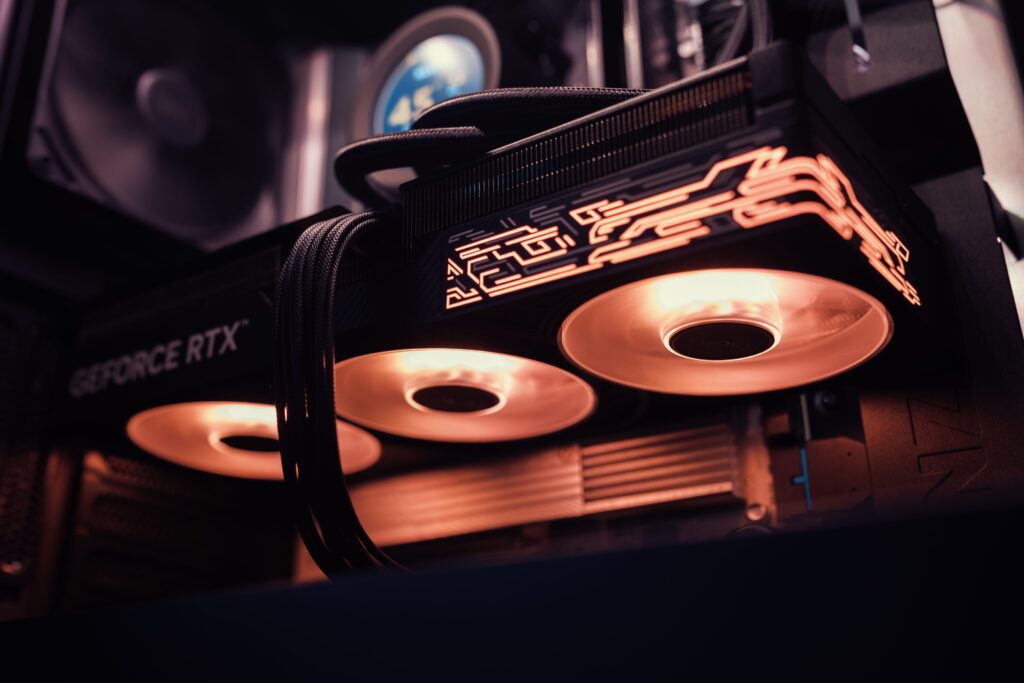
The Nvidia Price Hike is expected to affect systems using Nvidia’s Grace Blackwell technology.
Grace Blackwell is designed for demanding AI workloads and has become an important part of Nvidia’s data center strategy. These systems combine Nvidia’s computing technology with high-speed memory and networking components to support large AI applications.
The platform is aimed at organizations that need significant computing capacity for AI training and inference.
Because these systems are expensive and deployed at large scale, even a percentage-based increase can represent a substantial additional cost for a major data center project.
For example, a company ordering thousands of AI servers could face a significantly larger hardware bill if each system becomes more expensive.
Therefore, the impact of the Nvidia Price Hike will depend not only on the percentage increase but also on the size of each customer’s infrastructure plans.
Vera Rubin Adds Another Layer to the Story
The Nvidia Price Hike is also expected to affect systems based on Vera Rubin, Nvidia’s next-generation AI platform.
Vera Rubin is designed to support increasingly demanding AI workloads and represents another step in Nvidia’s effort to provide complete computing platforms for advanced AI infrastructure.
The timing is significant because companies are already planning their next wave of AI data center investments.
If hardware costs rise just as organizations begin ordering new systems, some companies could have to increase their capital budgets.
Nvidia Price Hike: Others may choose to delay projects, reduce initial capacity or negotiate different equipment configurations.
The actual impact will vary from company to company, but the pricing change adds another consideration to an already complicated AI infrastructure market.
Memory Has Become a Critical Part of AI Costs
The Nvidia Price Hike highlights how important memory has become to the AI industry.
Traditional computing systems also depend on memory, but modern AI accelerators require extremely high memory bandwidth to process large workloads efficiently.
High-bandwidth memory allows AI processors to access data rapidly. This is particularly important when training large models or running inference at scale.
At the same time, AI servers can contain enormous amounts of memory. That makes memory prices increasingly important when companies calculate the total cost of an AI data center.
Reports indicate that memory suppliers have gained significant pricing power as AI demand continues to rise.
This creates a difficult situation for server manufacturers.
Even if they want to keep system prices stable, higher component costs can make that increasingly difficult.
Big Technology Companies Could Feel the Impact
The Nvidia Price Hike is particularly important for large cloud and technology companies.
Microsoft, Google and Oracle are among the major companies building huge data center networks to support AI services. Server manufacturers supplying these operators have reportedly notified customers about upcoming price increases.
These companies operate at enormous scale.
Nvidia Price Hike: A relatively small increase in the cost of individual servers can become a significant expense when multiplied across thousands or even tens of thousands of systems.
However, large technology companies also have strong financial resources and may be able to absorb some of the additional costs.
They could also negotiate long-term supply agreements or adjust infrastructure plans to manage the increase.
Smaller AI companies may not have the same flexibility.
Smaller AI Firms Could Face Greater Pressure
The Nvidia Price Hike could create a bigger challenge for smaller cloud providers, AI startups and independent data center operators.
Large technology companies can spread infrastructure costs across massive businesses. Smaller companies often operate with tighter budgets and depend heavily on external financing.
Higher hardware prices could make it more expensive for these companies to expand computing capacity.
As a result, some smaller operators may look for alternative chip suppliers, lease computing capacity instead of purchasing equipment, or delay new data center projects.
This could gradually change the competitive landscape in the AI infrastructure market.
Nevertheless, Nvidia remains one of the most important suppliers of AI computing hardware, so replacing its technology is not necessarily a simple decision.
Can Customers Switch to Other AI Chips?
The Nvidia Price Hike could encourage some customers to consider alternatives from competitors such as AMD and other accelerator providers.
Normally, a significant price increase would make alternative products more attractive.
However, AI infrastructure decisions involve much more than the price of a processor.
Companies also consider software compatibility, developer tools, networking, performance, availability and existing infrastructure.
Nvidia has built a large software ecosystem around its AI hardware, which makes switching platforms more complicated for organizations already invested in its technology.
Moreover, competing AI accelerators also depend on advanced memory components, meaning a shortage in the broader memory market may affect alternative systems as well.
Therefore, customers may have limited options for avoiding the underlying cost pressure.
Data Center Budgets Are Under More Pressure
The Nvidia Price Hike arrives as data center developers are already dealing with several other challenges.
Building an AI data center requires much more than buying GPUs or AI accelerators.
Companies need land, electricity, cooling systems, networking equipment, buildings and specialized infrastructure. In many regions, obtaining enough power has become a significant challenge.
Higher interest rates and financing costs can also make large infrastructure projects more expensive.
Therefore, a 15% or greater increase in certain AI server prices could arrive at a difficult time for companies already managing rising construction and operating costs.
For some projects, the additional hardware expense could force companies to review their budgets.
Will AI Services Become More Expensive?
The Nvidia Price Hike could eventually influence the cost of AI services, although it is too early to say how much of the increase would reach consumers.
Cloud companies and AI service providers have several ways to respond to higher infrastructure costs.
They could absorb the expense, improve hardware utilization, negotiate better supplier terms or increase prices for certain services.
Competition could also limit how much companies are able to charge customers.
If several providers are competing for the same AI customers, raising prices too aggressively could cause users to move elsewhere.
Therefore, the effect on consumer prices will depend on the wider market rather than the Nvidia server increase alone.
AI Demand Remains Extremely Strong
The Nvidia Price Hike is happening because demand for AI infrastructure remains exceptionally strong.
Technology companies are investing heavily in generative AI, AI agents, enterprise automation and advanced computing.
The demand is not limited to a small group of companies. Governments, research institutions, financial firms, healthcare organizations and businesses across many industries are also exploring AI.
That broad demand is putting pressure on the entire technology supply chain.
At the same time, investors are watching whether the huge spending on AI infrastructure can eventually generate enough revenue to justify the investment.
Nvidia’s upcoming earnings report on August 26 will therefore receive significant attention from investors and the wider technology industry.
Nvidia’s Position Remains Strong
Despite the Nvidia Price Hike, Nvidia continues to occupy a powerful position in the AI hardware market.
Its processors are widely used by cloud providers, technology companies and research organizations.
The company is also expanding beyond individual chips by offering complete systems that combine computing, networking and software.
This strategy can make Nvidia an important partner for companies building large AI infrastructure projects.
However, the latest pricing pressure also shows that even a dominant company cannot completely escape broader supply-chain challenges.
Memory manufacturers have become increasingly important because their products are essential to modern AI systems.
Investors Will Watch Nvidia Closely
The Nvidia Price Hike comes just days before Nvidia’s quarterly earnings announcement, making the timing particularly interesting for investors.
The company is expected to face questions about AI demand, supply constraints, margins and future infrastructure spending.
Investors will likely want to know whether higher memory costs are being passed through to customers or whether Nvidia is absorbing part of the increase.
They may also examine whether higher system prices could affect demand.
At the moment, there is no clear evidence that customers are abandoning AI infrastructure plans because of the reported increases.
Instead, the broader trend continues to point toward strong demand for computing capacity.
What Happens Next?
The Nvidia Price Hike will likely be closely watched throughout the remainder of 2026 and into 2027.
The key question is whether memory prices remain elevated or begin to stabilize as manufacturers add capacity.
If supply improves, some of the pressure could eventually ease.
However, if AI demand continues growing faster than memory production, prices could remain under pressure.
Server manufacturers will also play an important role. They may look for ways to reduce costs through better system design, supply agreements and alternative components.
Meanwhile, cloud providers will need to balance infrastructure spending against customer demand and profitability.
What This Means for the AI Industry
The Nvidia Price Hike is a reminder that the AI revolution depends on a huge physical supply chain.
AI is often discussed in terms of software, algorithms and models. However, every major AI system ultimately requires physical hardware.
That hardware needs processors, memory, networking equipment, electricity and cooling.
When demand rises sharply in one part of the system, costs can increase elsewhere.
The latest development therefore provides a broader lesson for the industry: building AI at global scale requires not only powerful chips but also a reliable supply of the components surrounding them.
Conclusion
The Nvidia Price Hike could make AI servers more expensive for companies preparing to expand their data center capacity from early 2027.
The reported increases of more than 15% are mainly linked to rising memory costs and strong demand for AI infrastructure. Systems using Grace Blackwell and Vera Rubin technology are expected to be among those affected.
For large technology companies, the increase may be manageable, although it could still add billions of dollars to major infrastructure plans. Smaller companies may face tougher decisions as they balance hardware costs with the need to expand AI capacity.
At the same time, the situation shows how quickly the AI industry is changing. Demand remains strong, but the cost of building the infrastructure behind that demand is rising as well.
The coming months will reveal whether memory supply can catch up with demand and whether server prices stabilize. For now, companies planning AI investments will have to prepare for a more expensive and increasingly competitive hardware market.
Sources
- Reuters — reporting on Nvidia customers being notified about AI server price increases of more than 15%.
- Bloomberg/Fortune — reporting on the impact of rising memory costs on Nvidia AI server pricing.
- NDTV Profit — reporting on the planned price increases for Grace Blackwell and Vera Rubin systems.
- Tom’s Hardware — analysis of AI server pricing and the ongoing memory supply pressure.
