

Unitree IPO Draws 8,000 Times Demand in China’s Explosive Humanoid Robot Boom
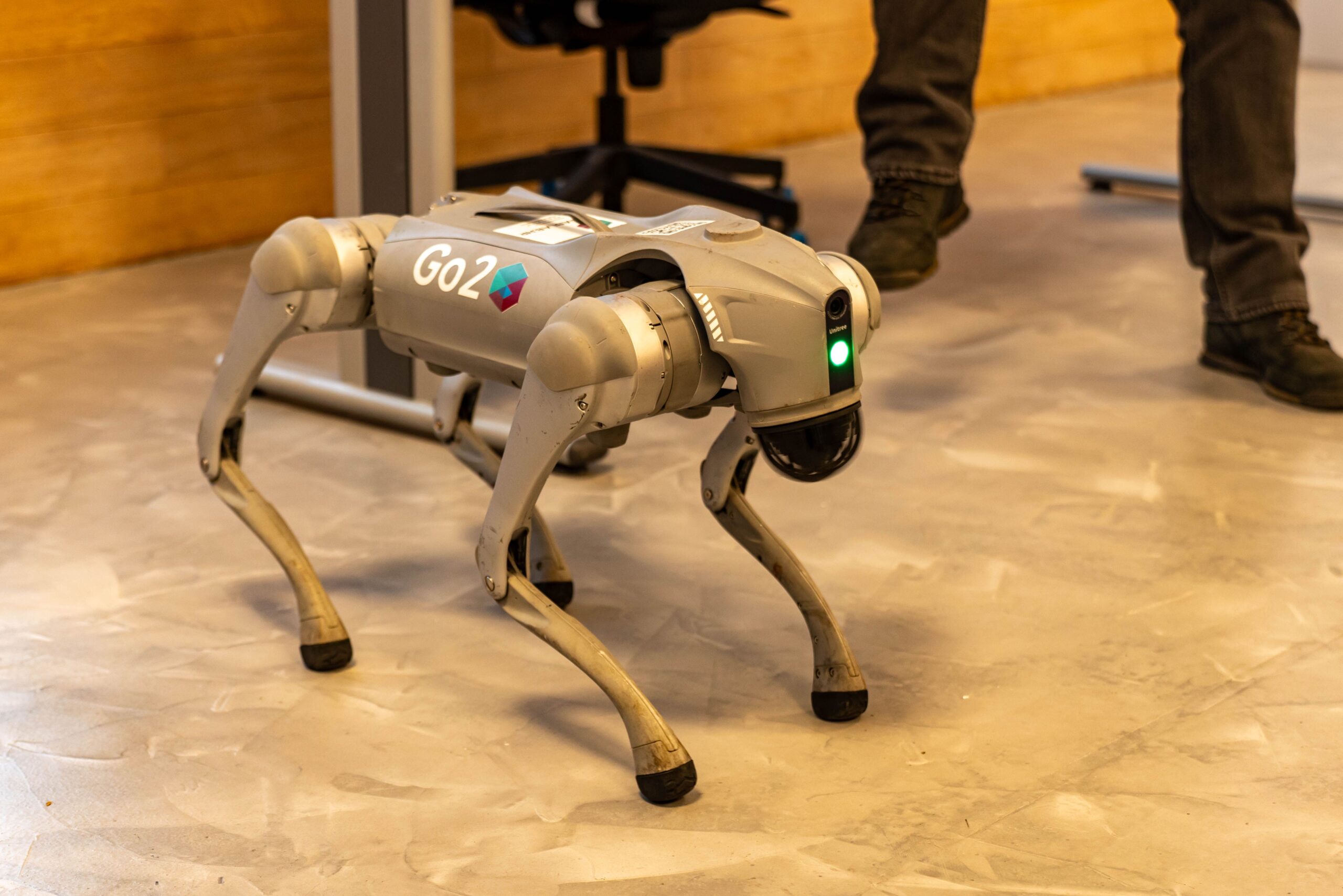
Unitree IPO Becomes a Major Robotics Market Story
The Unitree IPO has emerged as one of the most closely watched developments in China’s rapidly expanding humanoid robotics industry after investor demand reportedly reached an extraordinary level. The offering attracted orders worth roughly 8,000 times the shares available in some portions of the deal, highlighting the enormous enthusiasm surrounding companies developing robots designed to work alongside humans.
The extraordinary demand comes at a time when China is aggressively positioning itself as a global leader in robotics. Humanoid robots have moved from science-fiction concepts into a serious industrial technology sector, with companies competing to develop machines capable of walking, carrying objects, performing repetitive tasks and eventually operating in factories, warehouses, offices and homes.
Unitree Robotics has gained attention because of its focus on relatively affordable humanoid and quadruped robots. Unlike some robotics companies that primarily target research laboratories or highly specialized industrial applications, Unitree has attempted to create machines that can be demonstrated in real-world environments while keeping costs comparatively low.
The Unitree IPO therefore represents more than a fundraising event. It provides investors with an opportunity to participate in one of China’s most aggressively promoted technology themes. The enthusiasm surrounding the offering also reflects expectations that humanoid robots could become one of the next major growth industries alongside artificial intelligence, electric vehicles and advanced manufacturing.
Investor Demand Reaches Extraordinary Levels
The Unitree IPO demand figure has attracted particular attention because an 8,000-times oversubscription is an exceptionally high level for a public offering. Such demand means investors placed orders far exceeding the number of shares available through the relevant portion of the offering.
However, extremely high subscription numbers do not necessarily mean that every investor will receive a meaningful allocation. When demand dramatically exceeds supply, shares are typically distributed through allocation mechanisms that can leave individual investors with only a small portion of what they requested.
The Unitree IPO has consequently become a symbol of the current appetite for Chinese technology stocks. Retail investors in particular have shown strong interest in companies connected with artificial intelligence, robotics, semiconductors and other emerging technologies.
The enthusiasm is understandable. Humanoid robots have become a major focus for technology companies and governments because they could eventually automate tasks that are difficult or expensive to perform with traditional machines.
Furthermore, China already possesses a large manufacturing ecosystem capable of producing motors, batteries, sensors, processors, actuators and other components required for advanced robots. This existing industrial base could provide Chinese robotics companies with an important advantage as the industry develops.
Why Humanoid Robots Are Suddenly So Popular
The Unitree IPO is taking place against the backdrop of a much broader humanoid robot boom. Companies around the world are investing heavily in machines capable of moving through human environments rather than operating only on fixed production lines.
Traditional industrial robots are extremely effective in controlled environments. They can weld, paint, assemble and move products with remarkable precision. However, they generally require factories to be designed around their movements.
Humanoid robots are intended to work differently. Their human-like shape could allow them to use existing tools, navigate buildings designed for people and perform tasks without requiring major changes to infrastructure.
For example, a humanoid robot could potentially move boxes, inspect equipment, deliver materials or perform repetitive assembly work. In the long term, developers hope that such systems could become capable of more complicated tasks using advances in artificial intelligence.
The Unitree IPO has gained momentum partly because investors see the possibility of combining robotics hardware with rapidly improving AI models. A robot equipped with better perception, reasoning and motion-control systems could potentially perform a much wider range of tasks than earlier generations of machines.
Nevertheless, the technology remains in its early stages. Many demonstrations that attract public attention involve carefully controlled environments, and commercial deployment at large scale remains challenging.
Unitree’s Position in China’s Robotics Race
Unitree Robotics has built its reputation through robots such as quadruped machines and humanoid platforms. Its products have appeared in demonstrations involving walking, running, dancing, carrying objects and interacting with people.
The company has also attracted attention because of its efforts to bring advanced robots to a wider market. Pricing is an important part of that strategy. If humanoid robots become substantially cheaper to manufacture, businesses may be more willing to experiment with them.
The Unitree IPO could provide the company with additional capital to expand research, production capacity, marketing and commercial deployment. More funding could also help Unitree compete against larger robotics companies with substantial financial resources.
Meanwhile, Chinese policymakers have identified humanoid robotics as an important emerging industry. Government support for robotics research, manufacturing infrastructure and supply chains could help companies accelerate commercialization.
China’s enormous manufacturing sector also creates a potentially important domestic market. Factories are already familiar with automation, meaning businesses may be more prepared to adopt new robotic systems when the technology becomes reliable enough.
The Role of Artificial Intelligence
Artificial intelligence is perhaps the most important factor behind the latest humanoid robot enthusiasm. Hardware alone cannot make a humanoid robot genuinely useful. The machine needs software that allows it to understand its surroundings, recognize objects, plan movements and respond appropriately to changing situations.
The Unitree IPO is therefore closely connected to the broader AI investment story. Investors are increasingly interested in physical AI, a term used to describe AI systems that interact with the physical world through robots and machines.
Unlike software applications that operate on computers or smartphones, physical AI has to deal with real-world uncertainty. Floors can be uneven, objects can move unexpectedly and people can behave unpredictably. Robots must therefore combine perception, decision-making and physical control.
Advances in machine learning could eventually allow robots to learn from enormous quantities of video and sensor data. Instead of programming every individual movement manually, developers could train robots to understand tasks and adapt to new situations.
As a result, the Unitree IPO has attracted attention from investors who believe robotics could become the next major application area for AI.
Extraordinary Valuations Also Bring Risks
Despite the excitement, the Unitree IPO also highlights an important warning for investors. Extremely high demand can sometimes push valuations to levels that are difficult to justify using current business performance.
Humanoid robotics is still a developing industry. Many companies are spending heavily on research and development, while commercial revenues remain relatively small compared with the long-term expectations surrounding the sector.
Investors must therefore distinguish between technological potential and current financial performance. A company can have impressive robots while still facing years of losses before reaching sustainable profitability.
The Unitree IPO may attract speculative interest because robotics is currently considered one of China’s hottest technology themes. If investor sentiment changes, however, companies associated with the sector could experience significant price volatility.
Moreover, competition is increasing rapidly. Chinese robotics companies are not operating alone. International firms are also developing humanoid machines, while major technology companies are investing in AI systems that could eventually control robots.
China Wants to Lead the Humanoid Robot Industry
China’s interest in humanoid robots extends beyond individual companies. Policymakers increasingly view advanced robotics as a strategic industry that could support manufacturing modernization and economic growth.
The country already dominates several parts of the global manufacturing supply chain. If Chinese companies can combine that manufacturing strength with AI and robotics expertise, they could potentially produce humanoid robots at lower costs than competitors.
The Unitree IPO arrives at an important moment in this development. Public-market access could provide the company with greater visibility and additional resources while giving investors a direct way to participate in the robotics theme.
At the same time, the government’s focus on automation reflects demographic and economic pressures. An aging population and rising labor costs could encourage businesses to explore robots for repetitive or physically demanding jobs.
Humanoid machines could eventually help fill some of these gaps. However, widespread adoption will depend on whether robots can become reliable, safe and economically competitive.
What Could Drive Future Growth?
Several factors could determine whether the Unitree IPO becomes an early milestone in a much larger robotics industry.
The first is cost. Humanoid robots must become affordable enough for businesses to purchase them at scale. Expensive machines may remain limited to research facilities and specialized industrial applications.
The second factor is reliability. A robot that performs perfectly during a demonstration but requires frequent repairs will have limited commercial value. Businesses need machines that can operate consistently for long periods.
The third is AI capability. Better AI models could dramatically expand what robots can do. Improvements in vision, language understanding, motion planning and autonomous learning could make humanoid machines much more useful.
The fourth is safety. Robots designed to work around people must respond predictably and safely. Regulatory standards will therefore become increasingly important as commercial deployment expands.
The Unitree IPO could benefit from progress in all of these areas. If costs decline while capabilities improve, demand for humanoid robots could grow substantially over the next decade.
Investors Should Watch the Bigger Picture
The Unitree IPO may be attracting extraordinary attention, but investors should avoid viewing the subscription figure as proof that the entire robotics industry will immediately become profitable.
Stock-market enthusiasm can move faster than technological development. Building commercially successful humanoid robots requires years of engineering, manufacturing improvements and customer testing.
Nevertheless, the strong response demonstrates that investors believe the potential market is enormous. The combination of AI, automation and robotics has created a powerful investment narrative that is attracting capital from both private and public markets.
The Unitree IPO also illustrates how quickly investor sentiment can shift toward emerging technologies. Only a few years ago, humanoid robots were largely viewed as futuristic research projects. Today, they are increasingly discussed as potential commercial products.
This transition could accelerate if early deployments prove successful. Factories, logistics companies and other businesses may gradually increase adoption once robots demonstrate measurable improvements in productivity.
A New Chapter for China’s Robotics Industry
The Unitree IPO marks an important moment for China’s robotics sector because it connects a fast-growing technology trend with the public markets. The huge oversubscription figure shows how strongly investors are responding to the possibility of a humanoid robot revolution.
However, the real test begins after the excitement surrounding the offering. Unitree and its competitors will need to prove that humanoid robots can move beyond demonstrations and become dependable commercial products.
The Unitree IPO could ultimately be remembered as an early sign of a much larger transformation in the global robotics market. If humanoid machines become affordable, capable and reliable, they could reshape manufacturing and other industries.
For now, investors are watching closely. The extraordinary demand demonstrates confidence, but it also raises expectations. Companies operating in the sector will have to deliver technological progress and financial results to justify the enthusiasm.
The Unitree IPO has therefore become a powerful example of how artificial intelligence and robotics are converging. China’s manufacturing strength, government support and growing AI capabilities could give its robotics companies significant opportunities in the years ahead.
Ultimately, the success of the sector will not be measured by oversubscription numbers alone. It will depend on whether robots can solve real business problems at a competitive cost. If they can, today’s extraordinary investor enthusiasm could prove to be the beginning of a major industrial transformation.
Apple All-glass IPhone Cancellation Sparks Alarming Wall Street Fears
