

OpenAI Business Revenue Surges as Enterprise Demand Overtakes Consumer Sales
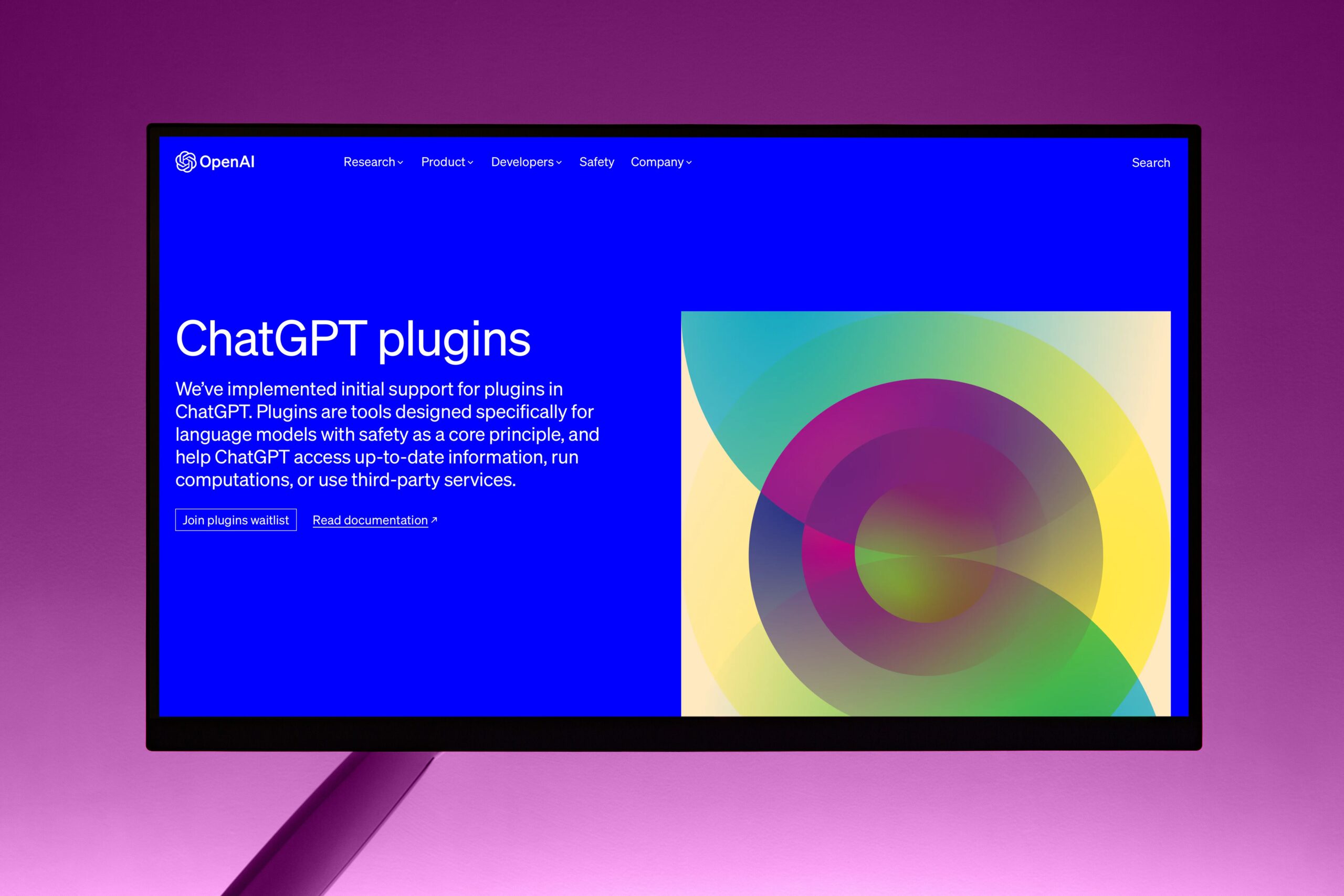
OpenAI Business Revenue Reaches a Major Milestone
OpenAI is reaching an important stage in its commercial development as its enterprise business becomes a larger source of income than its consumer business, according to the report you referenced. The shift is significant because ChatGPT originally became famous primarily as a consumer product, attracting millions of people who used it for writing, research, coding, education and everyday questions. Now, however, businesses are becoming increasingly important to the company’s financial future.
The rise of OpenAI business revenue reflects a broader transformation in the artificial intelligence market. Companies are no longer simply experimenting with chatbots. Instead, many organizations are integrating AI into software development, customer service, research, data analysis and other workplace activities. As a result, corporate customers can generate substantially more revenue than individual users because organizations may purchase AI access for hundreds or thousands of employees.
Enterprise Demand Is Growing Quickly
OpenAI has been working aggressively to expand its presence among corporate customers. Earlier reporting from The Information said the company expected about 50% of its revenue to come from enterprise customers by the end of 2026, compared with around 40% at the beginning of the year. (The Information)
That earlier expectation helps explain why the latest development is noteworthy. If the enterprise side has now moved beyond the consumer business, the company has reached the milestone faster than previously anticipated. OpenAI business revenue is therefore becoming central to the company’s strategy rather than remaining a secondary source of income.
The change also demonstrates how quickly corporate AI adoption is developing. Businesses that initially tested ChatGPT on a limited basis are increasingly exploring company-wide deployments. Furthermore, developers are using OpenAI’s application programming interfaces to build AI features directly into their own software.
From ChatGPT Popularity to Corporate Adoption
ChatGPT remains one of the best-known AI products in the world. Its consumer popularity gave OpenAI an enormous advantage because millions of people became familiar with the company’s technology before many businesses began adopting it formally.
That consumer familiarity can now help support OpenAI business revenue. Employees who already know how to use ChatGPT may encourage their employers to purchase business plans or introduce AI tools into workplace systems. In this way, consumer adoption can become a pathway into enterprise sales.
The strategy is somewhat similar to the way other major technology companies have grown. Individual users may begin using a product independently, and organizations later decide to purchase larger enterprise packages because employees are already familiar with the technology.
Why Enterprise Customers Matter
Enterprise customers can be particularly valuable because their contracts may involve larger and more predictable spending. A single large organization can purchase access for thousands of employees, while developers can generate additional revenue through API usage.
This makes OpenAI business revenue potentially more stable than depending entirely on individual subscriptions. Businesses may also increase their spending after discovering additional use cases. For example, a company could initially deploy ChatGPT for employees before expanding into coding assistance, internal research, customer service and automated workflows.
However, enterprise customers also have higher expectations. They generally require strong security, administrative controls, privacy protections and dependable performance. Consequently, OpenAI must continue investing in infrastructure and enterprise-focused products while competing for major corporate contracts.
The API Is an Important Revenue Channel
OpenAI’s business does not depend only on ChatGPT subscriptions. The company’s API allows developers and organizations to integrate its AI models into their own applications and services.
That means OpenAI business revenue can grow even when customers do not directly use the ChatGPT website or application. A company might build an AI-powered customer support system, coding platform or research application using OpenAI models behind the scenes.
The Information reported that OpenAI’s API sales had been growing rapidly, with CEO Sam Altman previously saying the company had added $1 billion in annualized revenue from API sales within a month. (The Information)
This illustrates why the enterprise market has become so important. The more businesses build AI into their daily operations, the more opportunities OpenAI has to earn revenue from model usage.
AI Coding Is Driving Corporate Demand
Coding has emerged as one of the strongest business applications for generative AI. Developers can use AI models to generate code, identify errors, explain unfamiliar software and complete repetitive programming tasks.
The growing importance of coding tools could provide another major boost to OpenAI business revenue. OpenAI has invested heavily in products such as Codex, while competitors have also targeted software developers with specialized AI tools.
For businesses, coding assistants can be attractive because productivity improvements may be easier to measure than benefits from more general chatbot use. If developers can complete certain tasks faster, companies may be more willing to pay for expanded AI access.
At the same time, competition in AI coding is intense. Anthropic has gained considerable attention in this area, putting additional pressure on OpenAI to maintain strong performance and customer satisfaction.
OpenAI Faces Strong Enterprise Competition
The rise of OpenAI business revenue is taking place during an increasingly competitive period for the AI industry. Anthropic, Google and Microsoft are all pursuing corporate customers with their own AI products and services.
The Information has reported that OpenAI has been making a stronger push to attract businesses from Anthropic. The company has been working to present itself as a broader technology provider rather than simply a consumer chatbot company. (The Information)
That shift is important because enterprise customers often make purchasing decisions based on more than model performance. They can also consider security, integration, pricing, support and the reliability of the provider.
Therefore, OpenAI needs to offer a complete business ecosystem if it wants to continue increasing its corporate share.
The Enterprise Push Could Change OpenAI’s Image
For years, the public image of OpenAI was closely associated with ChatGPT. That image remains powerful, but the company increasingly wants customers and investors to view it as a major enterprise technology provider.
The expansion of OpenAI business revenue could help reinforce that transformation. If corporations become the company’s largest source of revenue, OpenAI’s identity will increasingly be linked to business software, APIs and workplace automation.
That could also influence how investors assess the company. Enterprise software businesses are often valued partly on recurring revenue, customer retention and long-term contracts. Those factors can provide a different financial profile from a company that relies mainly on individual subscriptions.
Revenue Growth Has Come With Heavy Costs
Although revenue growth is impressive, OpenAI faces another major challenge: the cost of developing and operating advanced AI systems.
Training powerful models requires enormous computing resources. Running those models for millions of users also requires large data centers, specialized processors and significant amounts of electricity.
Therefore, OpenAI business revenue must eventually be considered alongside infrastructure and research expenses. Rapid sales growth does not automatically mean strong profits.
The Information has reported that OpenAI expects substantial cash spending through the end of the decade as it invests in computing capacity, model development and new business lines. (The Information)
This means investors will likely pay close attention to margins as well as revenue.
Enterprise Growth Could Improve Predictability
One potential advantage of enterprise customers is that they may provide more predictable spending than individual users. Large organizations often sign contracts, establish annual technology budgets and expand successful deployments.
That could make OpenAI business revenue an increasingly dependable part of the company’s financial structure.
For example, an organization might begin by purchasing access for a few hundred workers. If the technology proves useful, the company could expand access to thousands of employees and add additional AI products.
Such expansion can create a strong relationship between OpenAI and its customers. Nevertheless, large organizations can also negotiate aggressively on pricing and may demand discounts for major commitments.
AI Agents Could Create a New Market
The next major opportunity may come from AI agents that can perform multi-step tasks rather than simply answer questions.
OpenAI and its competitors are developing systems that can interact with tools, work with files, perform research and assist with complicated workflows. If businesses adopt these systems widely, they could become a significant source of future OpenAI business revenue.
The potential market is much larger than simple chatbot subscriptions. An AI agent could potentially assist with customer support, software development, sales operations, research or administrative tasks.
However, businesses will likely demand strong safeguards before allowing AI agents to perform important actions. OpenAI will therefore need to balance automation with reliability, oversight and security.
Consumer Revenue Still Matters
The shift toward enterprise customers should not be interpreted as the end of OpenAI’s consumer strategy.
ChatGPT remains a major consumer platform, and its enormous user base provides OpenAI with brand recognition that few competitors can match. The consumer business can also introduce new users to OpenAI’s technology before they encounter it professionally.
That means OpenAI business revenue can grow alongside the consumer business rather than replacing it completely.
In fact, the two segments can support each other. A person may discover ChatGPT at home, become comfortable with it and later encourage an employer to adopt an enterprise plan. This creates a natural connection between consumer popularity and corporate adoption.
The Company Is Building a Broader Business Model
OpenAI has increasingly diversified beyond basic chatbot subscriptions. Its business model includes consumer subscriptions, enterprise products, APIs and newer opportunities such as advertising and commerce.
The company’s own business strategy describes several revenue channels, showing that OpenAI is attempting to build an ecosystem around AI rather than relying on a single product. (The Information)
This broader strategy could make OpenAI business revenue more resilient over time.
If one revenue source slows, another could potentially compensate. However, diversification also increases operational complexity because each market has different customers, pricing models and competitive pressures.
The IPO Question Adds More Pressure
The growth of enterprise sales could become particularly important if OpenAI continues preparing for a future public listing.
Public-market investors typically examine revenue quality, customer growth, profitability and cash generation. A strong enterprise business could demonstrate that OpenAI has developed recurring commercial relationships beyond its consumer audience.
Therefore, OpenAI business revenue may become an important metric for investors evaluating the company’s long-term financial potential.
Reuters previously reported that OpenAI had been laying groundwork for a possible IPO, although the timing and structure remained subject to change. (Reuters)
A future public offering would bring significantly greater financial scrutiny, making the company’s enterprise growth and spending levels even more important.
What the Shift Means for Investors
For investors, the rise of OpenAI business revenue offers both opportunities and questions.
On the positive side, stronger enterprise adoption could provide larger contracts, recurring income and deeper customer relationships. It could also demonstrate that businesses see measurable value in AI technology.
On the other hand, investors will need to determine whether those revenues can eventually produce attractive margins.
AI infrastructure is expensive, and OpenAI continues to invest heavily in computing capacity. Consequently, revenue growth will need to outpace cost growth over time if the company wants to build a highly profitable business.
OpenAI’s Relationship With Large Technology Companies
OpenAI’s enterprise expansion is also connected to its relationships with major technology companies.
Microsoft remains a major partner, while OpenAI has also established relationships involving cloud computing, chips and data-center infrastructure. These partnerships provide access to the resources necessary to support increasing AI demand.
Such relationships can help OpenAI business revenue grow because the company can scale its products without having to build every part of its infrastructure independently.
Nevertheless, dependence on major infrastructure partners can create its own risks. Changes in pricing, capacity or strategic priorities could affect OpenAI’s operating costs and flexibility.
The Importance of Customer Retention
Winning enterprise customers is only the first step. Keeping them is arguably even more important.
Businesses that integrate AI deeply into their workflows may become valuable long-term customers. However, if competing models offer better performance or lower prices, companies may use several providers or shift spending elsewhere.
Therefore, OpenAI business revenue will depend not only on new customer acquisition but also on retention and expansion.
OpenAI’s ability to continuously improve its models and enterprise products will likely determine whether corporate customers increase their spending over time.
Competition From Anthropic
Anthropic has become a particularly important competitor in the enterprise market.
The Information has reported that Anthropic has developed strong traction among business customers, particularly through Claude Code and workplace automation products. (The Information)
That competition makes the growth of OpenAI business revenue even more significant. OpenAI needs to demonstrate that it can compete effectively for corporate budgets while preserving the consumer leadership that helped build its brand.
The competition could ultimately benefit businesses because companies will have more choices and stronger incentives to offer useful products at competitive prices.
AI Adoption Could Continue Expanding
The long-term opportunity remains substantial.
Many businesses are still in the early stages of determining how AI can be incorporated into their operations. As employees become more familiar with AI tools, organizations may move from experimentation toward larger deployments.
That could provide additional opportunities for OpenAI business revenue in areas such as software development, customer service, research, marketing and workflow automation.
However, adoption will not happen at the same speed in every industry. Some sectors face stricter regulatory requirements, while others may have more complicated technology systems.
OpenAI will therefore need to adapt its products to different business environments.
What Comes Next
The next few quarters should provide more evidence about the durability of the enterprise shift.
Investors will likely watch customer numbers, contract sizes, API usage, enterprise subscriptions and overall revenue growth. They will also pay attention to the company’s infrastructure expenses and cash requirements.
The performance of OpenAI business revenue could become one of the clearest indicators of whether OpenAI is successfully transforming itself from a consumer-focused AI company into a broader technology platform.
At the same time, consumer growth should not be ignored. ChatGPT’s enormous audience remains an important competitive advantage and could continue feeding enterprise adoption.
A Broader Change in the AI Industry
OpenAI’s changing revenue mix reflects a wider development across the AI sector.
Generative AI initially gained attention because ordinary people could interact with sophisticated technology through simple chat interfaces. Now, businesses are becoming increasingly interested in embedding AI directly into their operations.
That transition means OpenAI business revenue is part of a much larger movement toward enterprise AI adoption.
The companies that ultimately succeed may not necessarily be those with the largest number of users. Instead, long-term winners could be companies that combine strong technology, reliable infrastructure, customer trust and sustainable economics.
OpenAI is attempting to position itself across all of those areas.
Conclusion
The rise of OpenAI business revenue marks an important moment in the company’s development. OpenAI became globally recognized through ChatGPT’s consumer popularity, but enterprise customers are now playing an increasingly important role in its financial future.
The shift shows that businesses are moving beyond simple AI experimentation and exploring more practical applications, including coding, research, customer service and workflow automation. At the same time, OpenAI faces strong competition from Anthropic, Google and other technology companies that are also pursuing corporate customers.
The growth of OpenAI business revenue could provide OpenAI with larger contracts and deeper relationships, but revenue alone will not determine the company’s long-term success. Infrastructure costs, computing requirements, customer retention and profitability will remain important considerations.
Ultimately, the changing balance between consumer and enterprise demand should be viewed as part of the natural evolution of the AI market. Different companies and customers will continue to adopt artificial intelligence at different speeds, and the industry is still developing rapidly.
For OpenAI, the latest enterprise milestone offers a positive indication that its technology is becoming increasingly useful in professional environments. However, the company still has significant work ahead as it seeks to build a sustainable business while continuing to innovate.
As AI adoption expands, a balanced approach that recognizes both the opportunities and challenges of the technology can help businesses and investors make more informed decisions. The next phase of OpenAI’s story will likely depend on how effectively it converts growing corporate interest into lasting value while continuing to serve its enormous consumer audience.
Anthropic IPO Valuation: Bold $200 Billion Revenue Forecast Shapes Massive 2028 Bet
Sources
- The Information — reporting on OpenAI’s enterprise strategy, CFO Sarah Friar’s expectation that about 50% of revenue could come from enterprise customers, and the company’s efforts to compete more strongly for business customers. (The Information)
- The Information — reporting on OpenAI’s financial forecasts, revenue expectations and substantial future computing expenditure. (The Information)
- Reuters — reporting on OpenAI’s potential IPO preparations and the company’s broader financial plans. (Reuters)
- OpenAI — information about the company’s broader business model and revenue channels. (The Information)
