

Intel $20 Billion Share Sale: Chip Giant Raises Fresh Capital for AI Expansion
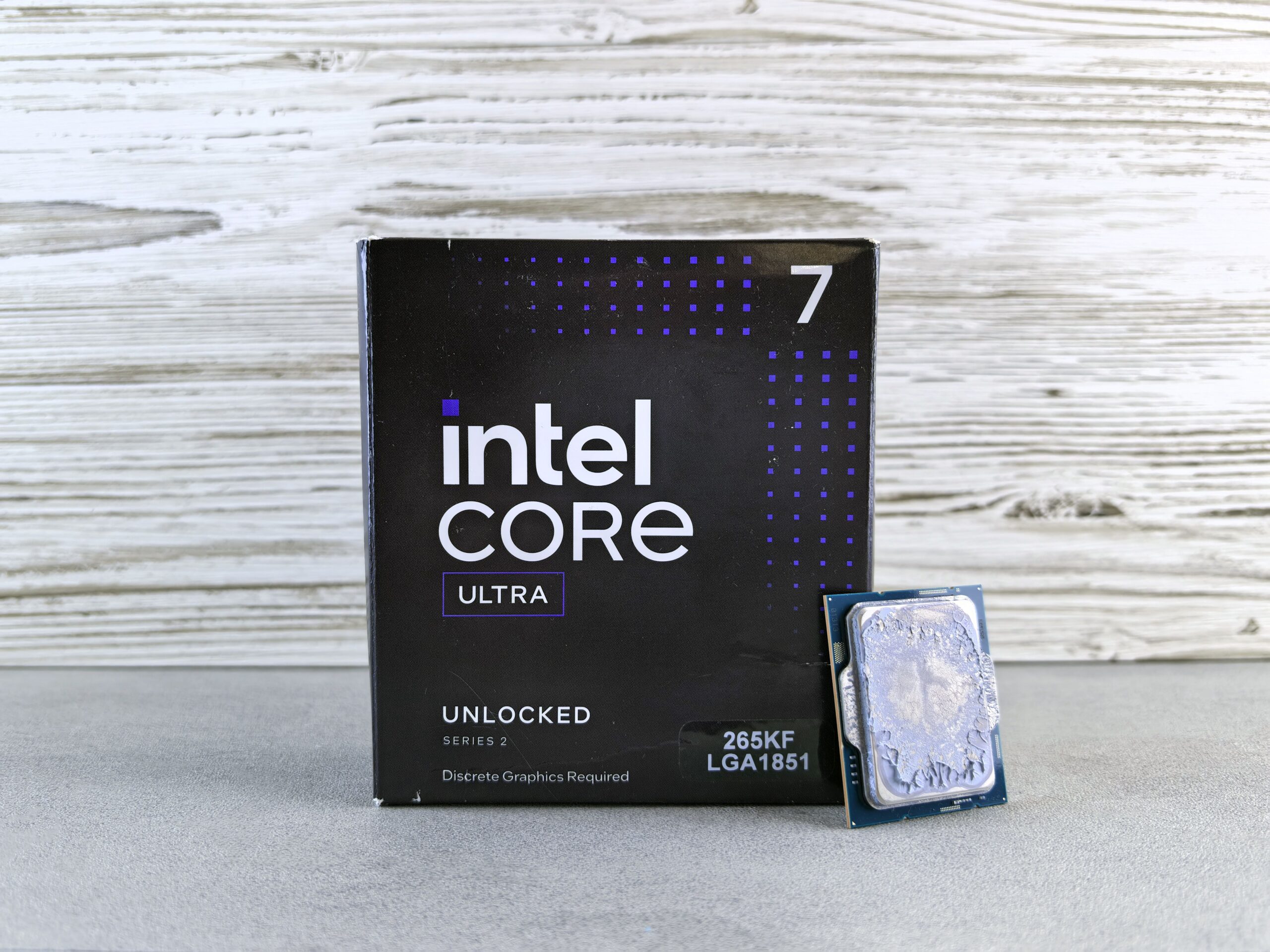
Intel Raises $20 Billion in Major Stock Offering
Intel has raised $20 billion through an expanded stock offering, giving the struggling chipmaker a major new source of capital as it works to strengthen its position in artificial intelligence and advanced semiconductor manufacturing.
The Intel $20 Billion Share Sale was significantly larger than the company’s original plan to raise $15 billion. Strong demand from investors allowed Intel to increase the size of the offering while its stock was trading near multi-year highs.
The company priced the new shares at $95 each. According to Reuters, that represented a modest discount to Intel’s previous closing price and allowed the company to raise approximately $20 billion before transaction-related costs.
The fundraising represents an important moment for Intel because the company needs enormous amounts of capital to compete in an industry increasingly dominated by artificial intelligence.
Why Intel Needs So Much Capital
The Intel $20 Billion Share Sale comes as Intel is spending heavily to rebuild its semiconductor manufacturing capabilities.
For years, Intel was one of the world’s most powerful chip companies. However, delays in advanced manufacturing and increasing competition from companies such as Nvidia, AMD and Taiwan Semiconductor Manufacturing Co. weakened its position.
Intel is now attempting to change that situation by becoming a major contract chip manufacturer.
That strategy requires expensive factories, advanced equipment, research and development, and sophisticated packaging technologies.
Furthermore, artificial intelligence has created a huge new source of semiconductor demand.
Intel wants to ensure that it has enough financial resources to participate in that growth.
AI Is Changing the Semiconductor Industry
The Intel $20 Billion Share Sale reflects how quickly artificial intelligence has transformed the global semiconductor industry.
AI applications require enormous amounts of computing power.
Data centers need advanced processors, accelerators and networking technologies to train and operate increasingly sophisticated AI systems.
Nvidia currently dominates the market for AI accelerators, while other companies are investing heavily to challenge that leadership.
Intel’s opportunity is different.
Rather than relying entirely on selling its own AI accelerators, the company is seeking to become a manufacturer for other chip designers through its foundry business.
That strategy could allow Intel to benefit from AI demand even when another company designs the final chip.
Intel’s Foundry Ambition
The Intel $20 Billion Share Sale gives the company additional financial flexibility as it develops Intel Foundry.
The foundry business is intended to manufacture chips designed by outside customers.
This model is similar to the business operated by TSMC, which manufactures chips for some of the world’s biggest technology companies.
Building a competitive foundry business is extremely expensive.
Customers require advanced manufacturing processes, reliable production and strong quality control.
Intel therefore needs to invest years ahead of actual production demand.
The company has been spending heavily on new manufacturing facilities and advanced process technology.
If those investments succeed, the foundry business could become one of Intel’s most important long-term growth opportunities.
Strong Investor Demand Helps Intel
The Intel $20 Billion Share Sale was expanded after investors showed strong interest in purchasing the company’s stock.
Intel had initially announced a $15 billion offering.
However, the company ultimately increased the deal to $20 billion.
That decision was helped by a dramatic recovery in Intel’s share price.
Reuters reported that Intel shares had nearly tripled during 2026, outperforming several major semiconductor stocks.
The rally gave Intel an opportunity to raise more money without issuing shares at the much lower prices seen during earlier periods of the company’s turnaround.
For management, timing was therefore particularly important.
Stock Rally Gives Intel More Options
The Intel $20 Billion Share Sale demonstrates how a stronger stock price can give companies greater access to capital markets.
When a company’s shares rise, it can issue fewer shares to raise the same amount of money.
That can reduce the relative dilution experienced by existing shareholders.
Intel still faces dilution because new shares increase the total number of shares outstanding.
However, raising money after a major stock-price recovery can be more attractive than raising the same amount during a market downturn.
The company is effectively using improved investor confidence to strengthen its balance sheet.
Nevertheless, investors will expect Intel to use the new capital carefully.
Where the Money Could Go
The Intel $20 Billion Share Sale is expected to support general corporate purposes, including capital expenditures and working capital.
Intel has already increased its expected 2026 capital spending.
The company recently raised its capital expenditure forecast from approximately $18 billion to $20 billion as demand connected with AI and other emerging technologies increased.
That spending can cover new manufacturing capacity, advanced packaging and other infrastructure.
Intel is also expanding its manufacturing footprint in Europe.
The company recently announced plans for a €5 billion expansion at its Ireland operations, further demonstrating the scale of its manufacturing ambitions.
Advanced Packaging Is Becoming Critical
The Intel $20 Billion Share Sale could also support Intel’s efforts in advanced semiconductor packaging.
Modern AI systems increasingly depend on combining multiple chips or chip components into sophisticated packages.
Packaging technology can improve performance, power efficiency and the ability to connect processors and memory.
This has become a major competitive area for semiconductor manufacturers.
Intel has invested heavily in advanced packaging capabilities as part of its effort to attract external customers.
If successful, the company could offer customers a broader manufacturing service that covers both chip production and advanced packaging.
Intel’s 14A Process Is Another Opportunity
The Intel $20 Billion Share Sale comes as Intel prepares for the next generation of its manufacturing technology.
Intel’s 14A process is expected to enter mass production in 2028.
Reuters reported that Tesla has been confirmed as a customer, while Apple has also shown potential interest in the technology.
External customers are particularly important to Intel’s foundry strategy.
The company has previously emphasized that it wants clear customer demand before committing to major new manufacturing investments.
If more major technology companies adopt Intel’s advanced process technology, the foundry business could become significantly more valuable.
Nvidia and Intel Are Now Connected
The Intel $20 Billion Share Sale also follows a major strategic shift in Intel’s relationship with Nvidia.
In 2025, Nvidia agreed to invest $5 billion in Intel.
The two companies announced plans to collaborate on products combining Nvidia’s accelerated computing technology with Intel’s processors.
The agreement demonstrated how dramatically the semiconductor industry has changed.
Intel and Nvidia were once positioned very differently in the computing market.
Today, Nvidia is the dominant force in AI acceleration, while Intel is working to rebuild its position across CPUs, data centers and manufacturing.
The relationship gives Intel access to Nvidia’s ecosystem while providing Nvidia with additional opportunities around Intel’s x86 technology.
SoftBank Has Also Invested
The Intel $20 Billion Share Sale follows other major investments that have strengthened Intel’s financial position.
SoftBank Group agreed in 2025 to invest $2 billion in Intel common stock.
SoftBank said the investment reflected its belief in advanced semiconductor manufacturing and the importance of expanding semiconductor supply in the United States.
These investments show that Intel’s turnaround is attracting support from major technology and investment companies.
However, external capital does not guarantee success.
Intel still needs to execute its manufacturing strategy and demonstrate that customers are willing to use its factories.
The U.S. Wants More Domestic Chip Production
The Intel $20 Billion Share Sale also fits into the broader U.S. effort to strengthen domestic semiconductor manufacturing.
The United States has become increasingly concerned about its dependence on overseas chip production.
Advanced semiconductors are critical to artificial intelligence, defense systems, telecommunications and consumer electronics.
Intel is one of the few American companies with the scale and expertise required to operate advanced semiconductor manufacturing facilities.
That gives the company strategic importance beyond its commercial performance.
Government support has therefore played an important role in Intel’s manufacturing plans.
Competition Remains Intense
The Intel $20 Billion Share Sale does not eliminate the competitive challenges facing the company.
TSMC remains the world’s leading contract chip manufacturer.
Samsung is also investing heavily in advanced semiconductor production.
Meanwhile, Nvidia continues to dominate AI accelerator sales, while AMD is competing aggressively in both data-center and consumer processors.
Intel must therefore compete on several fronts simultaneously.
Its advantage is that it controls a broad semiconductor ecosystem, including CPUs, manufacturing technology, packaging and software.
However, competitors have stronger positions in several individual categories.
The new capital gives Intel more resources, but execution will determine whether those resources produce meaningful returns.
Shareholder Dilution Is a Concern
The Intel $20 Billion Share Sale also creates an important issue for existing shareholders.
When a company issues new shares, ownership becomes spread across a larger number of shares.
That means existing shareholders experience dilution unless the company’s value increases sufficiently to offset the additional shares.
Investors therefore want to know whether Intel can generate enough growth from the new capital.
If the company’s investments produce higher revenue and stronger profits, dilution could become less concerning over time.
If spending increases without generating sufficient returns, shareholders may become more critical of management’s strategy.
Intel’s Turnaround Is Still a Work in Progress
The Intel $20 Billion Share Sale provides Intel with additional financial strength, but it does not solve every problem.
The company still needs to improve manufacturing efficiency.
It must also deliver new products on schedule and win additional external foundry customers.
Furthermore, Intel needs to control costs while investing billions of dollars in future technologies.
That balance will be difficult.
Investing too little could leave Intel behind its competitors.
Investing too much without sufficient customer commitments could put pressure on profitability and cash flow.
Management therefore faces a complicated capital-allocation challenge.
AI Demand Could Change Intel’s Future
The Intel $20 Billion Share Sale ultimately depends on the company’s ability to capture part of the AI-driven semiconductor boom.
Global AI investment continues to drive demand for computing infrastructure.
Cloud companies, technology firms and governments are spending heavily on data centers.
This creates opportunities for chip designers and manufacturers.
Intel does not need to replace Nvidia to benefit from this trend.
Instead, it could supply CPUs, foundry services, packaging technologies and other components needed by AI infrastructure.
A diversified AI strategy could therefore give Intel multiple ways to participate in the industry’s expansion.
Ireland Expansion Shows Long-Term Commitment
The Intel $20 Billion Share Sale comes alongside continued investment in Intel’s global manufacturing network.
Ireland remains an important location for the company’s European semiconductor operations.
Intel’s planned €5 billion expansion there highlights the long-term capital requirements of modern chip manufacturing.
These investments can take years to generate returns.
However, they can also create valuable manufacturing capacity that is difficult for competitors to replicate quickly.
For Intel, building a global manufacturing footprint is essential to its foundry ambitions.
Investors Will Watch Execution
The Intel $20 Billion Share Sale has given Intel a larger financial cushion, but investors will now focus on execution.
They will want to see whether Intel can secure major foundry customers.
They will also watch the development of the 14A manufacturing process and the company’s advanced packaging business.
Another important issue will be capital spending.
Intel needs to demonstrate that every major investment is connected to real customer demand and a realistic path toward returns.
If management succeeds, the latest capital raise could become an important milestone in Intel’s recovery.
What the Fundraising Means for AI
The Intel $20 Billion Share Sale is significant for the broader AI industry because semiconductor manufacturing has become a strategic bottleneck.
Demand for AI chips is rising faster than manufacturing capacity can easily expand.
That has increased the importance of advanced foundries.
If Intel successfully builds a competitive foundry operation, it could provide technology companies with another major source of advanced chip production.
That would reduce dependence on a small number of manufacturers.
It could also make the semiconductor supply chain more resilient.
A Bigger Role in the Global Chip Industry
The Intel $20 Billion Share Sale gives Intel an opportunity to redefine its role in the semiconductor industry.
The company was once primarily known for designing and manufacturing its own processors.
Now it is attempting to become a manufacturing partner for other technology companies as well.
That transition is strategically significant.
If Intel can attract major customers, its factories could operate as a broader platform for the semiconductor industry.
However, building trust with customers will take time.
Companies are unlikely to move critical chip production to a new supplier unless they are confident in performance, reliability and manufacturing consistency.
Conclusion
The Intel $20 Billion Share Sale represents one of the company’s biggest capital-raising efforts in decades and provides fresh financial support for its ambitious turnaround.
The company expanded the offering from its original $15 billion target after strong demand from investors and a major recovery in its stock price.
Intel priced the shares at $95 each, giving it approximately $20 billion in fresh capital before transaction costs.
The money comes at an important time.
Intel is investing heavily in advanced manufacturing, packaging and its contract foundry business while AI demand continues to reshape the semiconductor industry.
The company is also preparing for its 14A process, expanding facilities and seeking major external customers.
At the same time, Intel faces intense competition from TSMC, Samsung, Nvidia and AMD.
The Intel $20 Billion Share Sale therefore should not be viewed simply as a financial transaction.
It is a major bet on Intel’s ability to rebuild its manufacturing leadership and capture a larger share of the AI-driven semiconductor economy.
The new capital gives the company more room to invest, but it also raises expectations.
Investors will ultimately judge the fundraising by the results it produces.
If Intel can convert billions of dollars of investment into new customers, stronger manufacturing capabilities and sustainable profits, the capital raise could become a crucial step in its comeback.
However, if the company struggles to deliver on its foundry ambitions, the additional shares and spending could create greater pressure on shareholders.
For now, the Intel $20 Billion Share Sale has given the chipmaker something it urgently needs: financial flexibility at a time when the semiconductor industry is entering another major period of expansion.
The coming years will determine whether Intel can turn that financial advantage into a lasting position in the global AI and chip-manufacturing race.
IHG Hotel Demand Growth: Growing Middle Class Keeps Hotel Business Strong Despite Middle East Hit
