

Nvidia AI Infrastructure Fund: Powerful $500 Billion Push With Wall Street Giants
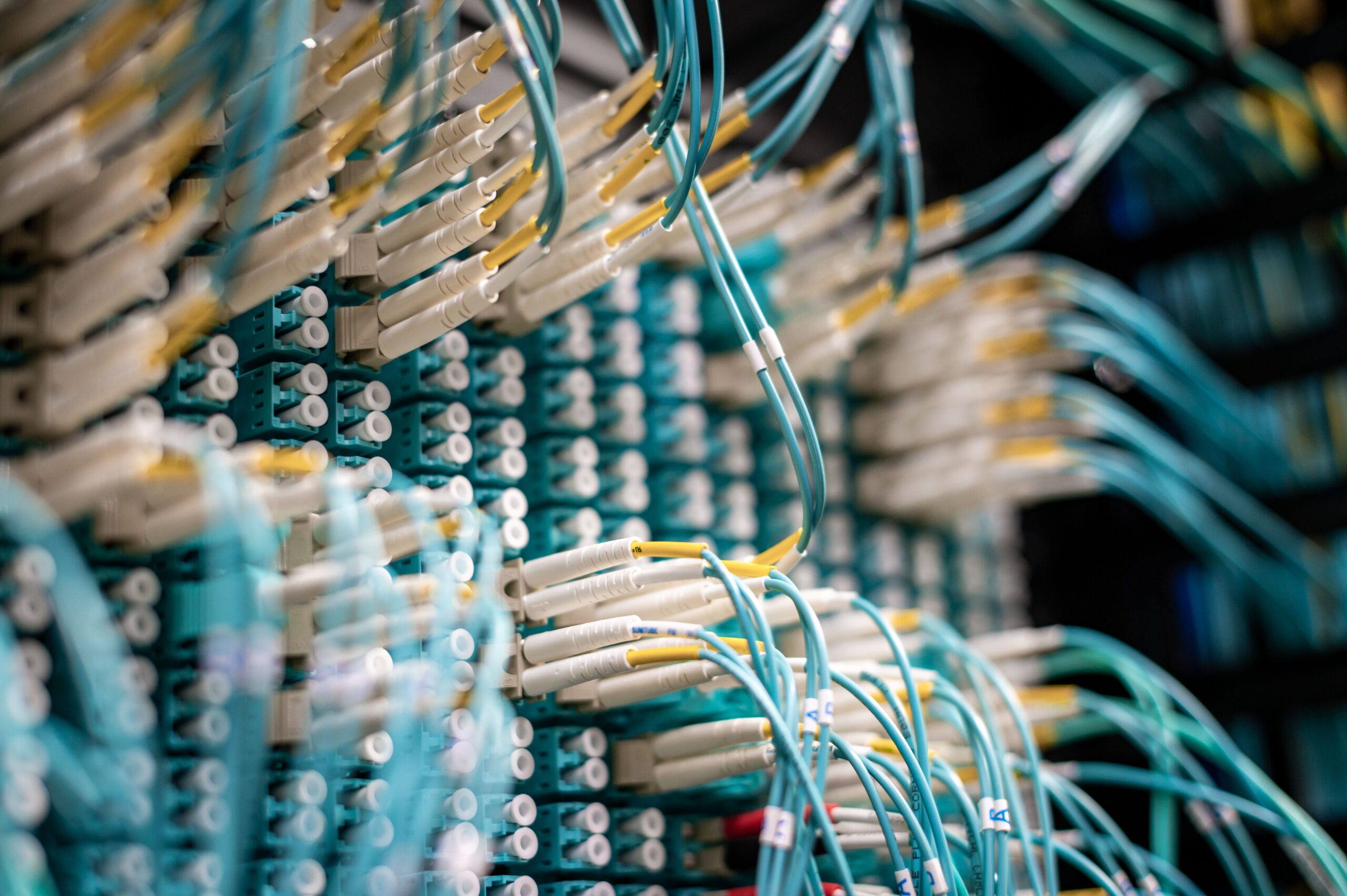
Nvidia is taking another major step to accelerate the global artificial intelligence buildout by partnering with some of the world’s biggest financial institutions to create financing platforms designed to mobilize more than $500 billion in third-party capital for AI infrastructure. The initiative brings together Nvidia with Apollo, BlackRock, Blackstone, Brookfield, Goldman Sachs and KKR, creating a powerful connection between the technology industry and institutional finance. According to Nvidia, the platforms are designed to help finance computing infrastructure and make it easier for customers to access large-scale AI systems without having to fund the entire infrastructure investment upfront.
The announcement is significant because the AI boom is entering a new phase. Companies are no longer investing only in individual servers or small data centers. Instead, they are building enormous computing facilities that require billions of dollars for chips, networking equipment, electricity, cooling systems, land and construction. Consequently, the Nvidia AI Fund strategy could change how AI infrastructure is financed and potentially create a new category of institutional investment.
Nvidia Connects AI Demand With Wall Street Capital
The Nvidia AI Fund initiative is built around a simple but important idea: AI computing infrastructure can be financed in a similar way to other large-scale productive assets. Rather than requiring technology companies or cloud providers to pay the full cost of infrastructure immediately, financial institutions can provide capital and recover their investment through long-term payments linked to the use of computing capacity.
Nvidia announced partnerships with six major financial firms to establish independent compute financing platforms. The participating institutions include Apollo, BlackRock, Blackstone, Brookfield, Goldman Sachs and KKR. The goal is to mobilize more than $500 billion of third-party capital over time.
Importantly, the $500 billion figure does not represent a single cash fund being handed directly to Nvidia. Instead, it refers to capital that the new financing platforms aim to mobilize for AI infrastructure projects. That distinction is important because the initiative is structured as a broader financing ecosystem rather than a conventional investment fund.
How the New Financing Model Could Work
The Nvidia AI Fund approach could help companies acquire access to expensive AI computing capacity through financing arrangements. A traditional data center project requires enormous upfront investment, but an infrastructure-financing structure could spread those costs over many years.
For example, an AI company that needs billions of dollars worth of computing capacity could potentially lease infrastructure rather than purchase every component outright. Institutional investors would finance the equipment and facilities, while customers would make payments over time.
This model could be attractive because AI infrastructure can generate revenue once it becomes operational. If computing capacity remains in high demand, long-term contracts could provide predictable cash flows to investors.
Nvidia has described the broader concept as treating compute as an investable infrastructure asset. The company argues that AI has moved beyond experimentation and is increasingly becoming part of commercial production.
Nvidia Could Backstop Part of the Financing
One of the most notable aspects of the Nvidia AI Fund strategy is Nvidia’s willingness to support some of the financing itself. Reuters reported that Nvidia could backstop up to $125 billion, equivalent to about 25% of the targeted financing, although the exact terms and deployment timetable were not disclosed.
Such support could make institutional investors more comfortable participating in AI infrastructure projects. Financial firms are familiar with financing large assets, but AI computing equipment presents different risks from traditional infrastructure.
Nvidia’s involvement could therefore help bridge the gap between technology companies seeking capital and investors looking for long-term opportunities.
At the same time, the arrangement means Nvidia is becoming more deeply involved in the financial structure surrounding the AI ecosystem. That could create additional opportunities, but it also introduces new risks if AI demand does not grow as quickly as expected.
Why AI Infrastructure Requires So Much Capital
The Nvidia AI Fund comes at a time when the cost of building AI infrastructure is rising rapidly. Modern AI data centers require much more than powerful processors. They need advanced networking, storage, cooling, power-generation capacity and specialized electrical systems.
Large AI facilities can consume enormous amounts of electricity. Therefore, developers must also invest in power infrastructure and long-term energy arrangements.
The rapid growth of generative AI has increased demand for computing capacity from cloud companies, model developers, enterprises and governments. As more businesses adopt AI, they need access to increasingly powerful systems.
This creates a significant financing challenge. Even companies with strong balance sheets may prefer to spread infrastructure costs over several years rather than commit huge amounts of capital immediately.
The Nvidia AI Fund model attempts to address that challenge by bringing institutional capital into the financing process.
Wall Street Sees a New Investment Opportunity
For Wall Street firms, the Nvidia AI Fund initiative offers exposure to one of the fastest-growing areas of technology without requiring them to become technology operators themselves.
Investment firms have enormous pools of capital that need to be deployed into assets capable of generating long-term returns. AI infrastructure could become attractive if computing demand remains strong and projects generate predictable cash flows.
The involvement of BlackRock, Blackstone, Brookfield, Apollo, Goldman Sachs and KKR demonstrates the scale of institutional interest. These firms manage or advise on substantial amounts of capital across infrastructure, private credit, real estate and other alternative assets.
Consequently, AI infrastructure could increasingly be viewed not simply as a technology investment but as an infrastructure and financing opportunity.
The Chipmaker’s Role Is Changing
The Nvidia AI Fund initiative also illustrates how Nvidia’s role in the AI economy has expanded. Nvidia is best known for designing the GPUs that power AI workloads, but the company is increasingly involved in the broader ecosystem needed to deploy those chips.
Its hardware is at the center of many AI data centers, while its software and networking technologies are also important components of modern AI systems.
By helping arrange financing, Nvidia can potentially support the expansion of infrastructure that ultimately creates additional demand for its products.
That creates an important strategic advantage. More financed data centers can mean more opportunities for Nvidia to sell GPUs, networking products and related systems.
However, the strategy also means Nvidia must carefully manage financial exposure and avoid taking on excessive risks associated with customer projects.
The AI Boom Is Becoming More Capital Intensive
The Nvidia AI Fund announcement comes as AI companies are moving from research and experimentation toward large-scale commercial deployment.
Early AI projects could be developed using relatively modest amounts of computing power. However, training and operating advanced models requires enormous computational resources.
As models become larger and businesses integrate AI into more applications, demand for computing capacity could continue to rise.
This creates a feedback loop. Strong AI demand encourages companies to build more data centers. More data centers require additional chips and infrastructure. Greater infrastructure availability then makes it easier for businesses to deploy additional AI applications.
The challenge is determining whether demand will grow quickly enough to justify the enormous investments now being planned.
Risks of Overbuilding Cannot Be Ignored
Despite the optimism surrounding the Nvidia AI Fund, the strategy is not without risks. The biggest concern is the possibility of overbuilding.
If AI infrastructure expands faster than actual demand, data center operators could struggle to generate sufficient revenue to cover financing costs. That could create problems for investors and lenders.
Technology also changes rapidly. AI chips can become obsolete as newer generations are introduced. Traditional infrastructure assets such as buildings and power facilities can remain useful for decades, while computing hardware may have much shorter economic lives.
The Financial Times has highlighted concerns that Nvidia and its financial partners are effectively betting that AI chips will retain enough economic value to support large financing structures.
Therefore, investors will need to evaluate both the long-term demand for computing and the depreciation risk of the underlying technology.
Could AI Compute Become a New Asset Class?
The Nvidia AI Fund initiative could eventually contribute to the creation of a new investment category centered on AI computing capacity.
If institutional investors become comfortable financing GPU-based infrastructure, computing could increasingly be treated as a productive asset capable of generating predictable cash flows.
That would represent a major change from the way technology infrastructure has traditionally been funded.
Instead of companies purchasing hardware entirely with their own capital, specialized investors could finance the equipment and receive payments from customers over time.
In theory, this could make it easier for smaller AI companies to gain access to powerful computing resources.
However, the success of such a model would depend heavily on reliable demand, long-term customer contracts and the ability of the underlying equipment to maintain economic value.
Competition Is Increasing Across the AI Industry
The Nvidia AI Fund also arrives as competition in the AI infrastructure market intensifies.
Nvidia remains the dominant supplier of advanced AI accelerators, but major technology companies are developing their own chips. Cloud providers are also investing heavily in customized computing systems.
Meanwhile, companies are competing to build larger and more efficient data centers.
This competition could eventually reduce infrastructure costs, but it could also pressure Nvidia’s market position.
For Nvidia, supporting financing could therefore be a way to help ensure that customers have access to enough capital to continue buying its technology.
What It Means for AI Companies
The Nvidia AI Fund could be especially important for AI companies that need large amounts of computing power but do not want to spend billions of dollars on infrastructure themselves.
Leasing or financing computing capacity could allow these companies to focus their capital on model development, employees, research and customer acquisition.
Furthermore, long-term financing could make computing expenses more predictable.
However, companies would still need to prove that their AI products can generate enough revenue to cover those long-term commitments.
If AI applications fail to produce expected returns, customers could find themselves locked into expensive infrastructure contracts.
What It Means for Investors
For investors, the Nvidia AI Fund represents both an opportunity and a warning.
On the positive side, AI infrastructure could become a major long-term growth industry. Institutional investors could gain exposure to data centers, computing capacity and related infrastructure through structured financing.
On the other hand, the rapid pace of AI investment raises questions about valuations, debt levels and future demand.
Investors should therefore avoid assuming that every AI infrastructure project will be profitable. Each project will need to be evaluated based on its customers, contracts, power availability, technology, financing costs and expected cash flows.
Nvidia’s Long-Term Strategy
The Nvidia AI Fund initiative fits into Nvidia’s broader strategy of expanding the AI ecosystem.
The company has already moved beyond selling individual chips by offering complete computing platforms that combine GPUs, networking and software.
Financing adds another layer to that ecosystem.
If customers can obtain funding more easily, they may be able to build larger AI systems faster. That could increase demand for Nvidia’s products while also helping the company strengthen relationships with cloud providers, enterprises and governments.
The approach could therefore reinforce Nvidia’s position at a critical stage of the AI infrastructure cycle.
A Potential Turning Point for AI Infrastructure
The Nvidia AI Fund announcement could ultimately prove important because it brings technology and institutional finance together on an unprecedented scale.
More than $500 billion in third-party capital is a huge target, even though it will be deployed through multiple financing platforms rather than one conventional fund.
If successful, the model could accelerate the construction of AI data centers around the world.
It could also encourage other financial institutions to develop their own AI infrastructure financing products.
As a result, AI could increasingly become part of the global infrastructure investment landscape rather than remaining primarily a technology-sector story.
Outlook for the AI Investment Boom
The future of the Nvidia AI Fund strategy will depend on whether AI demand continues to expand at the pace investors currently expect.
If companies keep increasing AI spending, financing platforms could help accelerate infrastructure construction and create attractive opportunities for institutional investors.
However, if demand slows, the financial risks could become more visible.
The industry must also deal with electricity constraints, permitting delays, supply-chain challenges and rapidly changing chip technology.
Therefore, the next stage of the AI boom will require more than technological innovation. It will require massive amounts of capital and careful financial planning.
Final Takeaway
The Nvidia AI Fund initiative represents a major attempt to connect Wall Street’s enormous pools of capital with the rapidly expanding demand for AI computing infrastructure. Nvidia’s partnerships with Apollo, BlackRock, Blackstone, Brookfield, Goldman Sachs and KKR aim to mobilize more than $500 billion in third-party capital through independent financing platforms.
The initiative could help companies access expensive computing infrastructure without having to finance every component upfront. At the same time, it gives institutional investors a potential new way to participate in the AI infrastructure boom.
Nevertheless, the strategy carries significant risks. AI hardware can depreciate quickly, demand could disappoint, and excessive infrastructure spending could create an oversupply of computing capacity.
For now, however, the scale of the initiative shows how dramatically AI has changed the technology and financial industries. Nvidia is no longer simply supplying chips to an emerging market. It is helping build the financial infrastructure that could support the next generation of AI computing.
If the strategy succeeds, AI compute could become a recognized infrastructure asset class and attract even larger pools of institutional capital. If demand fails to meet expectations, however, the same financing structures could expose investors and technology companies to significant losses.
That balance between enormous opportunity and substantial risk will make the Nvidia AI Fund initiative one of the most closely watched developments in the AI economy. As companies race to build increasingly powerful computing systems, the availability of capital may become just as important as the availability of chips, electricity and data centers.
Global IPO Market Faces Tougher 2026 As Listing Gains Contract To 7%
