

AI and AR Smart Glasses Set for Explosive Growth as VR Displays Lose Ground by 2030
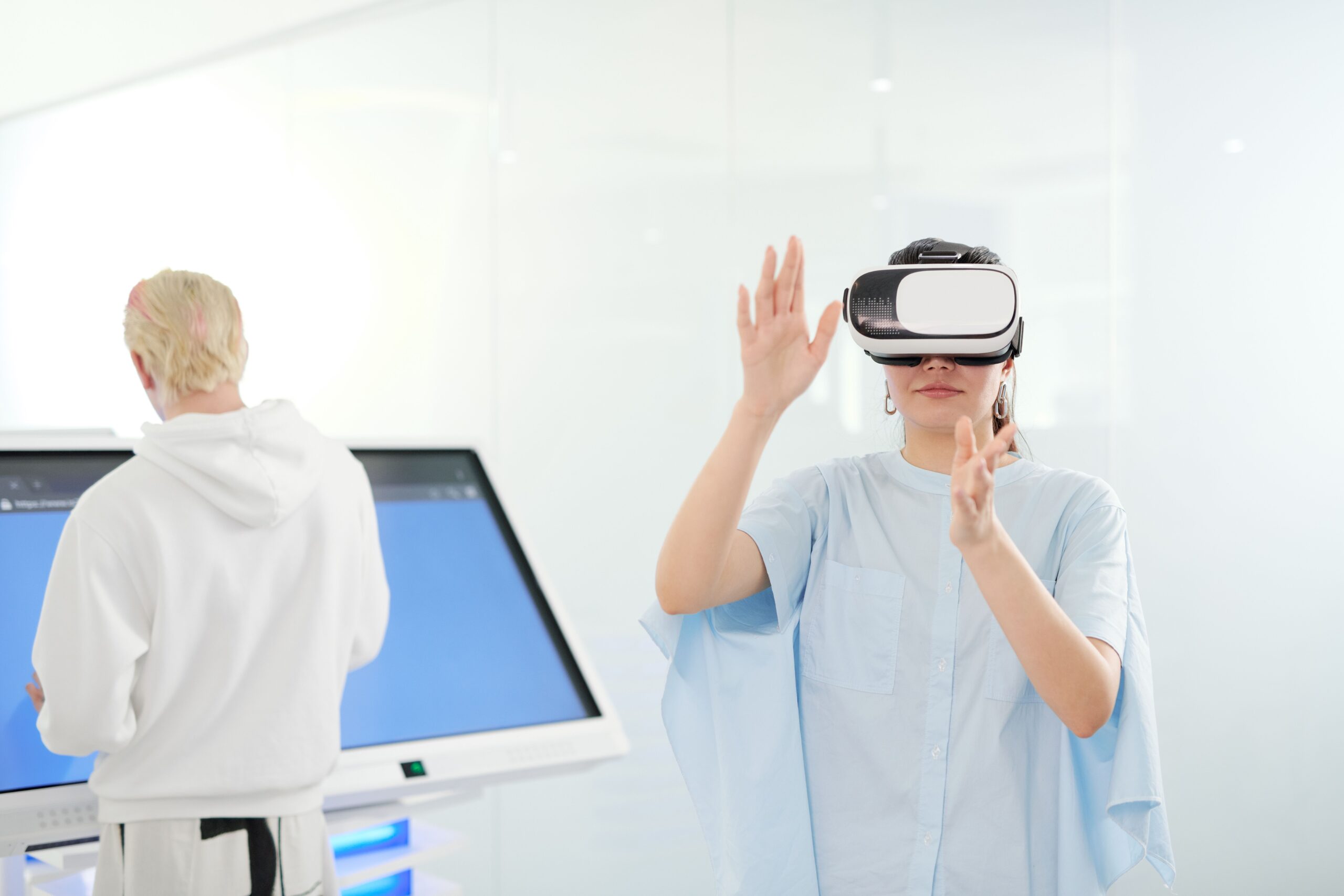
AI and AR Smart Glasses Enter a New Era of Explosive Growth
AI and AR Smart Glasses are moving rapidly from experimental technology toward a mainstream wearable category, with industry forecasts pointing to strong growth through 2030. The shift is being driven by advances in artificial intelligence, smaller displays, improved battery efficiency and growing demand for hands-free computing.
Unlike traditional virtual reality headsets, which completely replace a user’s view of the physical world, smart glasses can provide information while allowing people to remain connected to their surroundings. That difference could become increasingly important as consumers and businesses look for technology that is useful throughout the day rather than devices designed mainly for gaming or entertainment.
Recent research from ABI Research forecasts the global augmented reality hardware market to approach $38 billion by 2030. The firm also expects annual AR smart-glasses shipments in manufacturing, energy and healthcare to rise from 3.7 million units in 2026 to 14.9 million by 2030.
At the same time, Counterpoint Research analysis published through the Society for Information Display notes that AI is creating a new opportunity for AR and VR devices by turning them into interfaces for AI assistants.
AI and AR Smart Glasses Gain Momentum as VR Demand Changes
The rise of AI and AR Smart Glasses comes as the traditional VR market faces a very different outlook. Counterpoint Research says global VR headset shipments have been declining since their 2021 peak, with shipments expected to remain below five million units in 2025. The company describes this period as a “VR winter” caused partly by the difficulty of making head-worn devices attractive to a broad consumer audience.
VR remains important for gaming, entertainment, training and immersive applications. However, the technology generally requires users to wear relatively large headsets that isolate them from their surroundings. For many consumers, that makes VR a product for specific situations rather than something they want to wear for several hours every day.
Smart glasses offer a different proposition. They can look closer to conventional eyewear, provide access to cameras and microphones and connect users with digital assistants without completely blocking their environment.
Consequently, the industry is increasingly exploring a combination of artificial intelligence and lightweight eyewear rather than relying exclusively on traditional immersive displays.
AI and AR Smart Glasses Benefit From Artificial Intelligence
Artificial intelligence is arguably the biggest factor changing the smart-glasses market. Earlier generations of smart glasses were often focused on cameras, notifications or limited augmented-reality features. Modern devices can use AI to understand images, recognize objects, translate languages and respond to spoken questions.
This makes the glasses more useful without requiring users to constantly look at a screen.
For example, a person visiting another country could potentially use glasses to translate signs or conversations. A technician working on industrial equipment could receive instructions while keeping both hands free. A consumer could ask an AI assistant about an object in front of them without taking out a smartphone.
Counterpoint Research highlights this change, noting that AI assistants can use cameras and microphones in wearable devices to understand a user’s surroundings. Meta, Google and other technology companies are already developing AI-powered smart-glasses ecosystems.
Therefore, AI is not simply another feature. It could become the main reason consumers purchase the next generation of smart glasses.
AI and AR Smart Glasses Could Transform Everyday Computing
The potential of AI and AR Smart Glasses extends beyond entertainment. Their strongest advantage may be the ability to provide information without forcing users to stop what they are doing.
Smartphones require people to look down at a screen. Smart glasses can potentially place information within the user’s field of view or deliver it through audio.
That could make navigation, communication and productivity more natural. A worker could receive a reminder while performing a task. A traveler could see directions while walking. A student could access contextual learning information while exploring a museum or historical location.
Moreover, the technology could become valuable for people who need hands-free access to information. Healthcare professionals, warehouse employees, engineers and field technicians are among the groups that could benefit from lightweight wearable computing.
ABI Research expects manufacturing, energy and utilities, and healthcare to remain major enterprise drivers for AR smart glasses.
AI and AR Smart Glasses Find Strong Support in Enterprise Markets
Enterprise applications could become one of the most reliable growth engines for smart glasses. Businesses are often more willing than consumers to invest in new hardware when it can produce measurable productivity improvements.
In manufacturing, AR glasses can provide workers with instructions, equipment information and remote assistance. In healthcare, they can potentially support training and hands-free access to information. In logistics, workers can receive instructions without constantly checking handheld devices.
ABI Research forecasts AR smart-glasses shipments in key enterprise industries to rise significantly by 2030. The company also identifies Asia-Pacific as a major growth region, with AR smart-glasses shipments expected to increase from 4.7 million units in 2026 to 22.6 million by 2030.
As a result, the market may expand even if consumer adoption develops more slowly than expected.
AI and AR Smart Glasses Are Becoming Lighter
Weight has historically been one of the biggest obstacles to smart-glasses adoption. A device may have powerful processors, cameras and displays, but consumers are unlikely to wear it regularly if it feels uncomfortable.
Manufacturers are therefore investing heavily in miniaturization. Micro-OLED, microLED and other display technologies are helping companies create smaller visual systems.
Research and Markets reported in July that the global smart-glasses microdisplay market could grow from $1.79 billion in 2025 to $5.48 billion by 2030. The forecast is supported by demand for AR devices, improved microdisplay technology, lower power consumption and lightweight optical systems.
This development is important because display components are among the most difficult parts of a smart-glasses design. Smaller and more efficient displays can reduce the size and weight of the entire device.
AI and AR Smart Glasses Could Outpace Traditional VR Displays
The comparison between AI and AR Smart Glasses and VR displays is becoming increasingly important for investors and technology companies.
VR displays remain essential for fully immersive experiences. However, the broader smart-glasses market is increasingly focused on devices that can be worn casually and used throughout the day.
Counterpoint Research expects the AR/VR display market to begin recovering in 2026, with AI-focused AR glasses contributing to renewed demand. The company also expects micro-OLED revenue to reach $736 million by 2027, reflecting continued investment in compact display technology.
Meanwhile, broader market forecasts show strong growth for AR glasses through 2030. The Business Research Company estimates that the smart augmented-reality glasses market could grow from $1.6 billion in 2025 to $3.95 billion in 2030, representing an annual growth rate of nearly 20%.
These forecasts suggest that the industry’s center of gravity could gradually move toward lighter, more practical wearable displays.
AI and AR Smart Glasses Get a Boost From Display Technology
Display technology will determine how quickly AR glasses can move beyond early adopters. Users expect digital information to appear clearly without making the physical world difficult to see.
That requires improvements in brightness, resolution, field of view and power efficiency.
Micro-OLED currently has a strong position in immersive displays because it can deliver high pixel density in compact packages. MicroLED is also attracting attention because of its potential for high brightness and efficiency.
Research and Markets expects the smart-glasses microdisplay market to reach $5.48 billion by 2030, with microLED commercialization and improved optical systems contributing to growth.
However, advanced display technology remains expensive. Waveguides and microdisplays can significantly increase the manufacturing cost of AR glasses. That means companies will need to balance performance with affordability if they want to reach mainstream consumers.
AI and AR Smart Glasses Face Competition From Major Technology Companies
Competition in the smart-glasses industry is becoming intense. Meta has established a strong position with its AI-enabled eyewear, while Google is building its Gemini ecosystem around Android XR. Samsung and other hardware manufacturers are also entering the category.
Counterpoint Research notes that Meta has already integrated its AI assistant into smart glasses developed with EssilorLuxottica, while Google Gemini and Alibaba’s Qwen are also appearing in the smart-glasses ecosystem.
The growing number of competitors is beneficial for consumers because it encourages faster development and greater choice. At the same time, companies must differentiate themselves through design, software, battery life, cameras, displays and AI capabilities.
The next phase of competition may therefore be less about simply producing smart glasses and more about creating an ecosystem around them.
AI and AR Smart Glasses Could Reduce Smartphone Dependence
One of the biggest long-term questions is whether smart glasses could reduce the amount of time people spend using smartphones.
That does not necessarily mean smartphones will disappear. Instead, some tasks currently handled through phones could gradually shift to wearable devices.
Checking notifications, getting directions, translating text, recording short videos and asking simple questions are examples of activities that could potentially move to glasses.
If AI assistants become sufficiently accurate and responsive, users may not need to pull out their phones as frequently.
However, this transition will depend on several factors, including battery life, privacy, comfort, connectivity and social acceptance.
AI and AR Smart Glasses Raise Privacy Questions
Despite their potential, AI-powered eyewear also creates difficult privacy concerns. Cameras mounted on glasses can record people and environments without the same obvious visual signal associated with holding a smartphone.
That could lead to concerns in workplaces, schools, restaurants and other public environments.
Companies will need clear indicators showing when cameras are active, along with strong privacy controls and transparent data policies.
The issue is particularly important because AI-powered glasses may process not only photographs but also audio and contextual information. As the devices become more intelligent, users and regulators will likely demand stronger protections.
Therefore, privacy could become just as important as hardware performance in determining the success of the category.
AI and AR Smart Glasses Expand Across Asia-Pacific
Asia-Pacific is expected to play a major role in the development of AI and AR Smart Glasses. ABI Research expects the region’s AR smart-glasses shipments to increase substantially by 2030, with China identified as a major contributor.
China has a large manufacturing ecosystem, major technology companies and a rapidly expanding consumer electronics industry. Companies such as Xiaomi, Alibaba, Rokid, RayNeo and XREAL are participating in the broader AR and smart-glasses market.
As production scales, Asian manufacturers could also help reduce costs and accelerate the adoption of lightweight wearable devices.
Meanwhile, North America remains an important market because of the presence of major AI and technology companies. Europe is also expected to play a role through enterprise applications, industrial technology and research.
AI and AR Smart Glasses Could Create New Business Models
As smart glasses become more capable, they could generate new opportunities beyond hardware sales.
Companies may offer subscription-based AI assistants, premium translation services, navigation tools, productivity applications and specialized enterprise software.
This model could make smart glasses more attractive to manufacturers because recurring software revenue can provide a stronger business model than selling hardware alone.
For developers, the emergence of wearable AI platforms could create an entirely new application ecosystem. Instead of designing apps primarily for smartphone screens, developers could build experiences around voice, vision and spatial information.
That could eventually create a new category of software similar to the mobile-app revolution.
AI and AR Smart Glasses Still Have Technical Challenges
Despite strong forecasts, the road to mass adoption is not guaranteed. Battery life remains a major challenge because cameras, wireless connectivity, AI processing and displays consume significant power.
Heat management is another issue. Advanced processors generate heat, while glasses have limited physical space for cooling systems.
Connectivity is also important. Many AI functions depend on smartphones or cloud computing, which means users may experience limitations when networks are weak.
Furthermore, AR glasses require sophisticated optical systems that must remain lightweight while delivering clear images.
These technical challenges explain why the industry is progressing gradually rather than replacing smartphones overnight.
AI and AR Smart Glasses Could Become the Next Major Wearable Category
The strongest argument for AI and AR Smart Glasses is their combination of convenience and intelligence. Smartwatches provide information through a small screen, while smartphones provide a larger digital interface. Glasses can potentially combine visual, audio and contextual computing without requiring users to hold a device.
IDC’s 2026 market analysis shows the broader smart-glasses category gaining momentum, particularly through display-less AI-first eyewear. IDC forecasts display-less smart-glasses shipments to reach approximately 27.3 million units by 2030, compared with about 13.6 million in 2026.
This trend suggests that consumers may first adopt simpler AI glasses before moving toward more advanced AR products with displays.
In other words, the market may develop in stages rather than through one major technological breakthrough.
AI and AR Smart Glasses Move Toward the 2030 Milestone
By 2030, the smart-glasses industry could look very different from today’s market. Devices may become lighter, cheaper and more powerful, while AI assistants could become better at understanding the user’s environment.
AR hardware is also expected to expand rapidly. ABI Research forecasts the overall AR hardware market to approach $38 billion by 2030.
At the same time, smart-glasses microdisplay revenue is projected to reach $5.48 billion, according to Research and Markets.
These numbers do not guarantee that every forecast will be achieved. Nevertheless, they show that manufacturers, investors and researchers are putting substantial resources into the category.
Conclusion: AI and AR Smart Glasses Could Redefine Wearable Technology
The rapid development of AI and AR Smart Glasses signals a major change in the wearable technology industry. While VR displays continue to serve gaming, entertainment and immersive applications, lightweight smart glasses are gaining attention because they can combine artificial intelligence with everyday eyewear.
Market forecasts point toward strong growth through 2030. ABI Research expects the AR hardware market to approach $38 billion, while enterprise AR smart-glasses shipments are projected to increase significantly. Research and Markets also forecasts strong expansion in the microdisplay market, driven by AR adoption and improvements in display technology.
The biggest advantage of smart glasses may ultimately be their ability to make computing less intrusive. Instead of constantly looking down at a phone or wearing a large VR headset, users could receive information while remaining connected to the physical world.
However, success will depend on more than impressive technology. Battery life, comfort, affordability, privacy and reliable AI will all determine whether these devices become everyday products.
For now, the market is clearly moving toward a future in which artificial intelligence, augmented reality and wearable computing increasingly overlap. If current investment and shipment forecasts prove accurate, 2030 could mark a major milestone in the transition from screen-based computing to intelligent eyewear.
Anthropic Revenue Surges As Cerebras Launches Powerful Next-Generation AI Chips
Sources: Counterpoint Research analysis published in Information Display by the Society for Information Display; ABI Research 2026 AR market forecasts; IDC 2026 Augmented and Virtual Reality Headsets Market analysis; Research and Markets smart-glasses microdisplay forecast; The Business Research Company smart AR glasses market forecast. These are human-authored industry research and reporting sources, not AI-generated sources.
