

Humanoid Robot Record: Robots Break Bolt’s Mark
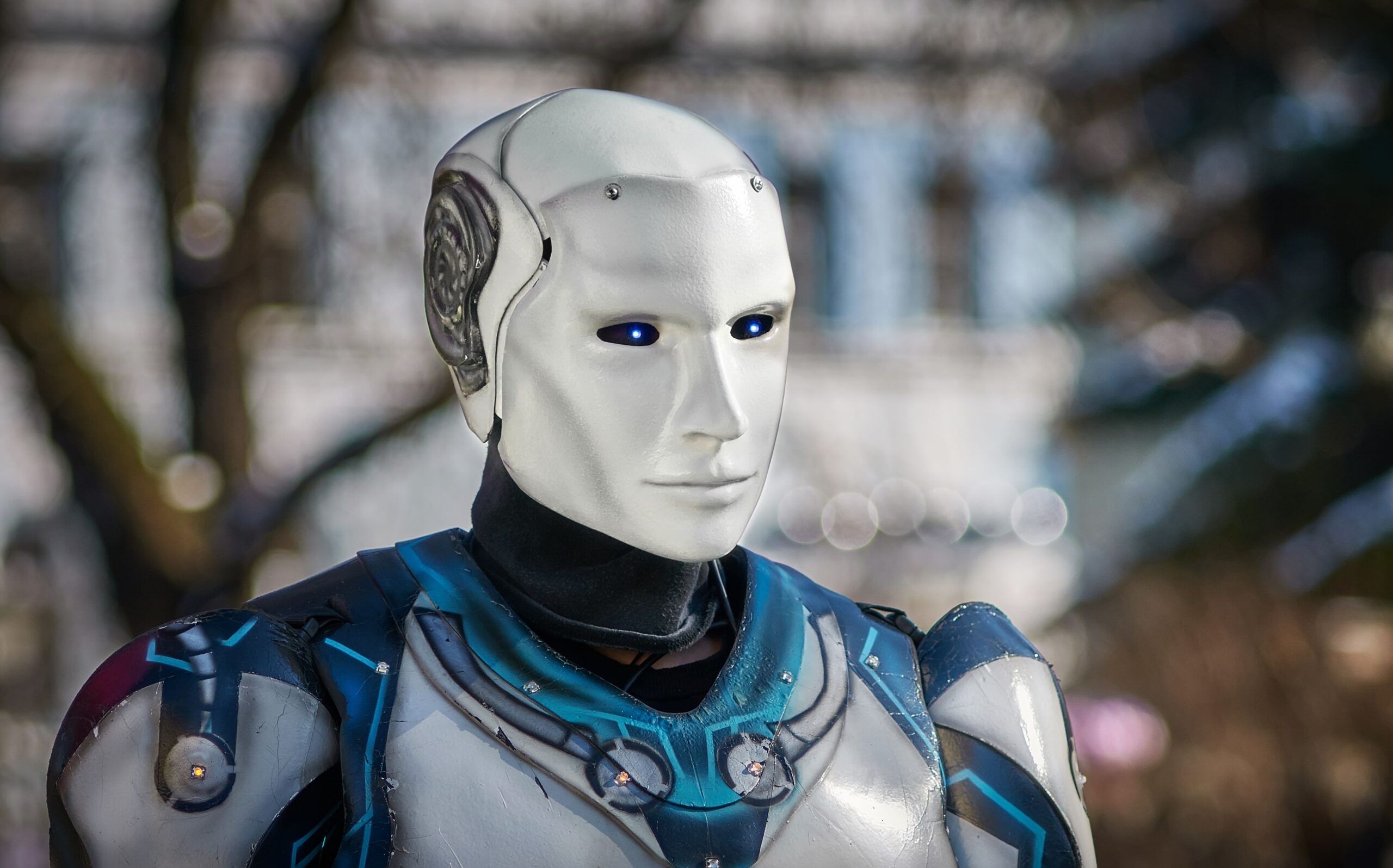
Humanoid Robot Record Makes Global Headlines
A new Humanoid Robot Record has captured worldwide attention after Chinese humanoid robots surpassed Usain Bolt’s famous 100-meter world record during the World Humanoid Robot Games in Beijing.
The result has become one of the most striking demonstrations of how quickly robotics technology is developing. A humanoid robot called Tiangong Ultra completed the 100 meters in 9.39 seconds during a preliminary heat, beating Bolt’s 9.58-second human record set in Berlin in 2009.
The achievement is particularly notable because the machine was competing in an event designed to test humanoid robots in athletic and practical challenges.
However, the story is not simply about a robot running faster than a human. The event also showed the current strengths and weaknesses of humanoid machines. While the robots reached remarkable speeds, some struggled to slow down and maintain control after crossing the finish line.
Therefore, the latest Humanoid Robot Record offers a fascinating look at both the progress and limitations of modern robotics.
How Fast Did the Robot Run?
The Humanoid Robot Record was set when Tiangong Ultra finished its 100-meter heat in 9.39 seconds.
That was 0.19 seconds faster than Bolt’s official 9.58-second record.
The difference may appear small, but in elite sprinting, fractions of a second are significant. Bolt’s record has stood since the 2009 World Athletics Championships in Berlin and is widely regarded as one of the greatest achievements in modern athletics.
Tiangong Ultra was developed by the Beijing Humanoid Robot Innovation Center. During its race in Beijing, it initially trailed another robot before accelerating toward the finish and taking the lead. The second-place machine, Honor’s Lightning, also completed the race faster than Bolt’s record, finishing in 9.47 seconds.
The results demonstrate how quickly robotic movement has improved over a relatively short period.
Another Robot Had Already Beaten Bolt in Testing
The Humanoid Robot Record story actually began before the main competition.
Honor’s humanoid robot Lightning completed a 100-meter test run in 9.32 seconds before the World Humanoid Robot Games officially opened. The machine reportedly reached a peak speed of 14.5 meters per second during that trial.
That performance was already faster than Bolt’s 9.58-second record.
Lightning’s progress is especially interesting because the robot had also demonstrated endurance earlier in 2026. In April, it completed a 21-kilometer humanoid half-marathon in Beijing in 50 minutes and 26 seconds, according to Reuters reporting.
Researchers subsequently modified the robot, including lengthening its legs, before the Beijing games.
This shows that robotic performance is improving not only through software but also through mechanical design.
What Happened at the Finish Line?
The Humanoid Robot Record came with an unusual scene at the end of the race.
Although the robots were extremely fast, they did not stop as smoothly as human athletes.
Reports from the event showed robots losing balance and crashing into protective cushions after crossing the finish line. Tiangong Ultra stumbled toward the sidelines, while Lightning also fell and needed assistance.
This detail is important because running fast is only one part of athletic performance.
A human sprinter can accelerate, maintain balance, slow down and change direction using a highly coordinated biological system.
Humanoid robots still have difficulty with some of these movements.
Consequently, the latest record should be viewed as a major engineering achievement rather than proof that robots have completely matched human athletic ability.
Why Is Running So Difficult for Robots?
The Humanoid Robot Record highlights a complicated engineering problem.
Running requires continuous balance.
Every time a person takes a step, the body briefly becomes unstable before the next foot lands. The brain, muscles, eyes and inner-ear balance systems work together to make tiny adjustments.
Robots have to recreate this process using sensors, motors, processors and control software.
At high speed, even a small error can cause a fall.
The faster a robot moves, the less time it has to correct mistakes.
That is why the performance in Beijing is significant. Reaching more than 9 meters per second while keeping a two-legged machine upright requires extremely precise coordination.
China Is Becoming a Major Robotics Hub
The Humanoid Robot Record also reflects China’s growing ambitions in robotics.
China has invested heavily in artificial intelligence, automation, manufacturing and advanced robotics.
The country is already one of the world’s largest producers of industrial robots. Now, companies and government-backed research organizations are increasingly focusing on humanoid machines.
The World Humanoid Robot Games are part of that broader effort.
The 2026 event features more than 2,000 robots, with teams from 16 countries participating in competitions ranging from sprinting and high jumping to soccer, table tennis and weightlifting.
These events provide companies with an opportunity to demonstrate advances in mechanical design, artificial intelligence and autonomous control.
Robots Also Beat a Human High-Jump Record
The Humanoid Robot Record story is not limited to sprinting.
Another humanoid robot at the Beijing games achieved a standing high jump of 2.88 meters.
That result exceeded the human standing high-jump benchmark of 2.45 meters set by Cuba’s Javier Sotomayor in 1993, according to reports from the event.
The result demonstrates the enormous mechanical potential of robotic systems.
Machines do not have the same biological limitations as humans. Engineers can design powerful motors, specialized joints and lightweight frames that allow robots to generate significant force.
However, raw power is not enough.
A useful humanoid robot must also be able to control that power safely and accurately.
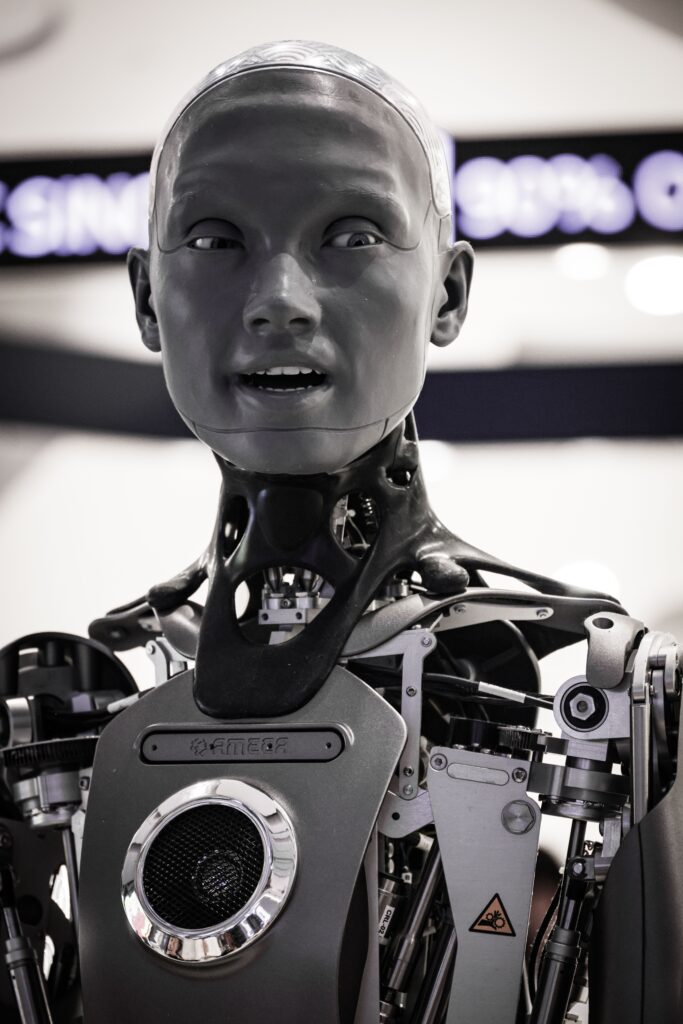
From Sports Demonstrations to Real-World Jobs
The Humanoid Robot Record may attract attention because of its connection to Usain Bolt, but the real importance of humanoid robotics lies elsewhere.
Companies are developing robots for factories, warehouses, logistics centers, hospitals and potentially homes.
A robot that can run quickly is impressive, but businesses are more interested in whether it can safely carry materials, connect cables, pick up objects and operate around people.
That is why the Beijing event includes practical challenges alongside traditional sports.
Robots are being tested in tasks involving material handling, electric-vehicle charging, warehouse work and other simulated real-world situations. Reuters reported that more than 40% of the competitions require full autonomy.
These tests may ultimately matter more than the sprinting results.
AI Is Making Robots More Capable
The Humanoid Robot Record also shows how artificial intelligence is changing robotics.
Modern humanoid robots increasingly combine traditional mechanical engineering with AI-based perception and control systems.
Cameras and other sensors allow robots to understand their surroundings. AI models can help machines identify objects, estimate movement and make decisions.
Meanwhile, advanced control systems allow motors to respond rapidly to changing conditions.
This combination is helping robots perform movements that were previously extremely difficult.
However, the technology is still developing.
Robots may perform exceptionally well in controlled environments but struggle when conditions change unexpectedly.
Real-World Environments Are Much Harder
The Humanoid Robot Record should not be interpreted as evidence that humanoid robots are ready to replace humans everywhere.
A running track is a controlled environment.
The surface is predictable, the distance is known and the robot’s objective is simple.
Real workplaces are different.
Humanoid Robot Record: A factory floor may contain unexpected obstacles. A warehouse may have boxes in different locations. A household can have furniture, pets, people and objects placed unpredictably.
A useful robot must be able to respond to these changes without constant human supervision.
Experts quoted by Reuters said humanoid robots remain largely focused on demonstrations, research and early applications, with mass deployment still requiring further development.
That distinction is important when evaluating the latest achievements.
The Importance of Balance and Safety
The Humanoid Robot Record also raises an important issue: safety.
A machine that can run at more than 14 meters per second has considerable kinetic energy.
If it loses balance near a person, the consequences could be serious.
For this reason, robotic engineers must develop reliable systems for acceleration, braking and emergency stopping.
The crashes at the Beijing games demonstrate why this is still an area of active research.
A robot that can run quickly but cannot stop safely is not ready for everyday public environments.
Therefore, future progress will probably focus as much on control and reliability as on raw speed.
Humanoid Robots Are Improving Quickly
The Humanoid Robot Record is especially remarkable when compared with previous robot performances.
At the first edition of the World Humanoid Robot Games in 2025, the winning 100-meter humanoid time was reportedly 21.50 seconds.
Just one year later, a robot crossed the distance in less than 10 seconds.
That is an enormous improvement.
Of course, the machines used in different competitions may not be directly comparable in every technical detail.
Still, the broader trend is clear.
Humanoid Robot Record: Robotics companies are improving motors, batteries, processors, sensors, control algorithms and mechanical designs at the same time.
The result is a rapid increase in robotic capability.
Battery Technology Remains a Challenge
The Humanoid Robot Record also brings attention to an issue that is less visible during a short race: energy.
High-speed movement requires substantial power.
Humanoid robots need batteries that can provide enough energy while remaining light enough for the machine to move efficiently.
This creates a difficult engineering trade-off.
Larger batteries provide more energy but add weight.
Smaller batteries reduce weight but can limit operating time.
For commercial robots, battery life may be more important than maximum speed.
A warehouse robot, for example, may need to work continuously for several hours rather than run 100 meters as quickly as possible.
The Race Is Not Only About Speed
The Humanoid Robot Record could easily make the robotics industry look like a competition to build the fastest machine.
In reality, the industry has a much broader goal.
Companies want robots that can work safely, reliably and economically.
Speed can be useful, but reliability may be more valuable.
A robot that completes a task correctly 99.9% of the time could be far more commercially useful than a machine that breaks speed records but frequently falls.
This is why competitions that test practical skills are becoming increasingly important.
Global Competition Is Increasing
The Humanoid Robot Record comes as countries and companies compete to establish leadership in advanced robotics.
China has built a strong manufacturing ecosystem for robots and components.
Japan has decades of experience in robotics and automation.
South Korea is investing heavily in intelligent machines, while American companies are developing humanoid robots for industrial and commercial applications.
Germany and other European countries also have strong industrial robotics sectors.
The competition is therefore becoming global.
Advances made in one country can quickly influence research and investment elsewhere.
What Could Humanoid Robots Do Next?
The Humanoid Robot Record may be followed by even more ambitious demonstrations.
Robots could become better at climbing stairs, carrying heavy loads, playing sports and navigating complex environments.
They may also become more capable of performing several tasks in sequence without human instructions.
For example, a future warehouse robot might receive an instruction to collect several items, navigate around obstacles, move them to another location and return to its charging station.
Similarly, industrial robots could eventually work alongside humans on production lines.
The technology is still developing, but the direction is becoming increasingly clear.
The Commercial Opportunity Is Huge
The Humanoid Robot Record has also attracted attention because investors see humanoid robotics as a potentially enormous market.
Companies are developing machines for manufacturing, logistics, construction and consumer applications.
China’s robotics sector has attracted significant investment as policymakers promote humanoid machines as a strategic technology.
The commercial opportunity, however, will depend on whether robots become affordable and reliable enough for widespread deployment.
A highly advanced machine is not necessarily a successful product.
Manufacturers must also control production costs, maintenance requirements and operating expenses.
What Happens After the Record?
The Humanoid Robot Record is likely to remain a major talking point, but the next challenge for robotics companies is proving that these machines can do more than win races.
The World Humanoid Robot Games provide a useful testing ground.
Robots are being pushed to their limits in sports while also being evaluated in practical scenarios.
The results can help engineers identify weaknesses and improve future designs.
For example, problems with braking could lead to better control algorithms. Balance issues could inspire new joint designs. Energy limitations could encourage better batteries or more efficient motors.
In this way, even a dramatic racing crash can provide useful information for future development.
Conclusion
The Humanoid Robot Record set in Beijing marks an exciting moment for robotics.
Tiangong Ultra completed the 100-meter sprint in 9.39 seconds, beating Usain Bolt’s 9.58-second human world record. Honor’s Lightning also recorded faster-than-Bolt times, including a 9.32-second test run before the games.
These results show how quickly humanoid robots are improving.
At the same time, the machines still face important challenges. Some struggled to stop after the race, and experts say humanoid robots remain largely in demonstration, research and early deployment stages.
That is not a reason to dismiss the achievement. Instead, it makes the progress even more interesting.
The future of humanoid robotics will not be decided by speed alone. Balance, safety, battery life, intelligence, reliability and affordability will all determine whether these machines can move from impressive demonstrations into everyday life.
For now, the record-breaking performances in Beijing offer a remarkable glimpse of what advanced robotics may eventually achieve. The machines may not be ready to replace human athletes or workers, but their rapid progress suggests that the next chapter of robotics could arrive sooner than many people expected.
Sources
- Reuters — reporting on Chinese humanoid robots surpassing Usain Bolt’s 100-meter record at the World Humanoid Robot Games.
- Associated Press — reporting on the Beijing games, the 9.39-second sprint and the 2.88-meter standing high jump.
- ABC News — reporting on Honor’s Lightning robot, its 9.32-second test run and 14.5-meter-per-second peak speed.
- The Washington Post — background on the 2026 World Humanoid Robot Games and China’s growing robotics industry.
