

Gold Prices Surge to Three-Month High Amid Global Safe-Haven Demand

Gold prices have climbed to a three-month high as investors around the world turn toward safe-haven assets amid rising economic and geopolitical uncertainty. The latest move has pushed spot gold close to $4,700 per ounce, marking one of the strongest periods for the metal in recent months. Gold prices surge as investors respond to concerns about inflation, the US dollar, government debt, bond markets, and fresh tensions in the Middle East. At the same time, traders are watching upcoming US economic data and Federal Reserve signals that could influence the direction of interest rates.
According to Reuters, spot gold reached its highest level since May 14 before easing slightly on Tuesday, August 25. Spot gold was around $4,640.40 per ounce after a small decline, while US gold futures remained near $4,696.10. The move came after several sessions of strong gains and showed that demand for the metal remains firm even after investors started taking some profits.
Why Gold Prices Are Rising
Gold prices surge when investors become less comfortable with risky assets or worry about the wider economic outlook. Gold has traditionally been viewed as a store of value during periods of uncertainty. It does not depend on the financial health of a single company or government, which can make it attractive when markets become nervous.
This time, several factors are working together. The US dollar has recently been under pressure, making gold more attractive to buyers holding other currencies. At the same time, concerns about US government finances and bond-market conditions have encouraged some investors to look for alternatives.
The US Treasury has also announced plans to increase buybacks of longer-dated government bonds. The decision has drawn attention in financial markets because investors are trying to understand what it could mean for bond yields, borrowing costs, and the broader US fiscal outlook. Gold prices surge in an environment where investors believe that currency and government debt risks could remain important market themes.
Gold Prices Surge: Reuters reported that gold-backed exchange-traded funds recorded their strongest weekly inflow in ten months, with 46.7 metric tons worth about $6.4 billion added during the latest reported week. That is an important sign because ETF demand can provide a clear picture of institutional investor interest in gold.
Safe-Haven Demand Remains Strong
One of the biggest reasons behind the recent rally is safe-haven demand. When investors face uncertainty, they often look for assets that may hold their value better during periods of market stress. Gold has played that role for centuries.
Gold prices surge as concerns about geopolitical tensions increase. Recent developments involving Iran and the United States have added another layer of uncertainty to financial markets. Iran has also warned of retaliation following expanded US economic sanctions, keeping geopolitical risks in focus.
However, the latest rally is not based on geopolitical concerns alone. Investors are also watching inflation, government spending, interest rates, and currency movements. Therefore, the current strength in gold reflects a combination of different factors rather than one single event.
The World Gold Council has also reported improving gold demand conditions in India. Its August 19 market update said international and domestic gold prices gained ground during August, while jewellery demand showed signs of improvement and gold ETFs continued to attract inflows.
A Weaker US Dollar Gives Gold Another Boost
Gold Prices Surge: The US dollar plays an important role in the international gold market. Because gold is mainly priced in dollars, a weaker dollar can make the metal less expensive for buyers using other currencies. This can encourage demand and provide additional support to prices.
Gold prices surge when dollar weakness combines with other positive factors. Recent market movements have shown that investors are closely watching the dollar as they assess the outlook for gold.
A weaker dollar can also reflect concerns about US economic conditions or expectations about future interest rates. If investors believe that US rates may not rise as much as previously expected, the dollar can lose some support. That can, in turn, make gold more attractive.
Kitco reported earlier in August that gold had moved higher alongside a weaker dollar and growing concerns about US fiscal conditions. The precious metal was already trading above $4,500 at that stage, showing that the current rally had been building before the latest three-month high.
Federal Reserve Signals Could Matter Next
Another important issue for gold investors is the direction of US interest rates. Gold does not pay interest or dividends. Therefore, when interest rates and bond yields rise sharply, some investors may prefer assets that generate income.
On the other hand, expectations of lower rates can support gold because the opportunity cost of holding the metal becomes less important.
Gold prices surge ahead of important economic events when traders try to position themselves for possible changes in monetary policy. This week, investors are paying close attention to US inflation data and Federal Reserve Chair Kevin Warsh’s speech at the Jackson Hole symposium.
Markets want to know whether policymakers are becoming more concerned about inflation or more focused on economic growth. Any unexpected signal could create short-term volatility in gold.
Reuters reported that traders were pricing in a meaningful chance of a US rate hike in September. Such expectations could limit gold’s gains because higher rates generally make non-yielding assets less attractive.
Gold Has Already Had a Strong August
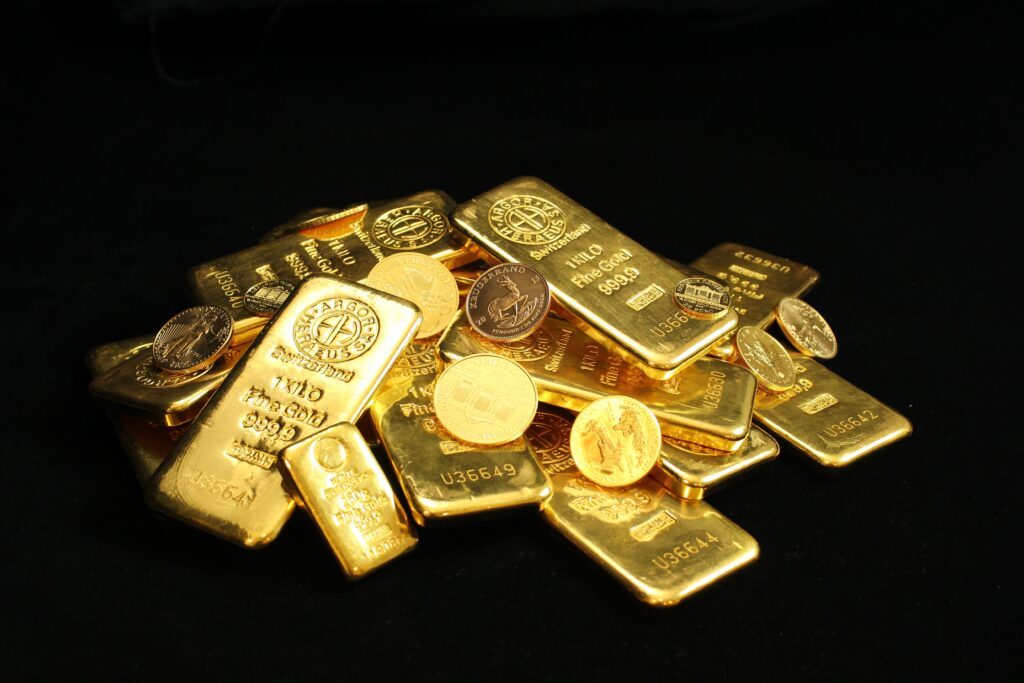
The latest rise is part of a much bigger move. Gold has gained strongly during August after suffering a sharp correction earlier in the year.
According to recent market reporting, gold has gained more than 14% during August and is on track for one of its strongest monthly performances in many years. The Guardian reported that the metal had gained about 15% during the month by August 25, with the rally supported by concerns about inflation, bond markets, and US economic policy.
Gold prices surge after investors regain confidence in the metal following periods of heavy selling. Earlier in 2026, gold experienced a major correction, falling below $4,000 in June after reaching much higher levels earlier in the year. Reuters noted that the metal’s rebound during August showed signs that its safe-haven appeal was returning.
The recovery has therefore been significant. Still, investors should remember that gold can move sharply in both directions, especially when markets are responding to central-bank decisions, currency changes, or geopolitical news.
What Is Happening in India?
Gold remains especially important in India because the metal has both financial and cultural value. It is widely used for jewellery and is also viewed by many households as a long-term store of wealth.
Gold prices surge in global markets, and Indian prices often respond to international movements, currency changes, taxes, and local demand. However, the final price paid by consumers can differ between cities, sellers, purity levels, and jewellery products.
The World Gold Council said India’s gold market was showing signs of recovery in August. Jewellery demand had strengthened as consumers responded to lower and more stable prices, while retailers and manufacturers were rebuilding inventories ahead of the festive season. Investment demand also remained supportive.
This could become important in the coming months. If international prices remain high, jewellery buyers may become more careful about purchases. However, strong investment interest could continue to support the broader market.
Investors Are Watching Bond Markets
Bond-market conditions have become another important factor behind the recent gold rally. Investors are increasingly focused on US government borrowing, long-term bond yields, and the sustainability of government finances.
Gold prices surge when concerns about debt and currency stability encourage investors to diversify. The recent increase in Treasury buyback operations has added to this discussion.
The move does not automatically mean that the dollar or US government debt is in immediate danger. Instead, it shows that financial markets are paying close attention to government policy and the way policymakers manage borrowing conditions.
Kitco reported that concerns about US debt sustainability, a weaker dollar, and the Treasury’s move to expand long-term bond buybacks helped gold move above $4,600 per ounce during the previous week.
Could Gold Reach $5,000?
The possibility of gold moving toward $5,000 per ounce is now being discussed by market analysts. However, such forecasts should not be treated as guaranteed outcomes.
Gold prices surge when several supportive factors come together, but the trend can change quickly. A stronger dollar, higher interest rates, falling geopolitical tensions, or weaker investment demand could put pressure on the metal.
At the same time, continued central-bank demand, geopolitical uncertainty, fiscal concerns, and strong investment flows could provide further support.
The Wall Street Journal reported that analysts continued to see a medium-term path toward $5,000, while also noting that gold needs to maintain important price levels to keep its bullish momentum.
For investors, the key point is that forecasts are based on current conditions. They can change as new economic information becomes available.
Profit-Taking Could Bring Short-Term Pullbacks
Even strong rallies do not move upward every day. After gold reached its three-month high, some investors chose to lock in profits. That pushed prices slightly lower on Tuesday.
Gold prices surge during strong buying periods, but profit-taking is a normal part of financial markets. A short-term decline does not necessarily mean that the wider trend has ended.
Reuters reported that gold fell slightly on Tuesday as the dollar strengthened and investors booked profits after the recent rally. The report also said that underlying support remained firm because of continued economic and geopolitical uncertainty.
Therefore, investors may see more daily price swings in the coming sessions. The focus will remain on whether buyers continue to enter the market after temporary declines.
What Could Drive Gold Next?
Several developments could influence gold prices in the near future. First, US inflation data will be closely watched because it can affect expectations for interest rates. Second, Federal Reserve comments could change market expectations about future policy.
Third, the US dollar will remain important. A further decline in the dollar could support gold, while a strong recovery could create pressure.
Fourth, geopolitical developments will continue to matter. Any major change in tensions involving the Middle East could affect safe-haven demand.
Finally, investment flows will remain important. If gold-backed ETFs continue to attract money, that could provide a strong source of demand.
Gold prices surge when investors believe the balance of risks is moving in favor of the metal. At the moment, several of these factors are working together, but the situation remains fluid.
Gold Market Outlook
The current gold rally has attracted significant attention because it comes after a period of sharp price swings. Investors are now trying to decide whether the latest move is the beginning of another major upward trend or simply a strong recovery within a wider period of volatility.
The answer will depend on economic data, interest-rate expectations, the dollar, geopolitical developments, and investor demand.
Gold prices surge when uncertainty rises, but investors should avoid assuming that every rally will continue indefinitely. Precious metals can experience large moves in either direction, and short-term forecasts can be difficult even for experienced market participants.
For ordinary buyers, especially those purchasing jewellery, the high international price also means that timing and product costs matter. Making a purchase decision based only on a headline price may not provide the complete picture. Purity, making charges, taxes, and local market conditions can all affect the final cost.
Conclusion
The latest rise in gold reflects a combination of safe-haven demand, a weaker US dollar, concerns about US fiscal conditions, bond-market uncertainty, and continued attention to global geopolitical risks. Gold prices surge when investors look for stability during uncertain periods, and the current market environment has created several reasons for renewed interest in the precious metal.
At the same time, the rally is not without risks. Higher interest-rate expectations, a stronger dollar, easing geopolitical tensions, or profit-taking could lead to temporary declines. Therefore, investors may continue to see volatility as markets respond to new information.
For now, gold remains firmly in focus. The next major clues are likely to come from US inflation data, Federal Reserve signals, currency movements, and developments in global markets. Rather than focusing only on short-term price targets, investors may benefit from watching these broader factors and making decisions that fit their own financial goals and risk levels.
The recent move to a three-month high shows that gold continues to hold an important place in global financial markets. Whether the rally continues or pauses, the coming weeks should provide a clearer picture of where the precious metal goes next.
Sources
- Reuters — Gold slips on profit-taking after rally to over three-month high
- World Gold Council — India gold market update: Recovery taking shape
- Kitco — Gold and silver extend breakout as US dollar slides
- The Guardian — Gold price hits three-month high amid economic and geopolitical concerns
- The Wall Street Journal — Gold stable after hitting three-month high
Canada Retaliatory Tariffs: Ottawa Prepares Heavy Response Against The United States

