

Tesla Cybercab: Bold Driverless Launch
Author: Crazyrites Editorial Team
Date: September 4, 2026
Tesla Takes a Major Step Into Driverless Travel
The Tesla Cybercab has officially moved from an ambitious concept toward real-world passenger service, as Tesla placed dozens of its fully autonomous two-seat vehicles on public streets in Austin, Texas.
The launch is one of the company’s biggest steps yet in its effort to build a driverless transportation business. Unlike a normal car, the new vehicle does not have a steering wheel or traditional brake and accelerator pedals. There is also no human driver sitting behind the wheel.
Instead, the vehicle is designed to handle the trip on its own.
Tesla began offering rides in limited areas of Austin on Thursday, September 3. The move comes nearly two years after Elon Musk first presented the Cybercab concept to the public.
The launch is important because Tesla is not simply testing autonomous software in an ordinary car. It is now putting a vehicle specifically designed around autonomous driving into a real ride-hailing service.
However, the rollout also brings new questions about safety, regulation and public trust.
What Is the Tesla Cybercab?
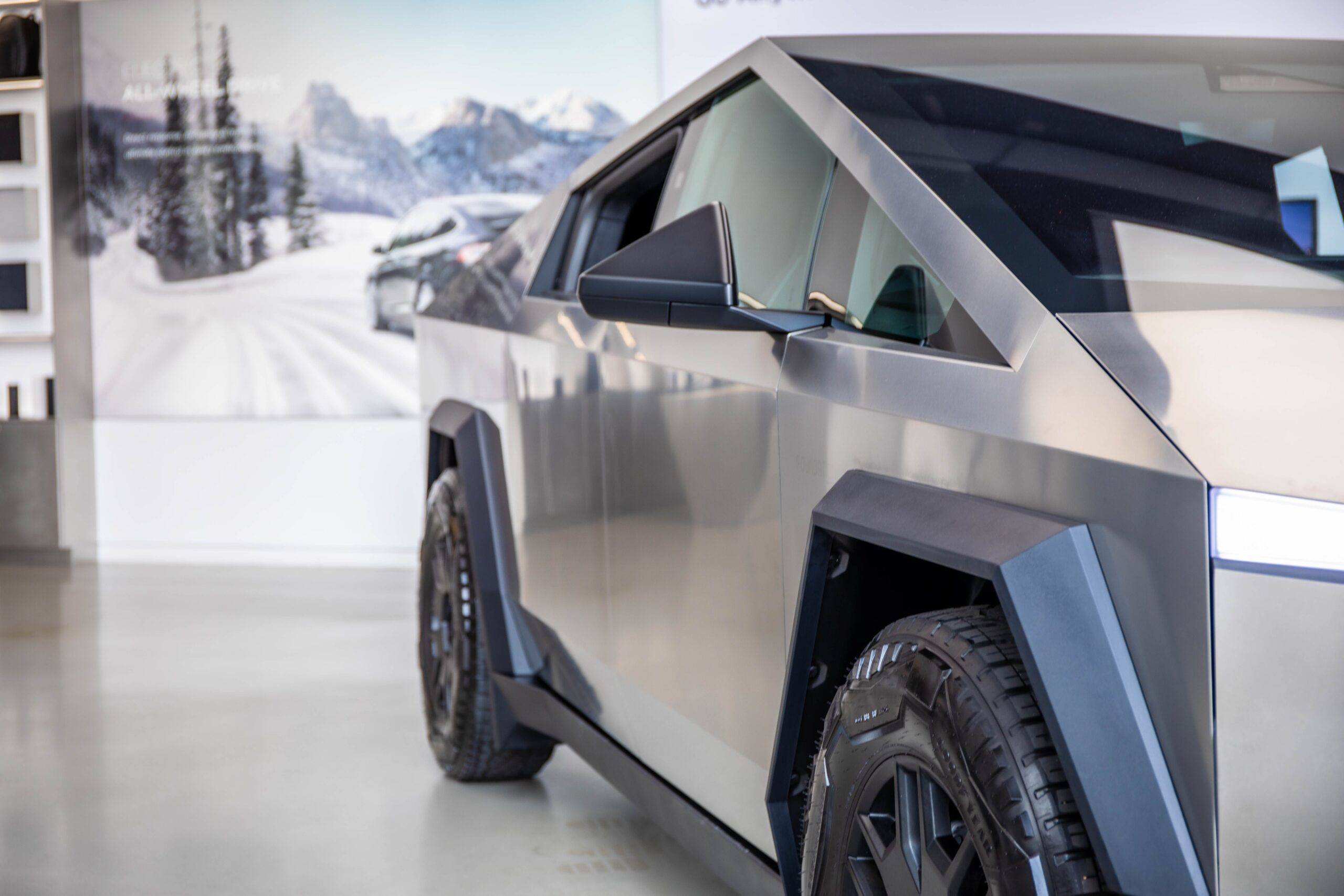
The Tesla Cybercab is a two-seat electric vehicle designed specifically for autonomous transportation.
Its design is very different from a traditional passenger car. There is no steering wheel, no accelerator pedal and no brake pedal for passengers to use.
The vehicle has a compact interior with two seats, a central display and a futuristic exterior design. Tesla has presented the vehicle as part of a future where people can request transportation through an app and travel without a human driver.
The idea is simple. A customer requests a ride, enters the vehicle and allows the automated driving system to handle the journey.
That could eventually create a new transportation model in which autonomous cars spend much more time providing rides instead of sitting unused.
For Tesla, this is a major part of Elon Musk‘s long-term vision for the company.
Why the Austin Launch Matters
The Tesla Cybercab launch is significant because Austin has already been an important testing ground for Tesla’s robotaxi ambitions.
Tesla began operating a robotaxi service in Austin in June 2025 using Model Y vehicles. Those vehicles were different because they retained conventional steering wheels and pedals.
The latest Cybercab takes a much bigger step.
There is no traditional driving position, meaning passengers cannot simply take control if something unexpected happens. That makes the technology and the surrounding safety systems especially important.
Reuters reported that Tesla currently has hundreds of autonomous vehicles registered in Texas, including Cybercabs, while the new vehicles are being introduced only in limited areas.
Tesla is therefore starting with a controlled rollout rather than immediately offering the vehicle everywhere.
Key Facts
| Category | Details |
|---|---|
| Vehicle | Tesla Cybercab |
| Location | Austin, Texas |
| Seating | Two passengers |
| Steering wheel | No |
| Traditional pedals | No |
| Human driver | No |
| Powertrain | Electric |
| Main purpose | Autonomous ride-hailing |
| Initial rollout | Limited Austin areas |
| Company | Tesla |
| CEO | Elon Musk |
No Steering Wheel or Pedals
The most talked-about feature of the Tesla Cybercab is also its most unusual one.
Passengers cannot steer the car or operate traditional pedals.
Tesla’s approach is based on the idea that a truly autonomous vehicle should not require a human to take over during normal operation. If the vehicle is designed to drive itself, conventional controls may not be necessary.
That creates a very different experience for passengers.
In a normal car, people know that a driver can react to traffic, road conditions or unexpected situations. In a Cybercab, the passenger has to trust the automated system.
This is one reason why public confidence will be just as important as the technology itself.
A driverless taxi may offer convenience and potentially lower operating costs, but customers must feel comfortable entering a vehicle that they cannot manually control.
Regulators Are Watching Closely
The Tesla Cybercab launch has already attracted attention from U.S. safety regulators.
The National Highway Traffic Safety Administration, or NHTSA, is evaluating Tesla’s deployment of the new vehicles.
The federal agency is examining whether the vehicle meets applicable safety requirements, particularly because traditional vehicle rules were largely developed around cars with human drivers and conventional controls.
Reuters reported that NHTSA has opened an audit involving Cybercabs and is reviewing Tesla’s self-certification process.
This does not mean regulators have declared the vehicle unsafe. Instead, the review shows that autonomous vehicles are creating new questions for rules that were originally designed around conventional cars.
That regulatory discussion could become important not only for Tesla but also for the wider autonomous vehicle industry.
Tesla’s Self-Driving Strategy
The Tesla Cybercab is closely connected to Tesla’s wider Full Self-Driving strategy.
Tesla has spent years developing software designed to allow its vehicles to navigate roads with less human involvement. The company believes advances in artificial intelligence and computer vision can eventually make autonomous driving practical at large scale.
Tesla’s approach has also differed from some competitors.
Companies such as Waymo use several types of sensors, including lidar, radar and cameras. Tesla has strongly focused on cameras and neural-network-based software.
This difference has created an ongoing debate within the autonomous driving industry.
Tesla believes its approach can eventually deliver a scalable system without relying on expensive additional sensors. Critics and some industry experts have questioned whether a camera-focused system can reliably handle every difficult road and weather condition.
The Austin deployment will provide another real-world test of that strategy.
Tesla Faces Strong Competition
The Tesla Cybercab is entering a market that is already developing quickly.
Waymo, owned by Alphabet, has established a driverless ride service in several U.S. cities. Its vehicles have completed large numbers of autonomous passenger trips.
Amazon’s Zoox is also developing purpose-built autonomous taxis.
Therefore, Tesla is not entering an empty market.
The company needs to show that its system can operate safely, reliably and at a competitive cost. It also needs to persuade passengers that a vehicle without a steering wheel or pedals is a comfortable way to travel.
Tesla has one major advantage, however: its huge global vehicle fleet and large amount of driving data.
If the company can successfully connect its software, vehicles and ride-hailing platform, it could potentially expand its autonomous service at a very large scale.
Public Trust Could Be the Biggest Challenge
Technology is only one part of the Tesla Cybercab story.
The other part is human behavior.
People may understand that autonomous vehicles can perform many driving tasks, but that does not automatically mean they will feel comfortable riding without a driver.
According to a Pew Research Center survey cited by the Associated Press, about seven in ten U.S. adults said they were not too comfortable or not at all comfortable with riding in a driverless car.
That shows why Tesla’s Austin rollout is also a test of consumer confidence.
A passenger getting into a vehicle without a steering wheel must believe that the technology can manage the journey.
Therefore, every successful ride can help build confidence, while highly visible problems could have the opposite effect.
What This Means for Tesla
The Tesla Cybercab arrives at a crucial time for Tesla.
The company remains one of the world’s best-known electric vehicle manufacturers, but the EV market has become more competitive.
Chinese manufacturers have expanded rapidly, while traditional automakers are also investing heavily in electric cars.
Tesla therefore wants investors and customers to see the company as more than a car manufacturer.
Musk has repeatedly described artificial intelligence, robotics and autonomous transportation as important parts of Tesla’s future.
A successful robotaxi network could potentially give Tesla another source of revenue beyond selling vehicles.
Instead of earning money only when a car is sold, Tesla could potentially earn money repeatedly when an autonomous vehicle provides transportation services.
That is a major reason the Cybercab has received so much attention.
The Economics of Robotaxis
The Tesla Cybercab could also change the economics of ride-hailing if autonomous service eventually reaches large scale.
Traditional taxi and ride-hailing companies must pay drivers. Driver wages represent a significant part of the cost of providing a trip.
An autonomous taxi could theoretically operate without a human driver, reducing that expense.
However, removing the driver does not make every other cost disappear.
Robotaxi operators still need to pay for vehicles, electricity, insurance, maintenance, software, charging infrastructure and fleet management.
There are also costs connected to remote assistance, customer support and regulatory compliance.
Therefore, the financial advantage of autonomous taxis will depend on how reliably and efficiently the vehicles can operate.
Tesla must prove that its technology can work not just during demonstrations but across thousands or eventually millions of trips.
Why Austin Is an Important Test Market
Austin provides Tesla with a useful environment for its autonomous ambitions.
The city is already familiar with Tesla’s robotaxi operations, and the company has its Texas manufacturing presence nearby.
Starting in a limited area also allows Tesla to collect information about real-world performance.
The company can observe how the vehicles respond to traffic, pedestrians, road construction, weather and other everyday situations.
At the same time, Tesla can study how passengers react.
Do people request another ride? Do they recommend the service to friends? Are they comfortable with the lack of controls?
These questions could be just as important as technical performance.
From Prototype to Real Service
When Elon Musk unveiled the Tesla Cybercab in 2024, the vehicle was presented as a symbol of Tesla’s autonomous future.
Since then, the company has moved through testing and development before bringing the vehicle into limited public operation.
The transition from a stage presentation to public roads is a major milestone.
Still, the current launch should not be confused with a nationwide autonomous taxi network.
Tesla’s service remains limited, and regulators are paying attention to the vehicle’s unusual design.
The company will need to demonstrate that it can expand without losing reliability or creating unnecessary safety concerns.
What Could Happen Next?
The future of the Tesla Cybercab will depend on several factors.
First, Tesla needs to demonstrate consistent performance in Austin.
Second, it needs to satisfy regulators as the vehicle expands.
Third, the company needs to build public confidence.
Finally, Tesla needs to show that the business can make financial sense.
If those pieces come together, the company could expand the service into additional U.S. cities.
However, expansion will likely require different regulatory approvals and operating plans depending on the location.
Tesla’s earlier robotaxi rollout showed that autonomous transportation can take longer to expand than early predictions suggested. Reuters noted that Tesla’s service has expanded gradually and that regulatory restrictions have limited wider deployment.
That means the next stage will be closely watched by investors, regulators and competing companies.
A Bigger Change for the Auto Industry
The Tesla Cybercab represents a broader change that goes beyond Tesla itself.
For more than a century, cars have been designed around human drivers. Steering wheels, pedals and driver’s seats became standard because people were expected to control the vehicle.
Autonomous technology challenges that basic idea.
If computers become responsible for driving, vehicles can be designed differently.
They could have more passenger space, fewer traditional controls and interiors designed around entertainment or work instead of driving.
The Cybercab is one example of what that future could look like.
Still, the transition will not happen overnight.
Technology, regulations, insurance, infrastructure and public acceptance will all influence how quickly autonomous vehicles become common.
Conclusion
The Tesla Cybercab launch in Austin is an important moment for Tesla and the wider autonomous vehicle industry.
The vehicle’s lack of a steering wheel and traditional pedals makes it very different from conventional cars and represents Elon Musk’s ambitious vision for fully driverless transportation.
At the same time, the launch should be viewed carefully. Tesla is beginning with a limited service, and U.S. safety regulators are examining the deployment and its compliance with federal requirements.
For passengers, the biggest question is simple: will they trust a vehicle they cannot control?
For Tesla, the challenge is even bigger. The company must prove that its autonomous technology can operate reliably, satisfy regulators and eventually support a sustainable business.
The Tesla Cybercab could become an important part of the future of transportation if Tesla can successfully overcome those challenges. For now, Austin is the testing ground where that future is beginning to take shape.
Source: Reuters, The Associated Press, NHTSA
