

AI Regulation Protest Poland: Urgent Warning
Author: Crazyrites Editorial Team
Date: September 8, 2026
AI Regulation Protest Poland
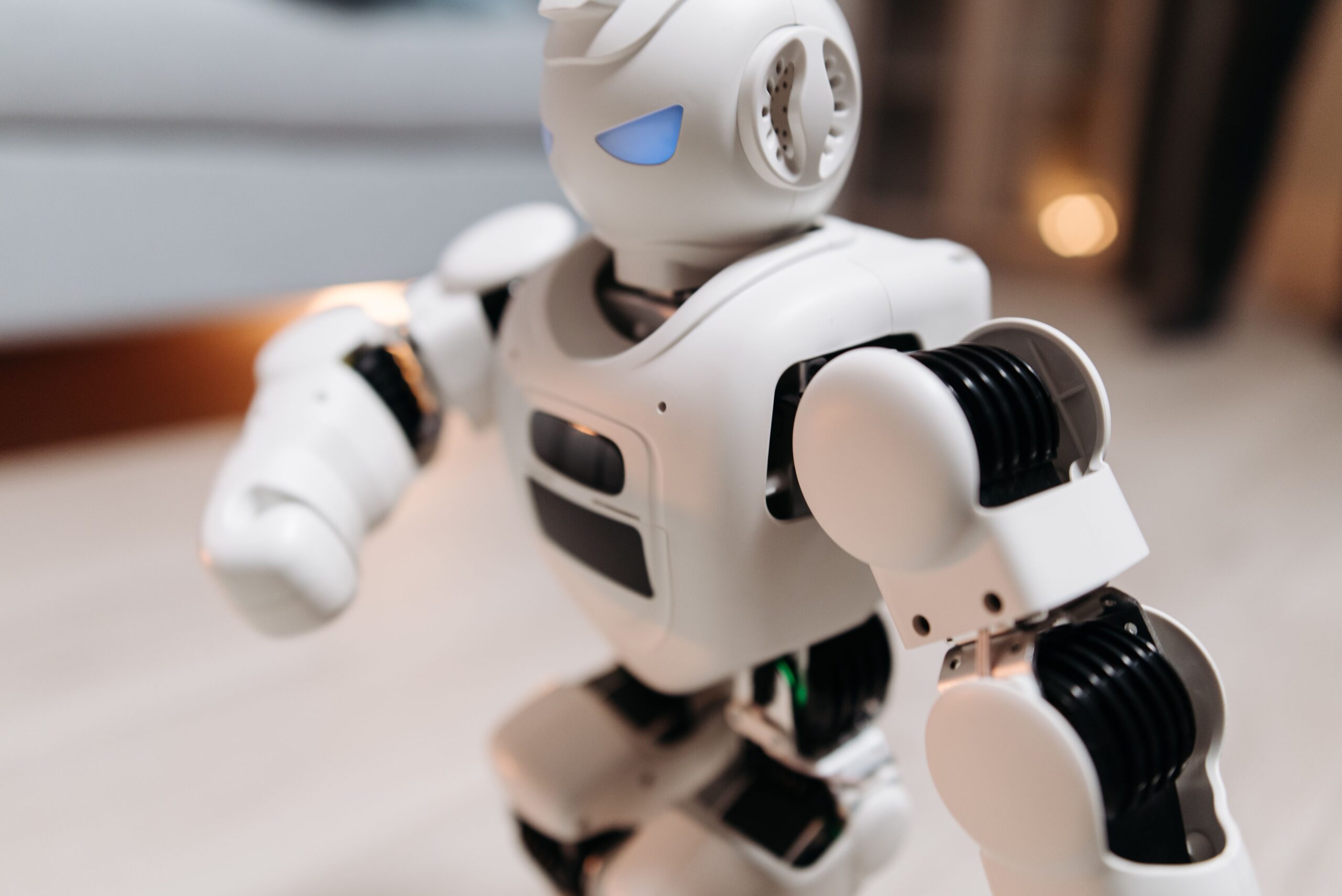
Around 30 robots have taken to the streets of Warsaw in one of the most unusual public demonstrations linked to artificial intelligence. The machines appeared outside Poland’s Ministry of Digital Affairs, waved flags and played slogans calling for stronger rules around AI and automation.
The demonstration took place on September 7 and was organized by Democratism, an initiative focused on the effects of AI and robotisation on the labour market. The event was designed to start a wider public discussion about what could happen to jobs as AI systems and robots become more capable.
The AI Regulation Protest Poland was unusual because the technology itself became part of the message. Instead of people simply holding signs about automation, humanoid robots and dog-like machines appeared in the street. The visual message was simple: advanced machines are no longer only a future idea.
What Happened in Warsaw?
Reports from Euronews and AFP said around 30 robots joined the demonstration. They included bipedal humanoid machines and quadruped robots that looked similar to robotic dogs.
The robots moved in circles and carried flags. Loudspeakers played slogans such as “Defend workplaces,” “Time for rules” and “Don’t wait, regulate.” One of the machines, an Agibot A3 humanoid robot, also answered questions from journalists.
That detail made the AI Regulation Protest Poland especially striking. A robot was being used to explain why society should think more carefully about robots and AI.
However, the machines were not independent political actors. The demonstration was organized and presented by people. The robots were used as a practical and visual demonstration of technology that is already available.
Grzegorz Kuliś, one of the organizers, said the campaign was aimed at the possible replacement of people by humanoid robots and AI systems used in knowledge work. He argued that action should begin before the effects become more difficult to manage.
The AI Regulation Protest Poland therefore worked as both a public demonstration and a technology showcase. That combination helped the event attract attention while keeping the discussion focused on jobs and regulation.
Why Jobs Are at the Center
The main concern behind the AI Regulation Protest Poland is not simply whether AI is good or bad. It is about how quickly businesses and workers can adapt.
AI can help companies complete tasks faster, analyze information and support employees. Robots can also handle repetitive physical work, improve production and operate in places where human work may be difficult.
At the same time, some jobs may change significantly. Certain tasks that once required several people can now be supported by software or machines. In offices, AI tools can assist with writing, coding, research and customer service. In factories, robotics can support assembly, movement of goods and quality checks.
That does not automatically mean mass unemployment. New technology can also create new roles and industries. Yet the transition can be difficult for people whose existing skills are no longer in high demand.
This is why the AI Regulation Protest Poland focused on rules and worker protection rather than simply asking governments to stop technological development.
The discussion also shows why the AI Regulation Protest Poland has a wider meaning than the unusual images from Warsaw. Behind the robots is a normal economic question: who benefits from automation, and how should the costs of change be managed?
Poland Already Has AI Rules
There is an important piece of context behind the demonstration. Poland is not starting from zero.
Poland’s government has already adopted a national law connected with the European Union’s AI Act. The law was signed by President Karol Nawrocki in July and published in the country’s official legal journal. It entered into force on August 11, although some sections have later effective dates.
Poland’s Ministry of Digital Affairs says the law creates a legal framework for AI oversight, supports safer use of AI systems and aims to provide stable conditions for innovation. The law also provides for a Commission for the Development and Security of Artificial Intelligence.
Therefore, the AI Regulation Protest Poland was not a call for Poland to create its first AI rules. Instead, it highlighted concerns about how those rules will work in practice and whether they will keep pace with rapidly developing technology.
That makes the AI Regulation Protest Poland more interesting from a policy point of view. The country has legislation, but regulators still have to turn legal requirements into practical oversight.
A Message About Enforcement
For campaigners, creating a law is only one part of the process. Enforcement matters just as much.
Rules need clear responsibilities. Businesses need to know what they can and cannot do. Workers need to understand how AI may affect their roles. Regulators need enough expertise to examine complex systems.
The AI Regulation Protest Poland therefore raises a wider question: how can governments regulate fast-moving technology without slowing useful innovation?
The answer is unlikely to be simple. AI covers many different uses, from everyday productivity tools to systems used in sensitive areas. A rule that makes sense for one application may be unnecessary for another.
That is why risk-based regulation has become an important idea in Europe. Higher-risk uses can require stronger controls, while lower-risk applications may face fewer requirements.
The AI Regulation Protest Poland also puts attention on the gap between regulation on paper and regulation in everyday life. Businesses may understand the broad rules but still need practical guidance about how to comply.
The European Union’s Approach
The AI Regulation Protest Poland also comes at a significant time for the European Union.
The EU AI Act uses a risk-based approach. Some AI practices are prohibited, while other systems face transparency or risk-management requirements. Certain high-risk applications have longer transition periods.
According to the European Commission, some high-risk rules related to areas such as employment, education, migration and critical infrastructure are scheduled for later application under the updated timeline. This means the regulatory system will continue developing over the coming years.
For companies, this creates a need to prepare early. Businesses may have to review how AI tools are selected, tested and used. They may also need better records, human oversight and clearer information for users.
For workers, the key issue is how these rules translate into everyday workplaces. That is one reason the AI Regulation Protest Poland attracted attention beyond Poland.
The AI Regulation Protest Poland is also a reminder that European AI regulation is entering a more practical phase. The European Commission says applicable AI Act rules began enforcement on August 2, 2026, with national authorities also taking on enforcement responsibilities.
Could Robots Really Replace Workers?
The AI Regulation Protest Poland deliberately put robots in front of the public because physical machines make the idea of automation easy to see.
Still, the relationship between robots and jobs is more complicated than a simple replacement story.
A robot may take over one task while creating demand for another. A factory may need fewer workers for a repetitive process but more technicians to install, maintain and monitor automated equipment.
Similarly, AI can reduce the time needed for certain office tasks while increasing demand for people who can check results, manage AI systems and make important decisions.
The biggest challenge may therefore be the speed of change. If technology develops faster than education and training systems, workers may struggle to move into new roles.
This is where policy can make a practical difference. Governments can support training, digital education and programs that help people move between industries. Companies can also invest in reskilling rather than treating automation only as a way to reduce costs.
The AI Regulation Protest Poland sends this message in a highly visible way: preparing workers may be just as important as regulating technology.
What the Protest Really Means
The AI Regulation Protest Poland became a media story because robots protesting for regulation sounds almost like science fiction. Yet the underlying issue is very real.
AI is moving from research labs and software demonstrations into everyday business operations. Robots are also becoming more capable and more visible.
The Warsaw event was therefore less about machines having political opinions and more about humans using machines to make a point. The organizers wanted people to see that robotics is already developing quickly.
Poland’s Digital Affairs Minister Krzysztof Gawkowski visited the demonstration and spoke with organizers. According to Euronews, he described uncontrolled AI models implemented into humanoid robots as a major concern.
The government has also discussed plans for AI oversight and regulatory sandboxes, which could allow companies to test AI solutions under controlled conditions before wider use.
In that sense, the AI Regulation Protest Poland is not simply an argument against technology. It is a request for society to think about the consequences of technology while there is still time to prepare.
Why This Matters for Businesses
The AI Regulation Protest Poland carries an important message for businesses as well.
Companies adopting AI should not look only at what the technology can do. They also need to consider privacy, safety, transparency, worker impact and accountability.
A responsible AI strategy can help businesses avoid costly mistakes. It can also build trust with employees and customers.
At the same time, regulation should not become so complicated that smaller companies cannot compete. Policymakers face the difficult task of protecting people while allowing useful technology to grow.
That balance will become more important as AI moves into more parts of the economy.
The AI Regulation Protest Poland shows why businesses should follow regulatory changes closely instead of waiting until enforcement becomes a problem.
What Workers Should Watch
The AI Regulation Protest Poland also highlights several issues workers may want to follow.
First, employees should understand how AI is being introduced in their industry. Second, learning new digital skills can make it easier to adapt as job roles change. Third, workers should know how workplace AI systems affect evaluation, monitoring and decision-making.
Employers also have a role. Clear communication can reduce fear and confusion when new technology is introduced.
Rather than presenting AI as either a complete solution or a threat, companies can explain which tasks are being automated, which responsibilities remain with people and how employees can develop new skills.
The AI Regulation Protest Poland therefore connects technology policy with a basic workplace issue: people need enough information and preparation to understand how new systems could affect them.
A Broader European Debate
The AI Regulation Protest Poland is part of a larger discussion taking place across Europe and beyond.
Governments are trying to set rules while technology companies are building increasingly powerful systems. Workers are asking how automation could affect employment. Businesses want clear requirements without unnecessary barriers.
These interests do not always conflict. Stronger safety standards can give companies and customers more confidence. Clear rules can also reduce uncertainty for businesses that want to invest in AI.
However, regulation needs to keep changing as technology changes. A rule designed for one generation of AI may not be enough for the next.
The AI Regulation Protest Poland showed this tension in a memorable way. Robots stood outside a government ministry while human organizers used them to call for rules that would govern technologies similar to themselves.
Final Thoughts
The AI Regulation Protest Poland was unusual, but its main question is serious: how should society manage the rapid growth of AI and robotics?
The answer does not have to be about choosing between people and machines. Technology can support workers, improve services and create new opportunities when it is introduced carefully.
At the same time, workers should not be left alone to deal with rapid change. Governments, companies, educators and employees all have a role in making the transition fair and practical.
The Warsaw robots may have attracted attention because of their unusual appearance, but the discussion behind them is likely to continue. As AI becomes more common, the focus will increasingly move from whether the technology is possible to how it should be used responsibly.
The AI Regulation Protest Poland may therefore be remembered less for robots marching in the streets and more for the question it placed in front of policymakers and businesses: can regulation, innovation and worker protection move forward together?
A balanced approach can help ensure that technological progress remains useful while people have a fair chance to adapt. The goal should not be to fear new technology, but to make sure it develops in a way that supports safety, opportunity and responsible innovation.
Key Facts
| Topic | Details |
|---|---|
| Location | Warsaw, Poland |
| Demonstration date | September 7, 2026 |
| Number of robots | Around 30 |
| Organizer | Democratism |
| Main concern | AI, robotics and possible job displacement |
| Location of protest | Outside Poland’s Ministry of Digital Affairs |
| Robot types | Humanoid and quadruped robots |
| Main message | Stronger rules and worker protection |
| Poland’s AI law | Entered into force August 11, 2026 |
| EU AI Act | Broad application began August 2, 2026 |
Sources
- Euronews, “Robot revolt? Polish company stages protest demanding stricter AI rules,” September 8, 2026.
- Agence France-Presse (AFP) reporting on the Warsaw robot demonstration, carried by international news outlets.
- Poland Ministry of Digital Affairs, “AI Systems Act – safe development of artificial intelligence in Poland,” July 27, 2026.
- Polish official legal database, AI Systems Act of July 3, 2026.
- European Commission, AI Act regulatory framework and implementation timeline.
