

US Canada Trade War: Fierce New Import Bans
Date: September 9, 2026
Author: Crazyrites Editorial Team
US Canada Trade War Enters a New Phase
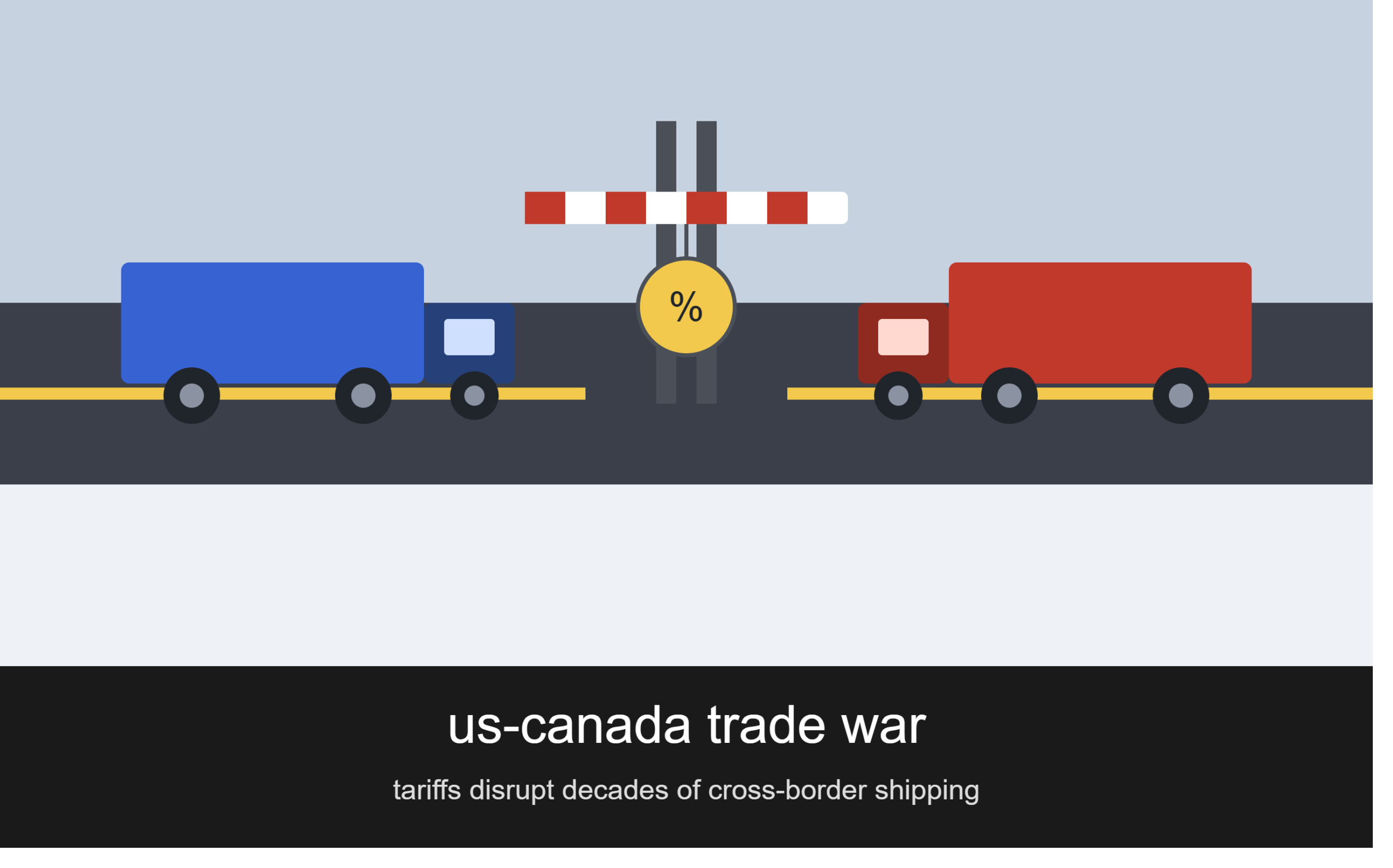
The US Canada trade war has entered a more serious phase after Washington announced bans on selected Canadian dairy products, alcoholic beverages and motorcycles.
The new restrictions were announced on September 8, just as Canada’s latest retaliatory tariffs on U.S. products came into effect. The United States says the action is a response to what it considers unfair treatment of American products by Canada. Ottawa, meanwhile, says its measures are a response to U.S. tariffs and that it wants to protect Canadian workers and businesses.
The latest move goes beyond traditional tariffs. Instead of simply making imported goods more expensive, the new U.S. measures will prevent certain Canadian products from entering the American market.
The bans are scheduled to begin on September 29, 2026. The White House said the measures were taken under Section 338 of the U.S. Tariff Act of 1930.
The development has added another layer of uncertainty to the US Canada trade war, which has already affected businesses on both sides of the border.
What Has Washington Banned?
The new U.S. measures target several categories of Canadian goods.
They include certain dairy products, alcoholic beverages and motorcycles. The alcohol restrictions cover a broad range of products, while the dairy measures apply to selected Canadian dairy goods. Motorcycles and some related vehicles are also included.
The White House says the decision is linked to Canada’s treatment of U.S. products and its latest retaliatory tariffs.
According to the U.S. Trade Representative, the new actions were designed to respond to Canada’s continued restrictions on important American exports. The administration also modified the list of Canadian products covered by earlier tariff measures.
| Area | Latest Development | Effective Date |
|---|---|---|
| Canadian dairy | Selected products banned | September 29 |
| Canadian alcohol | Selected alcoholic beverages banned | September 29 |
| Canadian motorcycles | Selected motorcycles and related products banned | September 29 |
| Canadian goods | Some tariff categories modified | September 15 |
| Canadian retaliation | Tariffs on about $27.6 billion of U.S. goods | September 8 |
| U.S. earlier tariffs | 50% tariffs on selected Canadian goods | August 22 |
The changes show how quickly the US Canada trade war has moved from tariff disputes toward direct restrictions on market access.
Why Did the Conflict Escalate?
The latest escalation follows months of difficult negotiations between Washington and Ottawa.
The two countries have traditionally maintained one of the world’s largest trading relationships. Their economies are closely connected through manufacturing, agriculture, energy, transportation and consumer goods.
However, disagreements over tariffs and market access have placed that relationship under increasing pressure.
The United States previously imposed additional tariffs of up to 50% on selected Canadian goods. Those measures took effect in August. Canada then announced countermeasures covering billions of dollars of American products.
Canada’s Finance Department says its latest counter-tariffs apply to approximately $27.6 billion of U.S. imports and include sectors such as steel, aluminum, dairy, agricultural equipment, appliances and other products.
The latest U.S. bans followed those Canadian measures.
As a result, the US Canada trade war is now operating through several different channels at the same time.
Canada Responds With Its Own Tariffs
Canada has not accepted the latest U.S. measures quietly.
Prime Minister Mark Carney has defended Canada’s response and said the country needs to reduce its economic dependence on the United States.
Canada’s latest counter-tariffs were introduced after Washington imposed its own measures. The Canadian government says the tariffs are designed to match the U.S. actions and protect Canadian economic interests.
The approach reflects a wider concern in Ottawa.
For decades, the United States has been Canada’s largest trading partner. Many Canadian businesses depend heavily on access to the U.S. market.
However, repeated trade disputes have encouraged Canada to consider expanding trade relationships with other countries.
Carney has also spoken about strengthening economic links with Europe and other international partners.
That could become one of the longer-term consequences of the US Canada trade war.
Why Dairy Has Become a Major Issue
Dairy has been a sensitive subject between the United States and Canada for years.
Canada operates a supply-management system for several dairy products. The system uses production controls and tariff-rate quotas to manage the domestic market.
The United States has repeatedly criticized aspects of Canada’s dairy trade policies.
Canada, however, says its system is designed to support domestic farmers and maintain stability in the sector.
The current dispute has therefore brought an old disagreement back into the center of the US Canada trade war.
Washington says Canadian policies create disadvantages for American producers. Ottawa disputes that interpretation and has defended its trade system.
The disagreement demonstrates how trade policy can affect industries that are closely tied to local communities.
Alcohol Becomes Another Flashpoint
Alcohol has also become an important part of the dispute.
Canadian provinces control much of the retail and distribution system for alcoholic beverages. Earlier restrictions on American alcohol products became a major point of tension during the latest negotiations.
The White House says Canada continued to discriminate against American alcoholic beverages, leading to the new U.S. restrictions.
The issue has also created a political and consumer dimension.
Canadian consumers have participated in campaigns encouraging people to buy domestic products rather than American goods. Some Canadians have also reconsidered travel and purchases linked to the United States.
Therefore, the US Canada trade war is no longer limited to government offices and large corporations. It is increasingly influencing consumer choices and public discussion.
Motorcycle Industry Faces New Uncertainty
Motorcycles are another sector affected by the new U.S. restrictions.
The U.S. government has included motorcycles among the Canadian products facing new import restrictions.
For manufacturers and dealers, this creates uncertainty about supply chains, inventory and future sales.
A company that normally sells products across the U.S.-Canada border may now need to find alternative markets or production arrangements.
That can increase costs and complicate business planning.
The motorcycle restrictions also show that the US Canada trade war is spreading into industries that may not appear central to the wider dispute.
What Does This Mean for Consumers?
The immediate impact on American consumers may be limited because the targeted Canadian goods represent a relatively small share of overall U.S. consumption.
U.S. officials have argued that many of the affected products have domestic or alternative foreign suppliers.
However, that does not mean there will be no effect.
When trade restrictions reduce the number of available suppliers, businesses may have to find new sources. Those changes can increase transportation, storage and production costs.
Over time, some of those costs can reach consumers.
The impact will vary depending on the product, the availability of substitutes and how long the restrictions remain in place.
This is one reason economists are watching the US Canada trade war closely.
Businesses Face a Bigger Challenge
Businesses may feel the effects more quickly than consumers.
Companies that depend on cross-border supply chains need predictable trade rules. Sudden tariffs or import bans can make it difficult to plan production and pricing.
A manufacturer may have contracts based on one cost structure. If tariffs suddenly rise or a product can no longer cross the border, the company may have to renegotiate those arrangements.
Small businesses can be especially sensitive because they often have fewer suppliers and less financial flexibility.
Large companies may have more options, but even they can face major costs when changing established supply chains.
The uncertainty created by the US Canada trade war could therefore be as important as the direct cost of the tariffs themselves.
USMCA Faces Another Test
The conflict is also raising questions about the future of the United States-Mexico-Canada Agreement, commonly known as USMCA or CUSMA in Canada.
The agreement was designed to provide a stable framework for trade between the three North American economies.
However, recent tariff measures have created new questions about how much protection the agreement can provide when one country uses other legal authorities to impose tariffs or restrictions.
Canada’s Trade Commissioner Service says the new U.S. Section 338 tariffs apply to certain Canadian products regardless of whether those goods qualify under USMCA
That distinction is important for businesses because traditional free-trade benefits may not remove the impact of newer sector-specific measures.
The longer the US Canada trade war continues, the more businesses may question how predictable North American trade rules really are.
Could the Conflict Get Worse?
There is a real possibility that additional measures could follow.
The White House has already changed the scope of some tariff categories and added new products to its trade actions.
Canadian officials have also indicated that they are prepared to defend Canadian economic interests.
That creates the possibility of another round of retaliation.
However, escalation is not the only possible outcome.
The two countries remain deeply connected economically. Companies on both sides benefit from cross-border trade, and many American and Canadian workers depend on that relationship.
That economic connection could eventually encourage both governments to return to negotiations.
For now, though, the US Canada trade war remains unpredictable.
The Economic Cost of a Long Trade Fight
A prolonged trade dispute can create costs even when individual tariffs appear manageable.
Companies may delay investments because they are unsure about future trade rules. Manufacturers may move production to different locations. Importers may search for new suppliers.
These changes take time and money.
The broader economy can also be affected if companies reduce investment or consumers become more cautious.
At the same time, some domestic industries may benefit from reduced foreign competition.
For example, American producers could gain market share if certain Canadian products are removed from the U.S. market. Canadian companies may also gain domestic demand when consumers choose locally produced goods.
The overall economic result, however, depends on how long the US Canada trade war continues and how businesses respond.
Canada Looks Beyond the U.S.
One of the most important long-term developments is Canada’s effort to diversify its trade relationships.
The United States remains Canada’s largest trading partner by a wide margin. Moving significant trade elsewhere would not be easy.
Still, repeated disputes have strengthened the argument for developing new markets.
Canada has discussed closer economic relationships with Europe and other regions.
If those efforts succeed, the current US Canada trade war could have an effect that lasts beyond the current tariff dispute.
It could encourage Canada to build a more diverse export network.
What Happens Next?
The next few weeks will be important.
The U.S. import bans are scheduled to take effect on September 29. Additional tariff changes are scheduled to take effect on September 15.
That gives both governments some time to reconsider their positions.
Businesses will also be watching for exemptions, negotiations and changes to the product lists.
A new agreement could reduce pressure quickly. On the other hand, another round of retaliation could make the situation more difficult.
The uncertainty means companies on both sides of the border are likely to continue reviewing their supply chains and trade plans.
Conclusion
The US Canada trade war has reached a new stage with Washington’s decision to ban selected Canadian dairy products, alcoholic beverages and motorcycles.
The measures are scheduled to begin on September 29 and follow Canada’s own retaliatory tariffs on billions of dollars of U.S. goods.
The dispute is about more than individual products. It reflects deeper disagreements over market access, tariffs, domestic industries and the future of North American trade.
Both countries have strong economic links, and businesses and workers on both sides benefit from that relationship. For that reason, a stable and fair trade arrangement would likely serve both economies better than an extended cycle of retaliation.
The coming weeks will show whether Washington and Ottawa can return to meaningful negotiations or whether additional restrictions will follow.
For consumers and businesses, the most important issue is stability. Clear trade rules allow companies to plan, invest and compete with greater confidence.
While the US Canada trade war has created serious uncertainty, the long history of economic cooperation between the two neighbors also leaves room for a practical solution. A balanced outcome could protect the interests of both countries while keeping cross-border trade strong.
Sources: U.S. Trade Representative, White House, Government of Canada, Reuters, Associated Press, CBS News and The Washington Post.
Global Crude Oil Prices Surge Past $100 As US-Iran Tensions Deepen

