

U.S. Stock Market Faces Sharp Fall as Fed Rate Hike Concerns Grow
By Crazyrites Editorial Team | August 29, 2026
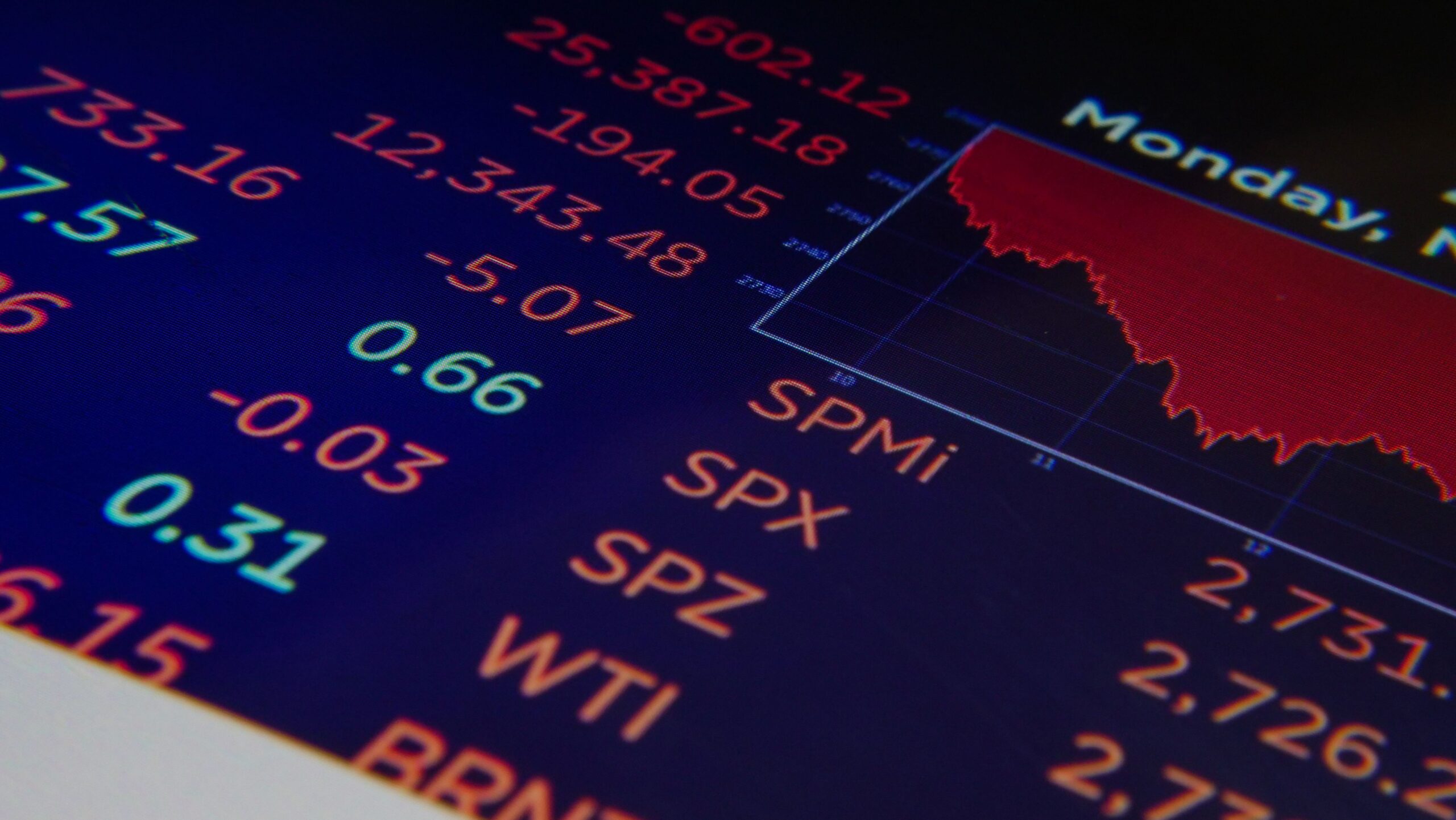
The U.S. stock market ended lower on Friday as investors reacted to renewed concerns that the Federal Reserve could keep interest rates higher for longer or potentially raise rates if inflation remains above the central bank’s target.
The decline followed remarks from Federal Reserve Chair Kevin Warsh at the annual Jackson Hole Economic Policy Symposium in Wyoming. Warsh emphasized that inflation remains an important concern and indicated that the Federal Reserve may have more work to do if price pressures do not move sustainably toward the central bank’s 2% goal.
The U.S. stock market had initially shown some resilience after Warsh’s speech. However, sentiment weakened as investors reassessed the possibility of tighter monetary policy. The S&P 500 finished down about 0.2%, while the Nasdaq Composite declined roughly 0.5%. The Dow Jones Industrial Average also edged lower, while the Russell 2000 suffered a larger decline.
Key Takeaways
- The U.S. stock market closed lower on Friday following renewed concerns about Federal Reserve policy.
- Federal Reserve Chair Kevin Warsh stressed the importance of bringing inflation back toward the 2% target.
- Expectations for a possible September rate hike increased after Warsh’s remarks.
- Treasury yields moved higher as investors reassessed the interest-rate outlook.
- Technology and smaller-company stocks faced additional pressure.
- Investors are now watching inflation, employment and other economic data before the Federal Reserve’s September meeting.
Why Did the U.S. Stock Market Fall?
The latest decline in the U.S. stock market was closely linked to changing expectations about Federal Reserve interest-rate policy.
Investors had been hoping that inflation would continue to cool enough to allow policymakers to maintain or eventually reduce borrowing costs. However, Warsh’s comments at Jackson Hole highlighted the possibility that the central bank may need to take additional action if inflation remains too high.
As a result, the U.S. stock market came under pressure because higher interest rates can affect corporate borrowing, consumer spending and the valuation of financial assets.
When borrowing costs rise, companies may face higher expenses for financing new projects, hiring, acquisitions or expansion. At the same time, consumers can become more cautious if mortgages, credit cards and other forms of borrowing become more expensive.
Therefore, investors often pay close attention to Federal Reserve communications because even a change in expectations can influence stock prices.
Fed Chair Kevin Warsh Raises Rate Concerns
The main catalyst for the latest move in the U.S. stock market was Warsh’s speech at Jackson Hole.
Warsh said the Federal Reserve remains focused on price stability and emphasized the importance of returning inflation to the central bank’s 2% objective. His comments were interpreted by investors as a signal that policymakers are prepared to consider tighter monetary policy if inflation does not improve sufficiently.
Importantly, Warsh did not announce a specific rate increase for September. Instead, his comments left the Federal Reserve with flexibility to respond to incoming economic data.
That distinction matters because the U.S. stock market reaction was driven largely by expectations rather than an actual policy decision.
According to Reuters, market expectations for a September rate increase rose significantly after Warsh’s remarks. Treasury yields also moved higher, reflecting increased expectations for tighter monetary policy.
Treasury Yields Move Higher
Another important factor affecting the U.S. stock market was the rise in Treasury yields.
The yield on the two-year Treasury note, which is particularly sensitive to expectations about Federal Reserve policy, rose sharply on Friday. Market reporting indicated that the two-year yield climbed to around 4.35%, its highest level in roughly a month.
Higher Treasury yields can influence stock valuations because investors compare the potential return from equities with relatively lower-risk government securities.
Consequently, when bond yields rise quickly, some investors may become more cautious about stocks, particularly companies whose valuations depend heavily on future growth.
This relationship was visible in the U.S. stock market on Friday as technology and growth-oriented shares experienced additional pressure.
Technology Stocks Face Pressure
Technology stocks were among the areas attracting attention as the U.S. stock market reacted to higher-rate expectations.
The Nasdaq Composite, which includes many large technology and growth companies, fell about 0.5% during Friday’s session.
Growth companies can be particularly sensitive to changes in interest rates because investors often value them based on expected earnings and cash flows over several years.
When interest rates rise, the present value of those future earnings can become less attractive under traditional valuation models.
As a result, the U.S. stock market can experience increased volatility in technology shares whenever investors significantly change their expectations for monetary policy.
Friday’s technology weakness was also influenced by company-specific developments. Semiconductor stocks came under pressure, while Marvell Technology shares dropped sharply following its earnings report despite the company raising its guidance.
Small-Cap Stocks Underperform

The U.S. stock market decline was more noticeable among smaller companies.
The Russell 2000, which tracks small-cap U.S. companies, fell approximately 1.4% on Friday, according to Associated Press market data.
Small businesses can be more sensitive to borrowing costs because they may rely more heavily on bank financing and variable-rate debt.
Therefore, expectations for higher interest rates can affect small-cap companies differently from large corporations with substantial cash reserves and easier access to capital markets.
The performance of the Russell 2000 also shows why looking only at the major indexes does not provide the complete picture of the U.S. stock market.
Inflation Remains the Main Concern
Inflation is at the center of the latest U.S. stock market uncertainty.
The Federal Reserve’s long-term inflation objective is 2%. However, policymakers remain concerned that price pressures could prove persistent.
Warsh’s comments suggested that the central bank is not prepared to ignore inflation risks simply because economic activity remains relatively resilient.
For the U.S. stock market, this creates an important policy question.
If inflation continues to decline, investors could eventually expect less restrictive monetary policy. On the other hand, if inflation remains elevated, policymakers may maintain higher rates or consider additional increases.
This uncertainty can lead to greater day-to-day volatility as traders respond to each new economic report.
What Could Happen at the September Fed Meeting?
The next major event for the U.S. stock market will be the Federal Reserve’s September policy meeting.
Investors are currently watching the September 15–16 meeting closely.
However, the final policy decision will depend on economic information available before the meeting.
Inflation reports, employment data, consumer spending and other indicators will therefore be important.
The Federal Reserve has not committed to a particular rate path. Instead, policymakers are expected to evaluate the latest data before determining whether monetary policy should remain unchanged or become tighter.
For the U.S. stock market, this means investors may continue to react strongly to major economic releases in the weeks ahead.
Why Interest Rates Matter for Businesses
Interest rates have a broad impact on the U.S. stock market because they influence businesses across different industries.
For example, companies may postpone expansion plans if financing becomes more expensive. Consumers may also reduce spending on homes, vehicles and other major purchases when borrowing costs increase.
Banks can experience different effects because higher rates may support lending margins, although weaker borrowing demand can create challenges.
Meanwhile, highly leveraged companies may face greater pressure because they have to refinance debt at potentially higher costs.
These factors mean that the U.S. stock market does not necessarily react uniformly to a change in interest-rate expectations.
Different industries can respond differently depending on their debt levels, pricing power, cash flow and exposure to consumer demand.
Dollar and Other Markets Also React
The latest move in the U.S. stock market was part of a broader reaction across financial markets.
The U.S. dollar strengthened after Warsh’s comments, while Treasury yields moved higher. Gold prices also declined sharply as traders reassessed the possibility of higher interest rates.
These movements demonstrate how closely connected global financial markets can be.
When investors expect U.S. interest rates to remain higher, the dollar can become more attractive because higher yields can increase demand for dollar-denominated assets.
At the same time, higher interest rates can create pressure on assets that do not generate interest income.
Consequently, the U.S. stock market response should be viewed as part of a broader adjustment in expectations across stocks, bonds, currencies and commodities.
Investors Remain Focused on Economic Data
For the U.S. stock market, economic data will remain one of the most important sources of direction.
Investors will be watching inflation readings for signs that price pressures are moving closer to the Federal Reserve’s 2% objective.
Employment data will also be important because the Fed must balance price stability with economic and labor-market conditions.
If economic growth remains strong while inflation stays elevated, policymakers could have more reason to maintain a restrictive stance.
However, if inflation falls meaningfully and economic conditions weaken, expectations could shift in the opposite direction.
That is why the U.S. stock market may remain sensitive to incoming data rather than following a simple one-directional trend.
What This Means for Wall Street
The latest decline does not necessarily indicate a major change in the longer-term direction of the U.S. stock market.
Major indexes still recorded weekly gains despite Friday’s decline. The S&P 500 and Dow both gained about 0.5% for the week, while the Nasdaq rose approximately 0.8%.
This is an important distinction.
A single trading session can reflect a short-term adjustment in investor expectations rather than a fundamental shift in the broader market.
Nevertheless, the U.S. stock market could remain volatile if investors continue to receive mixed signals about inflation and Federal Reserve policy.
Businesses, investors and policymakers will therefore be paying close attention to upcoming economic reports.
Conclusion
The U.S. stock market finished lower on Friday as investors reassessed the outlook for Federal Reserve interest rates following Kevin Warsh’s remarks at Jackson Hole.
The key issue is inflation. Warsh emphasized the Federal Reserve’s commitment to price stability and indicated that policymakers may need to take further action if inflation does not move convincingly toward the 2% target.
For the U.S. stock market, the immediate reaction included lower stock prices, higher Treasury yields and increased expectations for a possible September rate increase.
However, no final decision has been made. The Federal Reserve will continue to evaluate economic data before its September meeting.
As a result, the U.S. stock market may remain focused on inflation, employment and economic-growth reports in the coming weeks.
For readers following the U.S. stock market, the most important development will not simply be whether indexes rise or fall on a single day. Instead, attention will remain on whether inflation continues to improve and how Federal Reserve officials respond to the evolving economic picture.
For now, the U.S. stock market remains caught between expectations for continued economic strength and concerns that persistent inflation could keep interest rates higher for longer.
Sources: Federal Reserve, Reuters, Associated Press, Wall Street Journal and CME Group market data.
PayPal Takeover Collapse: Shocking $53 Billion Deal Falls Apart As Shares Tumble

