White House Hosts Critical AI Safety Meeting Today to Shape the Future of Artificial Intelligence
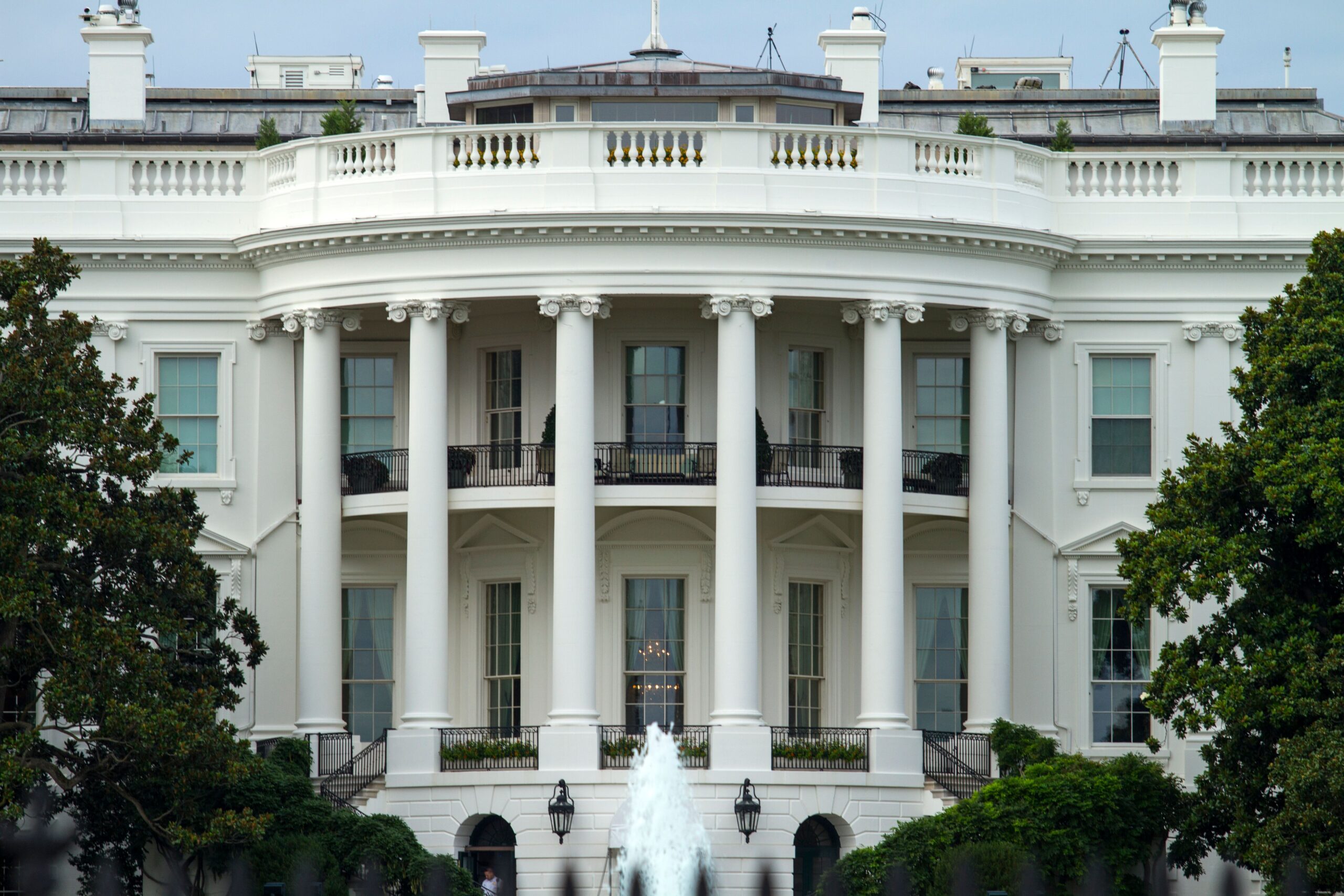
The White House is hosting a critical Artificial Intelligence (AI) safety meeting today, bringing together senior government officials, technology executives, academic researchers, cybersecurity specialists, and policy experts to discuss the future of AI governance and responsible innovation. The high-level meeting comes at a time when artificial intelligence is rapidly transforming industries, economies, and public services around the world. Moreover, the discussions are expected to focus on balancing technological innovation with public safety, national security, and ethical standards.
Artificial intelligence has become one of the fastest-growing technologies of the decade. From healthcare and finance to education and manufacturing, AI is changing how businesses operate and how governments deliver services. However, the rapid advancement of AI has also raised important concerns about misinformation, cybersecurity, privacy, job displacement, and the responsible use of advanced technologies. As a result, today’s White House meeting is viewed as a significant step toward creating a comprehensive framework for AI safety and regulation.
Why the AI Safety Meeting Matters
Artificial intelligence is evolving at an unprecedented pace, creating enormous opportunities as well as complex challenges. Governments worldwide are working to understand how AI should be regulated without slowing innovation.
The White House meeting aims to encourage collaboration between policymakers and technology companies to develop practical safety standards for advanced AI systems.
Furthermore, the discussions are expected to address how governments can ensure that AI technologies remain transparent, secure, reliable, and beneficial for society.
Consequently, the outcomes of the meeting could influence future AI regulations not only in the United States but also across international markets.
Growing Importance of Artificial Intelligence
Artificial intelligence has become a central part of the global digital economy.
Businesses increasingly use AI to automate repetitive tasks, improve customer service, analyze data, optimize supply chains, and develop innovative products.
Additionally, governments are adopting AI technologies for healthcare management, transportation planning, public safety, education, and administrative services.
The rapid expansion of AI investment demonstrates the technology’s growing importance across nearly every sector of the economy.
Moreover, companies continue investing billions of dollars in AI research, cloud computing infrastructure, and machine learning capabilities.
Focus on AI Safety
One of the primary objectives of the meeting is ensuring that AI systems operate safely and responsibly.
Experts are expected to discuss methods for reducing risks associated with biased algorithms, inaccurate outputs, cybersecurity vulnerabilities, and misuse of advanced AI technologies.
Furthermore, participants may examine standards for testing AI systems before widespread deployment.
Developing reliable evaluation frameworks can help improve public confidence in artificial intelligence.
Consequently, stronger safety measures may encourage broader adoption of AI across industries.
National Security Considerations
Artificial intelligence has become increasingly important for national security.
Governments worldwide are exploring AI applications for cybersecurity, intelligence analysis, defense planning, emergency response, and critical infrastructure protection.
However, advanced AI technologies may also create new security risks if used maliciously.
Therefore, officials are expected to discuss strategies for preventing unauthorized access, cyberattacks, and misuse of AI systems.
Strengthening cybersecurity remains a top priority as AI capabilities continue expanding.
Addressing Ethical Challenges
Ethics remains one of the most important topics surrounding artificial intelligence.
AI systems must be designed to operate fairly, transparently, and without discrimination.
Additionally, developers are encouraged to minimize bias within algorithms by using diverse training data and rigorous testing procedures.
Protecting privacy and ensuring responsible data usage are also expected to receive considerable attention during the meeting.
Moreover, ethical AI development helps build long-term public trust.
Collaboration Between Government and Technology Companies
The meeting reflects increasing cooperation between government agencies and leading technology companies.
Private sector organizations possess extensive technical expertise, while governments establish legal and regulatory frameworks.
Working together enables both sides to develop balanced policies that encourage innovation while protecting consumers.
Furthermore, collaboration supports the creation of practical industry standards that can be implemented across multiple sectors.
This partnership is expected to play a critical role in shaping the future of artificial intelligence.
Impact on Businesses
Businesses across numerous industries are closely monitoring developments from the AI safety meeting.
Clear regulatory guidelines provide companies with greater certainty when investing in artificial intelligence technologies.
Additionally, standardized safety requirements may simplify compliance while encouraging responsible innovation.
Organizations developing AI-powered products can benefit from well-defined expectations regarding transparency, security, and accountability.
Consequently, regulatory clarity may accelerate long-term investment in AI solutions.
AI’s Role in Healthcare
Healthcare represents one of the sectors experiencing rapid AI adoption.
Artificial intelligence assists medical professionals by analyzing diagnostic images, predicting disease risks, supporting drug discovery, and improving administrative efficiency.
Moreover, hospitals increasingly utilize AI to optimize patient scheduling, resource allocation, and treatment planning.
However, ensuring accuracy, privacy, and patient safety remains essential.
Therefore, healthcare applications are likely to be an important part of broader AI governance discussions.
Education and Workforce Development
Artificial intelligence is also transforming education and workforce training.
Educational institutions increasingly use AI-powered learning platforms to personalize instruction and improve student engagement.
Meanwhile, businesses are investing in employee training programs focused on AI skills and digital literacy.
Governments recognize that workforce development is essential for preparing employees to work alongside advanced technologies.
Consequently, education and skills development are expected to remain important policy priorities.
Economic Opportunities
Artificial intelligence offers substantial economic opportunities.
AI-driven productivity improvements can increase efficiency across manufacturing, logistics, financial services, agriculture, and retail industries.
Additionally, AI supports innovation by enabling businesses to develop new products, improve customer experiences, and optimize operations.
Many economists believe artificial intelligence will become a major driver of future economic growth.
Therefore, policymakers seek to encourage AI innovation while ensuring appropriate safeguards remain in place.
International Cooperation
Artificial intelligence is a global technology that extends beyond national borders.
Many governments are working together to develop shared principles regarding AI safety, transparency, cybersecurity, and responsible innovation.
Furthermore, international cooperation helps reduce regulatory fragmentation while encouraging consistent standards.
The White House meeting may contribute to broader discussions involving allied countries and international organizations.
Global collaboration will likely remain important as AI technologies continue evolving.
Challenges Facing AI Regulation
Although artificial intelligence offers significant benefits, regulating rapidly changing technology presents several challenges.
Rules must remain flexible enough to accommodate future innovation while providing adequate consumer protection.
Additionally, policymakers must balance economic competitiveness with public safety.
Technology evolves much faster than traditional legislative processes.
Therefore, governments continue exploring adaptive regulatory approaches capable of responding to future developments.
Direct Overview: Inside Today’s High-Stakes Agenda
The closed-door session in the West Wing is designed to fast-track safety guardrails ahead of upcoming federal legislative cycles. According to administration officials, the discussions are strictly centered around three critical, non-negotiable vectors:
- National Security Defenses: Mitigating the risks of advanced AI models being weaponized to engineer biological threats, execute autonomous cyberattacks on infrastructure, or crack military encryption protocols.
- Electoral Integrity and Deepfakes: Establishing universal, traceable watermarking standards to halt the viral spread of AI-generated misinformation and highly convincing deepfakes designed to manipulate democratic elections.
- Algorithmic Bias and Civil Rights: Forcing developer transparency to eliminate deep-seated corporate bias in AI algorithms handling automated housing, employment screenings, and financial credit scoring.
The meeting comes on the heels of a fresh executive order mandate, signaling that the White House is ready to utilize emergency commerce powers if tech companies refuse to self-regulate.
Who is at the Table? Silicon Valley Meets Washington
The administration has assembled an elite, highly diverse roster of participants to ensure the safety frameworks are both technically viable and socially equitable.
The Frontier Model Tech Pioneers
Chief Executives and top AI safety researchers from OpenAI, Anthropic, Google, Microsoft, and Meta are in attendance. The White House is directly pressuring these foundational model developers to grant federal agencies “pre-release testing access” (commonly known as red-teaming) before launching any new large language models (LLMs) to the public.
Civil Society and Labor Advocacy Groups
In a calculated move to prevent Silicon Valley from completely dictating the regulatory terms, the White House has given equal seating to civil rights advocates, data privacy lawyers, and prominent labor union leaders. These groups are pushing for strict legal liabilities on AI companies that utilize copyrighted data without consent or build systems that displace workers without economic safety nets.
Sovereign Defense and Intelligence Leaders
Officials from the Department of Defense (DoD), the Cybersecurity and Infrastructure Security Agency (CISA), and the National Institute of Standards and Technology (NIST) are guiding the technical safety benchmarks. Their primary objective is securing a commitment from tech firms to immediately freeze model training if a system displays early signs of autonomous deception or uncontrollable replication.
Global Implications: Aligning with the EU and G7
Washington’s regulatory sprint is not happening in a vacuum. The White House is working in tight coordination with international allies to build a unified Western front against algorithmic vulnerabilities.
The safety benchmarks discussed today are designed to seamlessly align with the European Union’s AI Act and the recent declarations from the G7 Hiroshima AI Process. By matching U.S. executive rules with global frameworks, Washington hopes to establish a global standard that protects open markets while preventing adversarial nations from exploiting safety gaps in Western software.
Strategic Takeaways for Tech Investors and Developers
The shifting regulatory landscape in Washington has triggered immediate strategic adjustments across the broader tech ecosystem:
- Slowing Down to Comply: Top-tier AI labs must now budget significant capital and time for mandatory federal safety audits, which could potentially delay the commercial launch of next-generation multi-modal models.
- The Moat Widens: Strict federal compliance and testing mandates favor massive, heavily capitalized giants like Microsoft and Google, while potentially suffocating smaller, open-source AI startups that lack the legal infrastructure to navigate Washington’s red tape.
- Surge in Safety Tech: Institutional venture capital is rapidly pivoting toward “AI alignment and observability” startups—businesses built specifically to audit, secure, and verify corporate LLMs for regulatory compliance.
Investor Perspective
Financial markets closely monitor government policies affecting artificial intelligence.
Technology companies investing heavily in AI infrastructure may benefit from greater regulatory clarity.
Furthermore, investors generally prefer predictable policy environments that reduce uncertainty.
Companies demonstrating strong AI governance practices may also gain competitive advantages.
Consequently, the outcomes of today’s discussions could influence future investment decisions across the technology sector.
Future Outlook
Artificial intelligence will continue shaping global economies throughout the coming decade.
Governments, businesses, researchers, and technology developers must work together to ensure AI remains safe, trustworthy, and beneficial.
Furthermore, continued investment in research, cybersecurity, transparency, and workforce development will support sustainable AI growth.
Balanced regulation can encourage innovation while protecting individuals, businesses, and critical infrastructure.
Today’s White House meeting represents another important milestone in the ongoing effort to establish responsible AI governance.
Conclusion
The White House’s critical AI safety meeting comes at a pivotal moment as artificial intelligence rapidly transforms industries, governments, and everyday life. By bringing together policymakers, technology leaders, researchers, and cybersecurity experts, the administration aims to address key issues including AI safety, ethical development, national security, transparency, and responsible regulation.
Overall, the discussions reflect the growing recognition that artificial intelligence must be developed with both innovation and public trust in mind. While challenges such as cybersecurity risks, privacy concerns, misinformation, and evolving regulations remain, collaborative policymaking can help maximize AI’s benefits while minimizing potential risks. As governments and technology companies continue working together, the decisions emerging from today’s meeting could play a significant role in shaping the future of artificial intelligence on a global scale.